
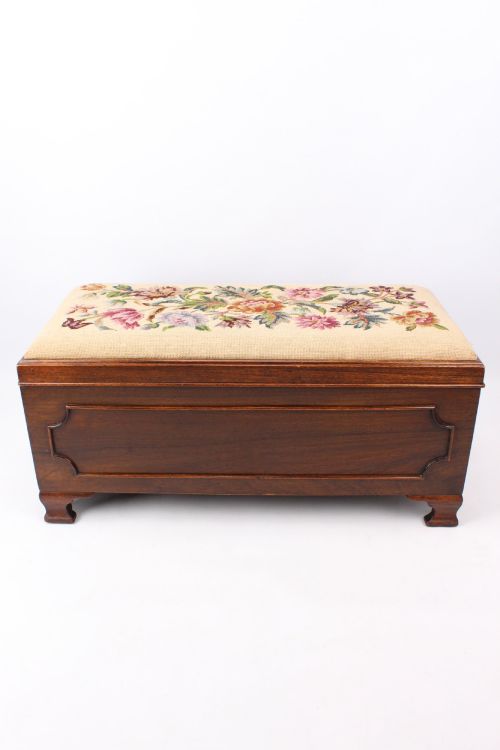
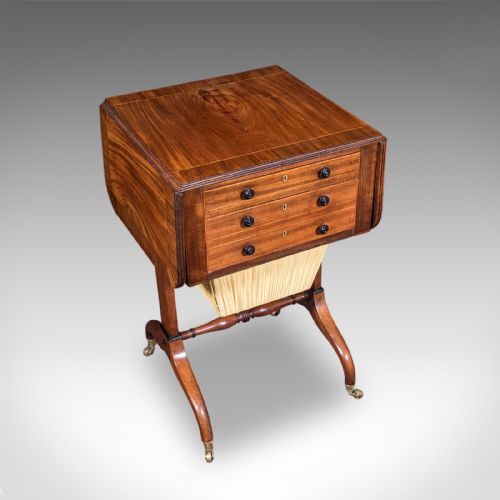
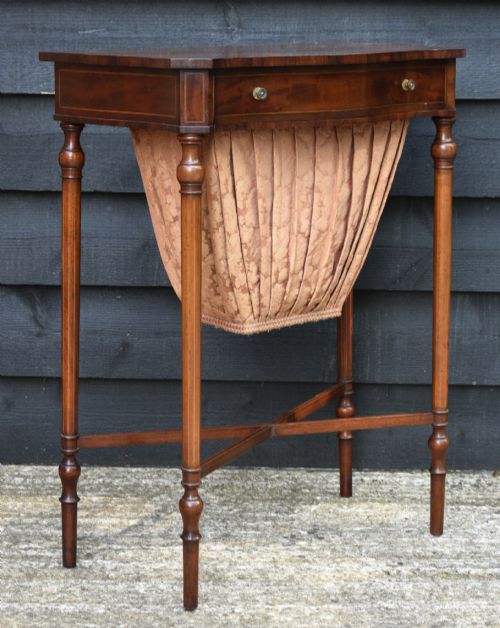
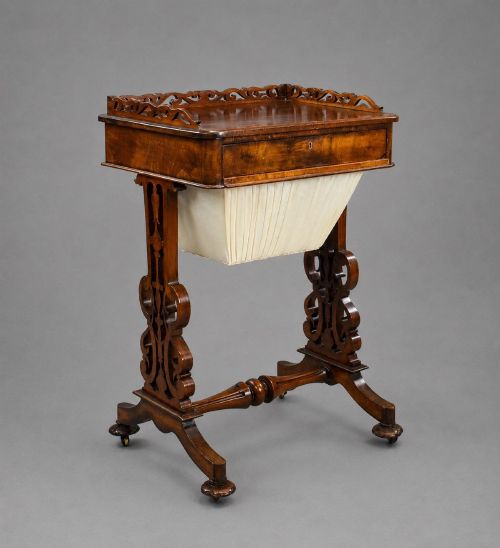




Mahogany Needlework Box
A mahogany needlework box organises threads and implements inside a timber case designed for domestic craft.

Mahogany Needlework Box
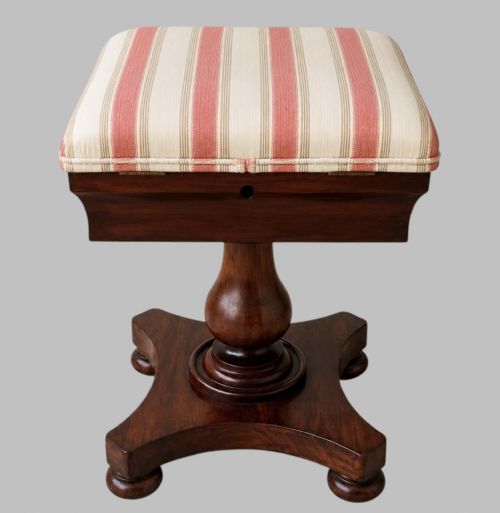
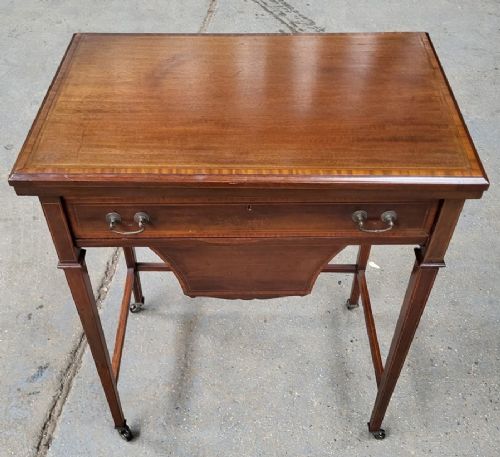
A mahogany needlework box combines timber construction with fitted compartments for domestic sewing implements, taking the form of standalone tables, drop-leaf designs, and compact table-top boxes. The pieces gathered under this phrase span the nineteenth and early twentieth centuries, encompassing Georgian, Regency, William IV, Victorian, and Edwardian periods.
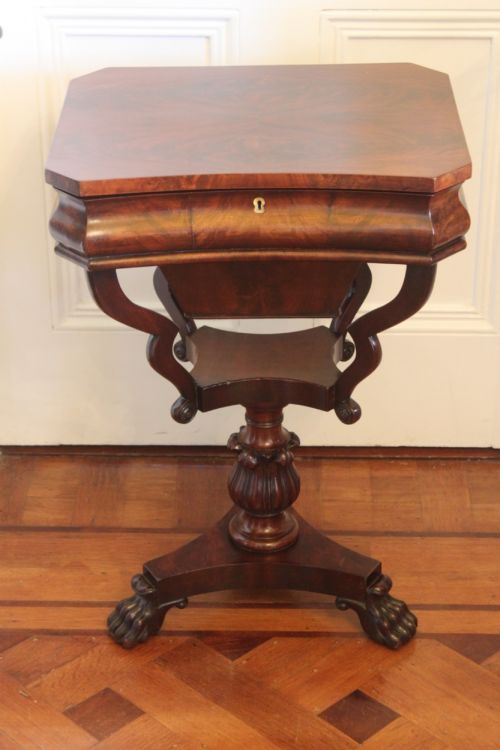
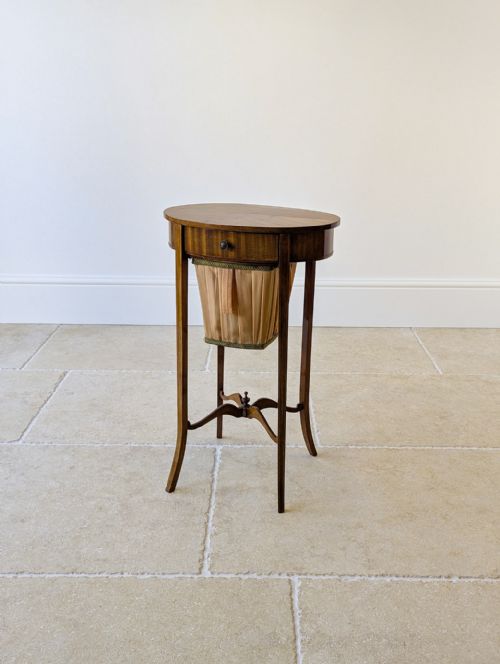
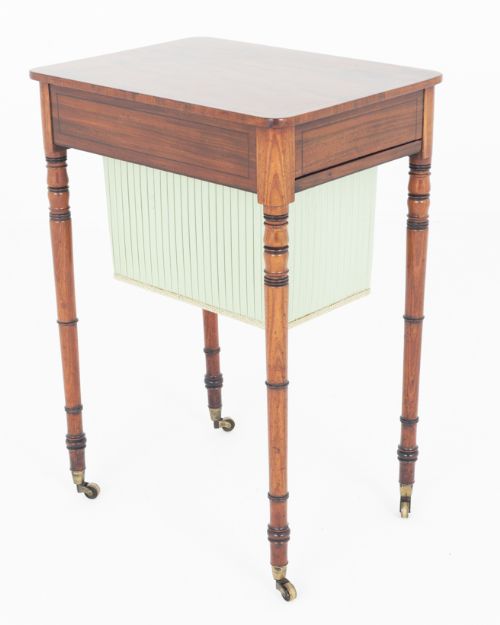
The most frequent form on this page is the work table, often equipped with a suspended fabric basket, internal trays, or a hinged lid concealing compartments for wool, silk, and pins.
Materials and construction
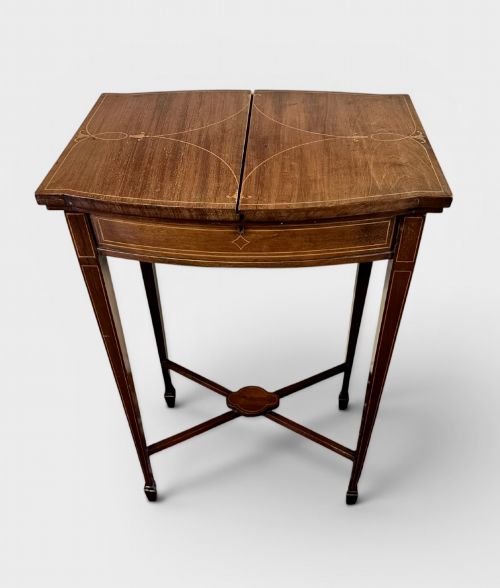
Makers utilised solid timber and veneers, frequently selecting flame mahogany, curl grain, and figured boards to create rich surface patterns across lids and drop leaves. Contrast and detail were achieved through inlay work using boxwood, satinwood, and shell motifs.
Interior compartments incorporated delicate turned elements, fabric linings in silk and wool, and brass hardware such as drop handles, hinges, and locks.
Evaluating the standard of workmanship
The distinction between standard and superior pieces rests on the choice of timber and the precision of the joinery, particularly in the figuring of the flame mahogany and the crispness of any inlaid banding. Finer examples display carefully matched grain patterns across multiple surfaces and retain their original internal fittings.
Structural stability in smaller components, such as lyre ends, pedestals, and drop-leaf hinges, indicates the original standard of assembly and the care taken by the cabinet maker.
The Mahogany Needlework Box Glossary
- Flame mahogany
- A veneer showing a distinctive flickering flame pattern derived from the branch junctions of the tree. This figure was prized for prominent surfaces such as table tops and box lids.
- Drop leaf
- A hinged flap at the side of a table that can be raised to extend the surface area or lowered when space is constrained. These leaves are supported by swing brackets.
- Work table
- A small table designed specifically for sewing, needlework, and writing, featuring internal compartments, drawers, or a fabric bag beneath. They were essential pieces for nineteenth century domestic interiors.
- Boxwood
- A dense, pale yellow wood utilised for stringing and decorative inlay work to contrast against darker timbers such as mahogany.
Mahogany Needlework Box: Frequently Asked Questions
What is a work table?
A work table is a dedicated piece of furniture designed to hold sewing equipment, threads, and unfinished needlework projects. These tables typically feature a combination of drawers, lidded compartments, and suspended fabric bags.
During the nineteenth century, they stood in parlours and sitting rooms as functional items that doubled as elegant occasional furniture for receiving guests.
How do I date a mahogany sewing box?
Dating relies on observing the stylistic characteristics, construction methods, and timber choices typical of specific periods. Regency examples often feature pedestal bases and lyre ends, while Edwardian pieces frequently incorporate delicate inlay work.
Secondary woods, nail types, and the complexity of internal compartments also provide reliable clues to the era of manufacture.
Where were these placed in a home?
These pieces sat beside seating areas in drawing rooms, parlors, and boudoirs where ladies gathered to mend or practice needlework. Their compact proportions allowed them to function as lamp tables or side tables when not in active use.
Today, they adapt readily to modern interiors as bedside cabinets or hallway surfaces with hidden storage.
What is the difference between a box and a table?
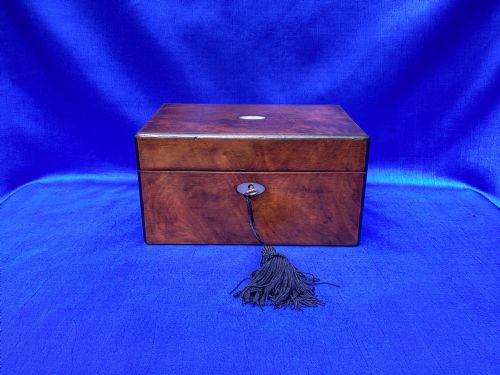
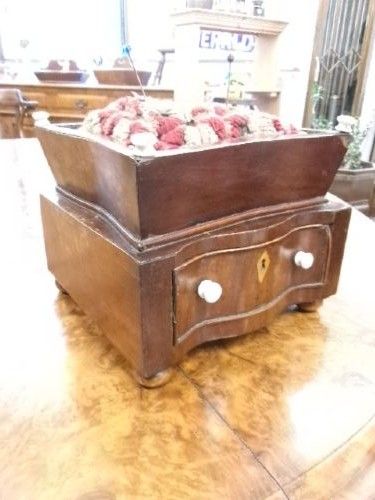
A box is a portable case designed to sit upon a desk, chest, or table, housing smaller sewing accessories and removable trays. A table is a freestanding piece of furniture incorporating legs, a pedestal, or a cabinet stand.
Both serve the primary function of organising needlework materials, but tables offer integrated surface space and larger storage volumes.