


Antique Fabric Pouch Table
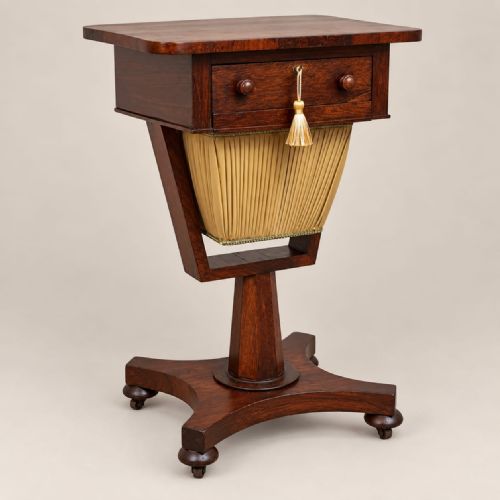
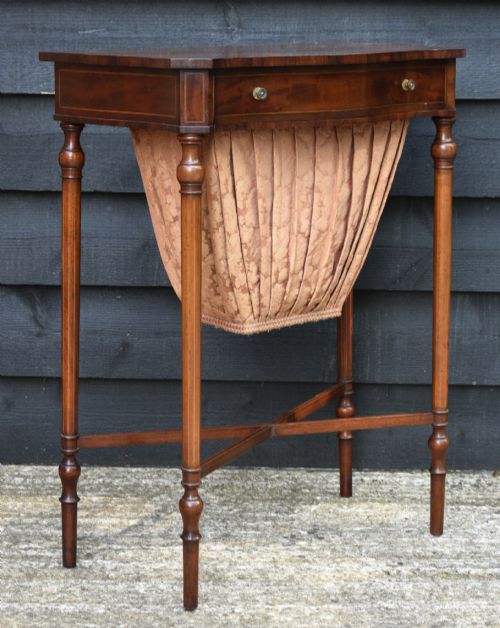
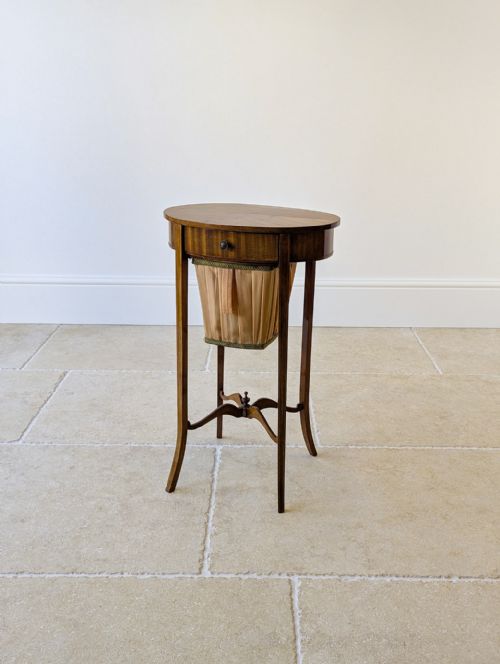
An antique fabric pouch table combines a compact occasional surface with a suspended silk or fabric receptacle for needlework.

Antique Fabric Pouch Table
An antique fabric pouch table is a specialised domestic piece designed primarily for sewing and needlework, incorporating a hanging bag beneath the top. Most examples on this page date from the Regency and Victorian periods, alongside Edwardian and Georgian pieces.
The form typically functions as a side table or lamp table when closed, with internal compartments and a fabric bag to hold textiles. Work tables, sewing tables, and occasional tables appear frequently across the listings.
Makers utilised woods such as mahogany, rosewood, and pollard oak, often pairing the timber frame with silk and fabric components. Proportions remain relatively small, making these pieces suitable for domestic placement beside seating.
Materials and construction methods
Cabinet makers constructed the primary framework using solid timbers and veneers of mahogany, rosewood, and satinwood, supported by brass details and boxwood stringing. Timber selection dictated the structural integrity of the pedestal or leg assembly.
Silk and woven textiles formed the suspended work pouches, gathered or pleated to wooden or brass frames beneath the main surface. Joinery methods included turned pedestals, lyre ends, and drop-flap mechanisms.
Gentlemen occasionally borrowed these sewing tables to store clandestine correspondence away from the household.
Judging quality and execution
Superior examples display refined timber grain, such as figured rosewood or rich mahogany, matched with precise brass inlay and boxwood stringing. The integrity of the internal compartments and the execution of the lyre ends or pedestals distinguish finer cabinet work.
The preservation of the original fabric pouch and the quality of the silk gathering influence the overall standard of the piece. Subtle details like turned columns and well-fitted drawers separate standard utilitarian examples from elevated workshop production.
The Antique Fabric Pouch Table Glossary
- Work table
- A small domestic table fitted with drawers and a fabric bag for sewing materials. These pieces were essential for domestic needlework during the eighteenth and nineteenth centuries.
- Lyre end
- A furniture support shaped in the stylized form of a classical Greek lyre. This form appears frequently on the ends of Regency period tables.
- Pollard oak
- Oak timber taken from trees that have been pollarded, producing a dense and highly figured grain pattern. Cabinet makers used this decorative wood for tabletops and surfaces.
- Boxwood stringing
- A narrow inlay of pale boxwood set into contrasting darker wood surfaces. This decorative technique defines the edges of many Georgian and Edwardian tabletops.
Antique Fabric Pouch Table: Frequently Asked Questions
What is a fabric pouch table?
A fabric pouch table is a small occasional table equipped with a hanging textile bag beneath the top. The bag stored sewing supplies, wool, and needlework projects.
Cabinet makers designed these pieces for domestic sitting rooms where needlecraft took place. The top provided a surface for candles or lamps while work remained stored below.
How do I date an antique work table?
Dating relies upon timber choice, decorative styles, and construction methods. Regency pieces often feature brass inlay and lyre supports, while Victorian examples utilise rosewood and heavy pedestals.
Edwardian tables tend to display lighter mahogany frames with delicate inlay. Examining the interior construction and secondary woods confirms the period.
Were these tables used only for sewing?
While primarily built for sewing and needlework, these tables functioned as general side tables and lamp tables. The enclosed compartments held letters and small personal items.
The drop-flap mechanism and top surface allowed the furniture to serve multiple domestic purposes in a drawing room.
What woods are typical for these tables?
Mahogany and rosewood appear most frequently across the listings from the Georgian, Regency, and Victorian eras. Cabinet makers also utilised satinwood, pollard oak, and boxwood for decorative contrast.
Solid timbers formed the structural legs and pillars, while veneers covered the primary surfaces and drawer fronts.