
Antique Executive Desk Table
An antique executive desk table is a substantial piece built for serious work, combining fine timbers with generous writing surfaces to anchor a study.
Antique Executive Desk Table
An antique executive desk table brings together robust workspace utility and period craftsmanship, serving as the central working surface in a traditional study or office. When searching for an antique executive desk table, buyers encounter large pedestal formats, partners tables, and refined writing tables designed for daily service.
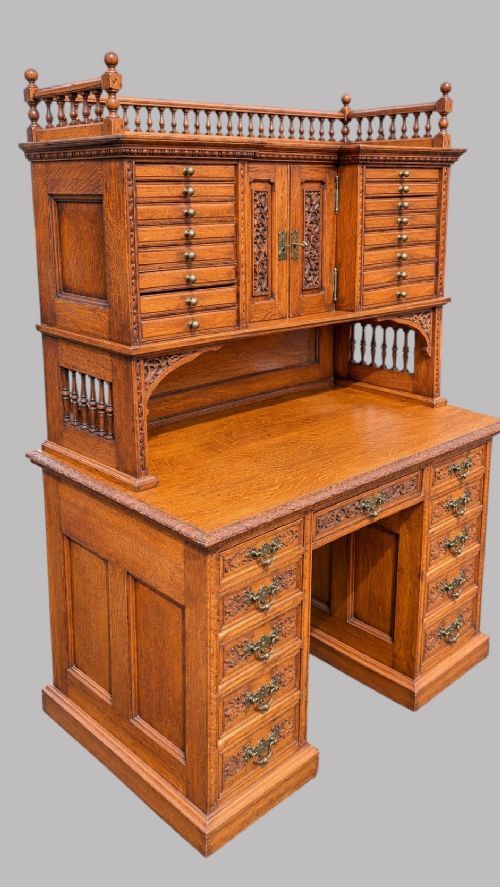
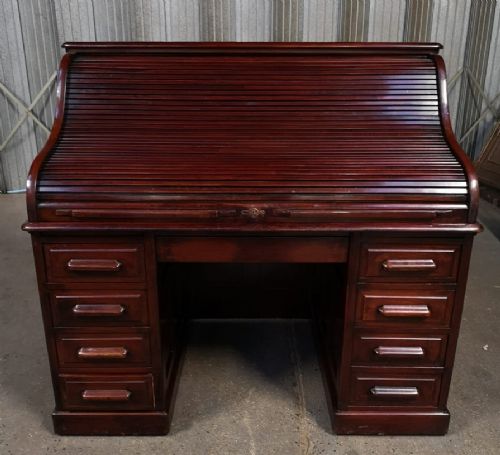
The material palette draws heavily on rich hardwoods, with mahogany, oak, and walnut dominating the selection alongside burr walnut and rosewood accents. These timbers provide the structural durability needed for heavy everyday use while displaying natural grain patterns that define the period aesthetic.
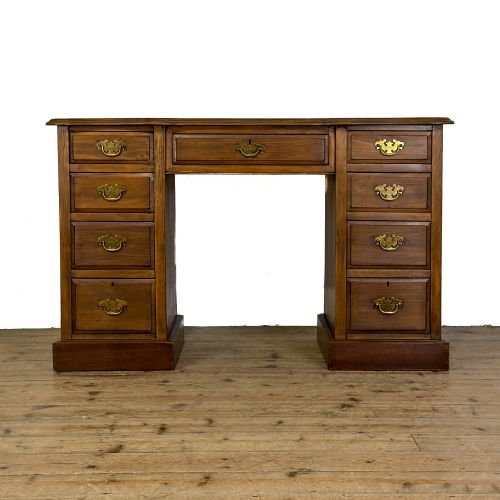
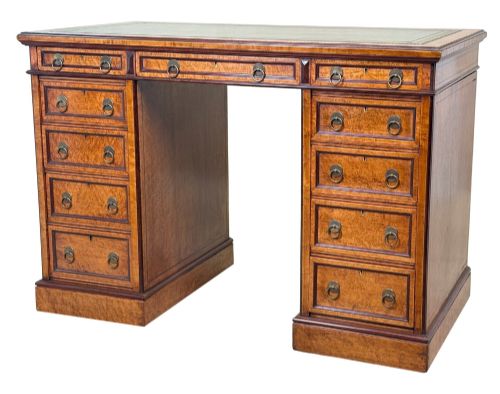
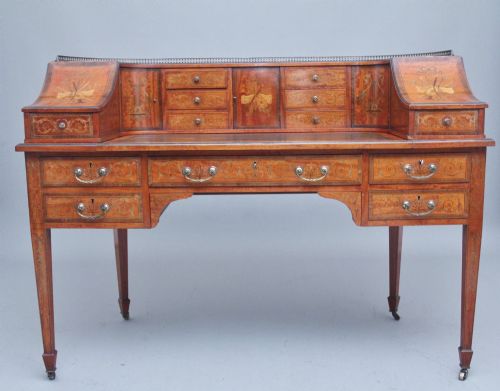
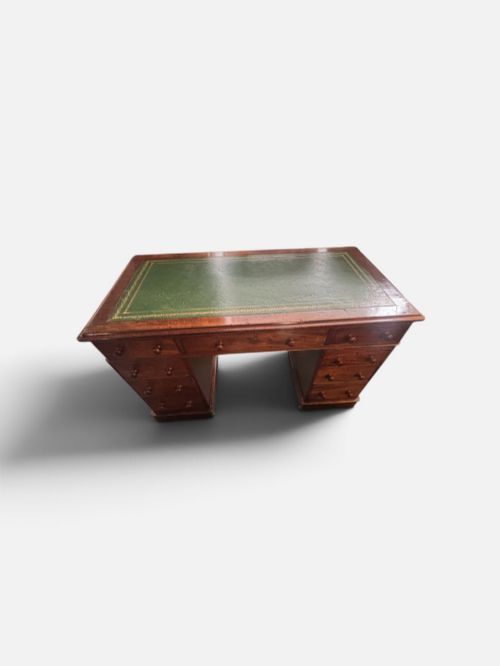
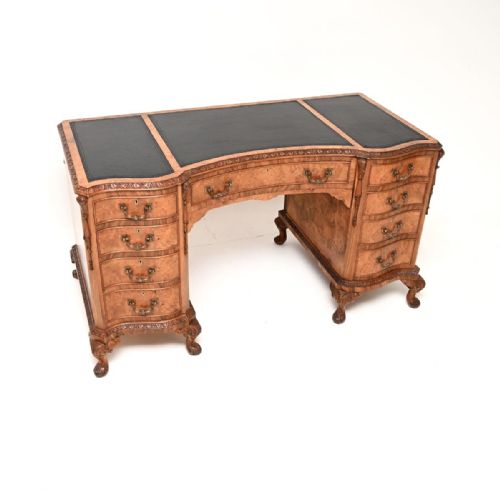
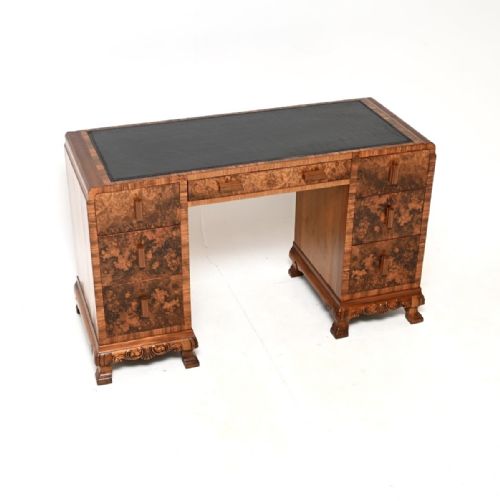
Most examples date from the nineteenth and early twentieth centuries, spanning Victorian, Edwardian, and Art Deco periods. Pedestal configurations with multiple drawers and kneeholes appear frequently, offering practical storage alongside expansive writing surfaces inset with tooled leather.
Construction and materials
Cabinet makers utilised dense hardwoods such as mahogany, oak, and walnut to build carcases and framing that would endure decades of daily office use. Drawer linings often relied on secondary timbers like pine or oak, joined with traditional hand-cut dovetails for lasting strength.
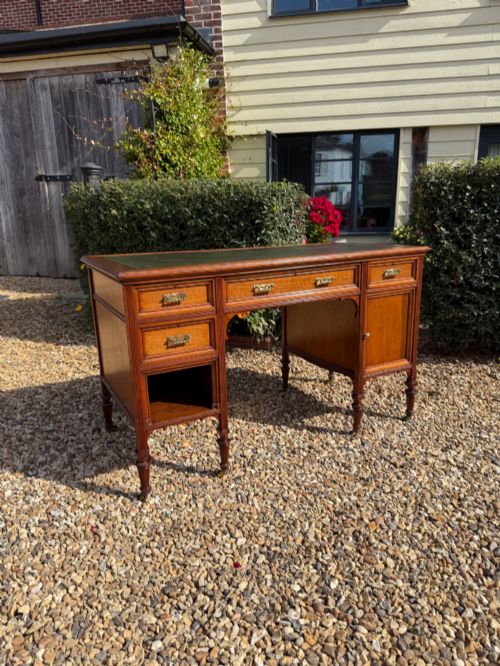
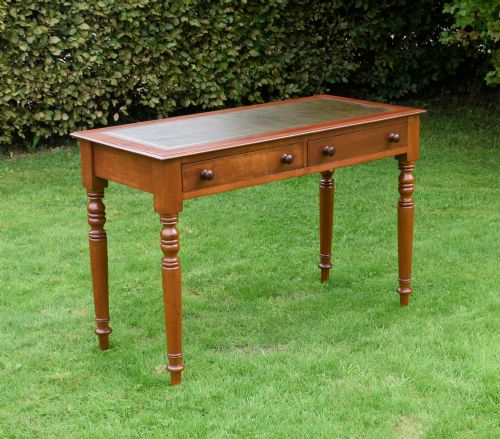
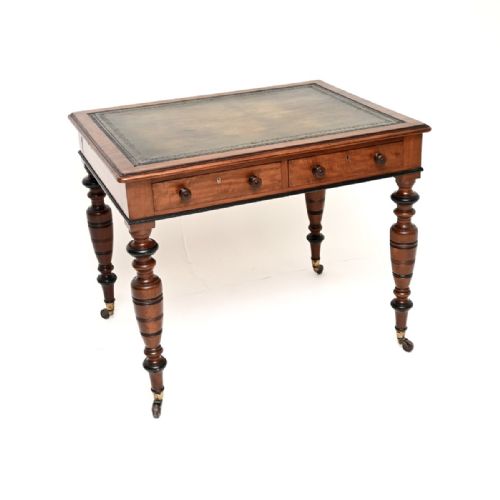
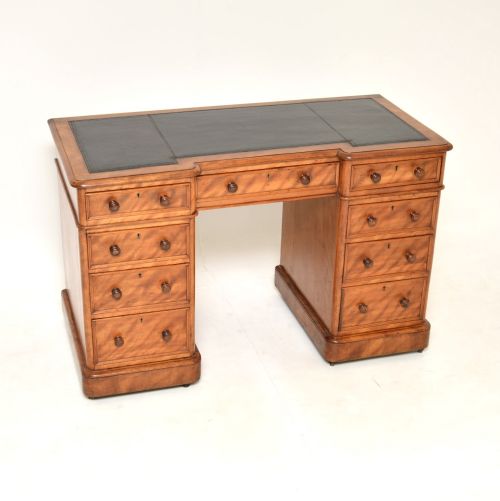
Writing surfaces were typically inset with panels of cattle hide or leather, frequently decorated with blind or gold-tooled borders. Brass hardware, including drop handles, escutcheons, and castors, provided functional accents that complemented the deep tones of the polished wood.
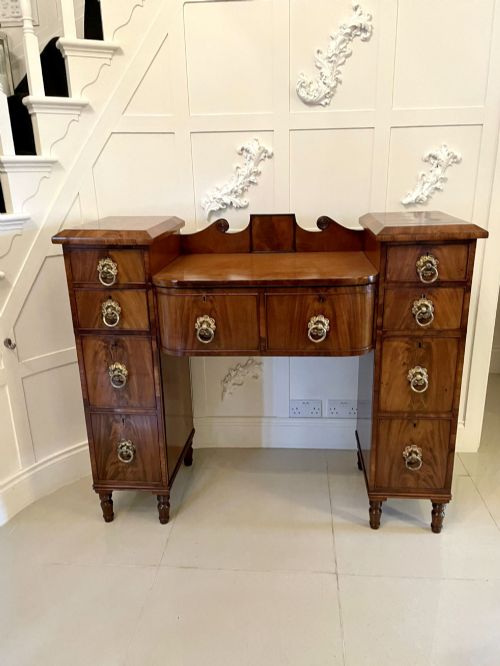
Listings feature pedestal desks, partners tables, and writing tables executed in mahogany, oak, walnut, and burr walnut across Victorian and Edwardian periods.
Judging quality in executive desks
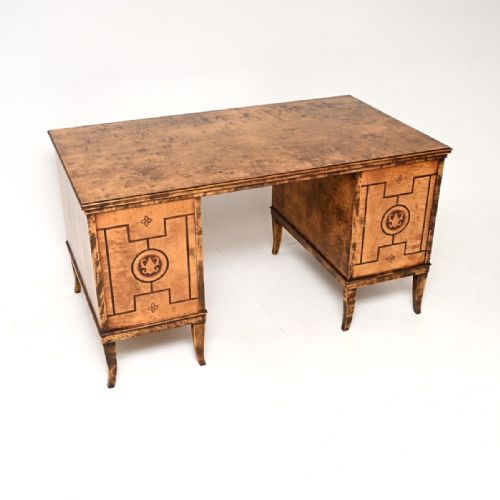
The standard of timber selection and figure sets superior examples apart, particularly when book-matched burr veneers or dense, richly polished mahogany are employed across expansive surfaces. The depth of hand-applied polish and the crispness of carved details reveal the level of skill invested in the piece.
Interior construction details, such as solid wood drawer framing, cleanly cut dovetailing, and retention of original brass hardware or fitted leather inserts, distinguish workshop pieces from later reproductions. The balance of proportions and the seamless integration of double-sided pedestal designs indicate high-grade maker output.
Trollope and Sons·Edwards and Roberts·Maple and Co·Johnstone and Jeanes
The Antique Executive Desk Table Glossary
- Pedestal desk
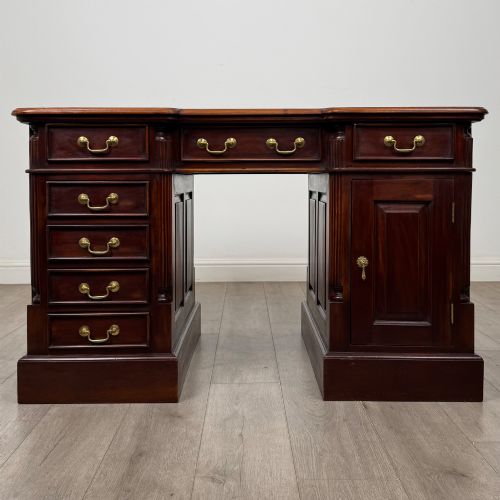
- A heavy freestanding desk comprising two supporting banks of drawers with a central kneehole space. They provide substantial storage capacity and a fixed work surface.
- Partners desk
- A double-sided executive desk designed with drawers and cupboards on both sides so two people can work opposite each other. These large tables often occupy the centre of a room.
- Kneehole desk
- A compact desk featuring a central recess for the sitter's legs, flanked by smaller pedestals of drawers. They are typically shallower than full partners desks.
- Bureau plat
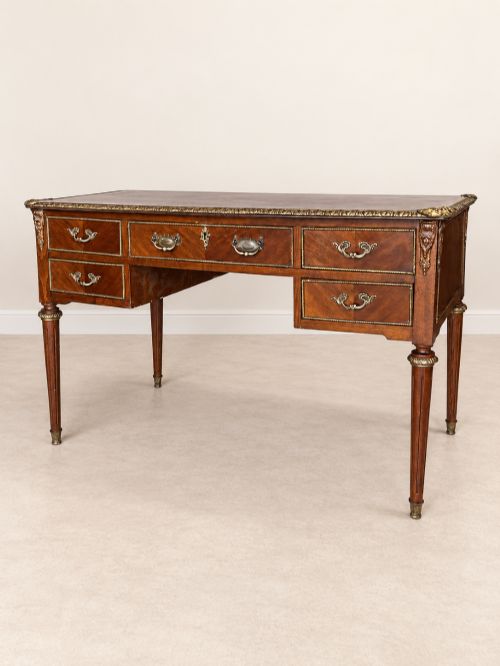
- A French freestanding writing table, usually featuring one or more frieze drawers and cabriole or tapered legs. They are finished on all sides for placement in the middle of a room.
- Tooled leather
- Leather writing surfaces decorated with pressed patterns using heated brass tools and gold leaf. This technique adds a decorative border to the functional workspace.
Antique Executive Desk Table: Frequently Asked Questions
What is a partners desk?
A partners desk is a large double-sided desk built with drawers and storage compartments accessible from both the front and the back. This layout allowed two people, such as business partners or bankers, to sit opposite each other and share the same workspace.
These pieces are traditionally finished on all sides so they can stand freely in the middle of a large library or office rather than against a wall.
How do I clean a leather desk top?
Leather desk tops benefit from gentle cleaning using a slightly damp cloth with mild soap, avoiding excessive water that can stain or warp the hide. Nourishing balms or leather waxes can then be applied sparingly to maintain suppleness and protect the gold tooling.
Harsh chemical cleaners or abrasive pads should be avoided entirely, as they strip the original finish and damage the delicate blind tooling around the edges.
Are these desks suitable for modern computers?
Many antique executive desks offer ample surface area and sturdy construction to accommodate modern desktop computers, laptops, and peripheral equipment. Their generous widths and deep pedestal drawers provide practical solutions for contemporary home offices.
Care should be taken to protect the antique timber and leather surfaces from heat, scratches, and cable wear by using appropriate desk mats and organisers.
How do I tell Victorian from Edwardian desks?
Victorian desks tend to feature heavier proportions, darker finishes, and robust mahogany or walnut construction with deep mouldings and traditional carving. They often reflect revival styles like Gothic or Georgian influences.
Edwardian desks frequently display lighter timbers, simpler lines, and occasional Sheraton or satinwood inlay work reflecting a shift toward brighter, less cluttered interior aesthetics.