



Antique Executive Desk Chair
An antique executive desk chair brings substance to a study, offering leather seats and sturdy timber frames built for daily work.
Antique Executive Desk Chair
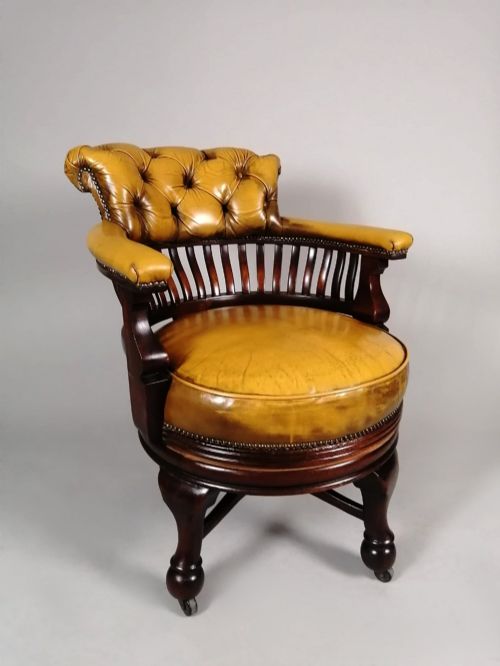
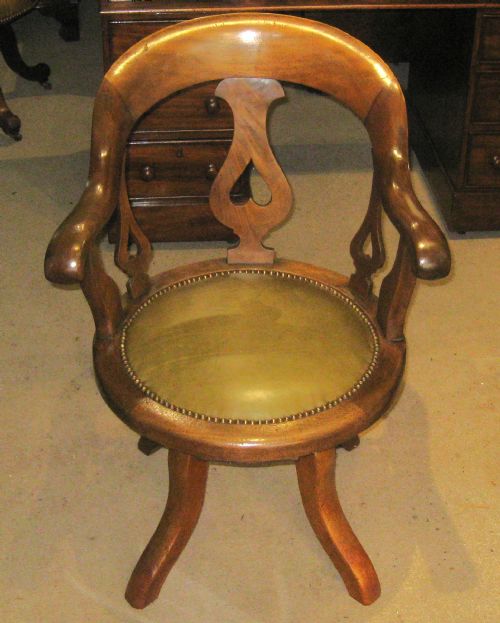
An antique executive desk chair is a sturdy seating option designed for study and office work, frequently appearing as a revolving or swivel model. These pieces bridge the gap between heavy library armchairs and functional office seating, often featuring supportive upholstered backs.
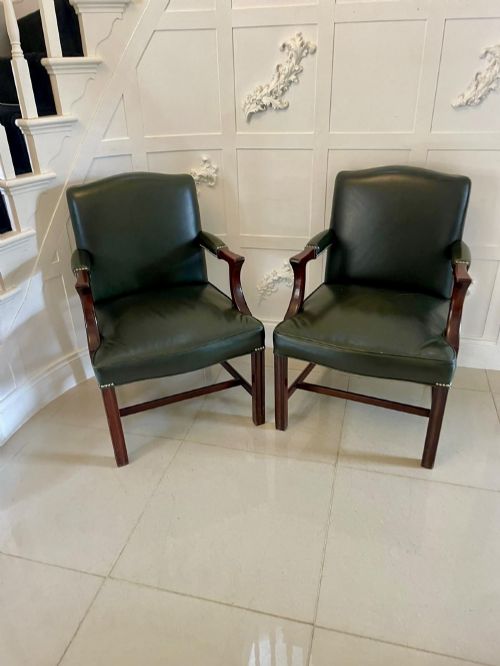
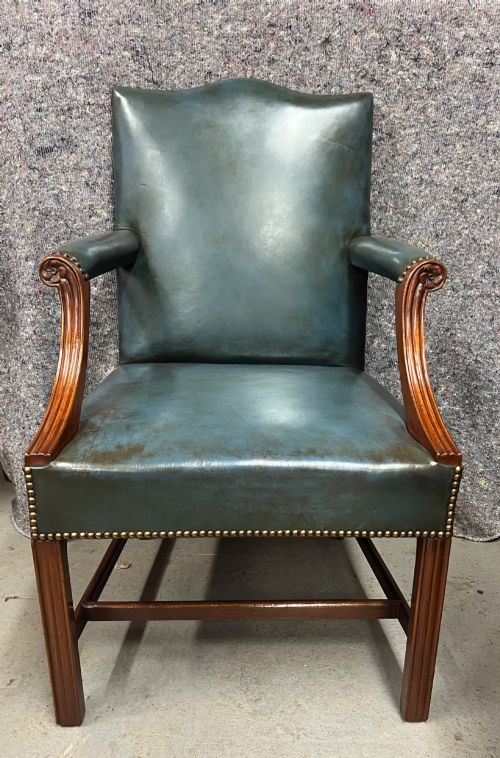
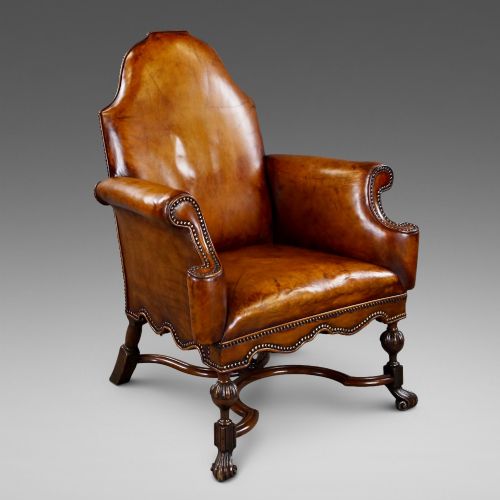
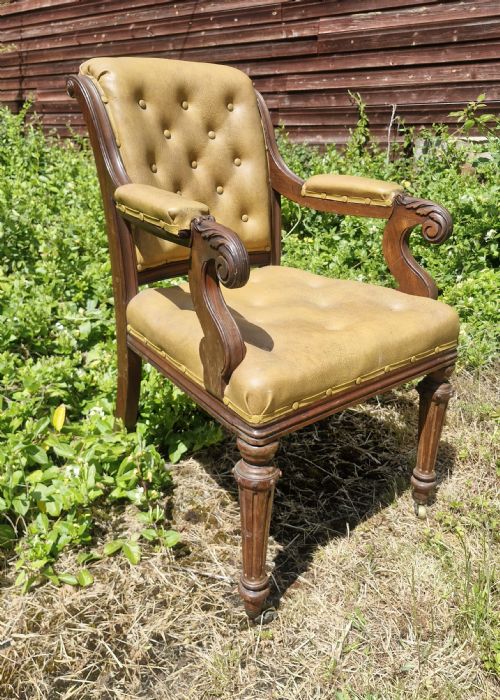
The most common versions on this page date from the nineteenth century and the Edwardian era, constructed in durable timbers like mahogany, walnut and oak. Buyers encounter various forms, from straightforward swivel chairs to Gainsborough styles and library armchairs.
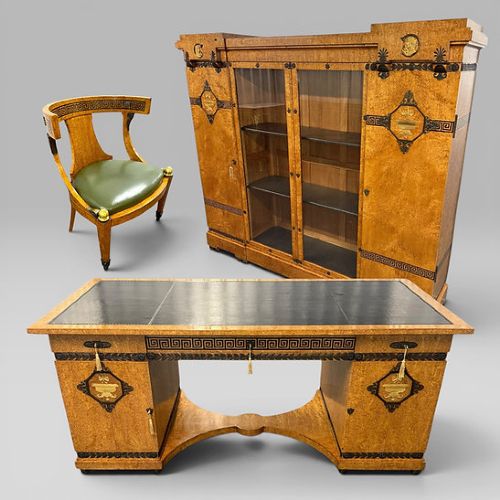
Makers often drew inspiration from Georgian, Regency, French Empire and Queen Anne styles, resulting in handsome seating suited to traditional home offices and studies. These chairs combine ergonomic comfort from earlier eras with the rich grain of traditional hardwoods.
How they were made
Makers built these chairs using solid hardwoods such as mahogany, walnut, oak and rosewood, chosen for their strength and rich grain. Frames frequently incorporate bentwood or carved elements to support the demands of daily office use.
Upholstery centres on leather, often buttoned, paired with fabric and supported by iron or cast iron swivel mechanisms and brass details. These durable materials ensured the chairs could withstand constant movement and weight.
What varies in quality
Quality depends heavily on the selection of timber and the complexity of the cabinetmaker's carving, with dense mahogany and figured walnut standing at the top of the range. Finer examples display meticulous attention to the frame's construction, ensuring stability in swivel and revolving mechanisms.
The grade of the leather upholstery and the precision of the buttoning also separate standard pieces from superior ones. Original brass hardware and robust iron underframes further indicate a higher standard of manufacture.
Mercier Frères·Boston Chair Company·Gillows
The Antique Executive Desk Chair Glossary
- Swivel desk chair
- A chair featuring a mechanical pivot that allows the seat to rotate fully. This innovation became popular in offices during the nineteenth century.
- Library armchair
- A comfortable, upholstered seat designed for reading in a library or study. These pieces often feature generous proportions and leather armrests.
- Gainsborough style
- A wide, upholstered armchair with open arms, originating in the eighteenth century and revived in later periods. They are frequently used at executive desks.
- Fauteuil de bureau
- A French term for a desk armchair, often characterised by an enclosed upholstered back and curved arms. They reflect classic continental styling.
- Bentwood
- Wood that has been heated and steamed into curved shapes. This technique created strong, flowing lines for chair backs and frames.
Antique Executive Desk Chair: Frequently Asked Questions
Are antique executive desk chairs comfortable for daily work?
Many of these chairs were built with ergonomic intent, featuring supportive buttoned leather backs and padded seats designed for long hours at a desk.
Revolving and swivel models allow for easy movement, making them practical for modern home offices.
How do I identify the period of a desk chair?
Dating relies on examining the timber species, upholstery style, and the complexity of any mechanical swivel components.
Nineteenth-century examples often use solid mahogany or walnut with cast iron mechanisms, while Edwardian pieces lean towards lighter oak frames.
What is the difference between a library armchair and a desk chair?
Library armchairs generally feature fixed legs and deep upholstery intended for reading or relaxation in a study.
Desk chairs frequently incorporate swivel mechanisms, castors, and more upright postures suited to working at a writing surface.
Can I use a swivel desk chair on wooden floors?
Most antique swivel chairs use metal castors or iron mechanisms that require careful placement to avoid scratching delicate flooring.
Using a protective mat beneath the chair preserves both the antique castors and the floor surface.