

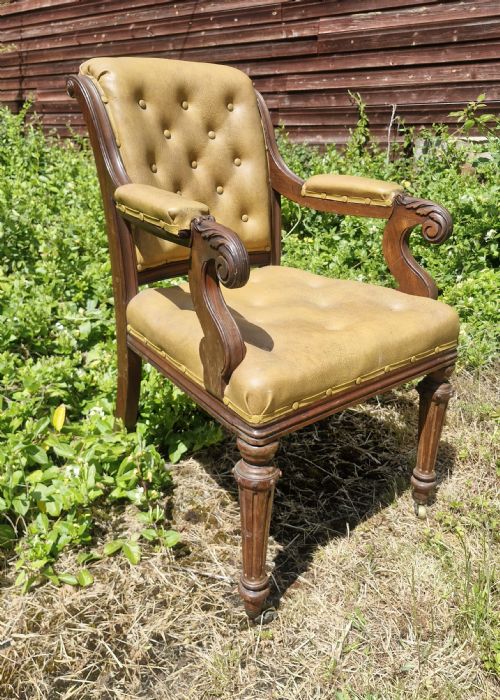


Antique Executive Chair
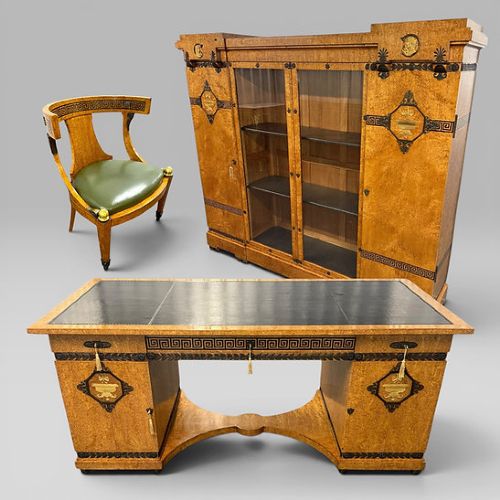
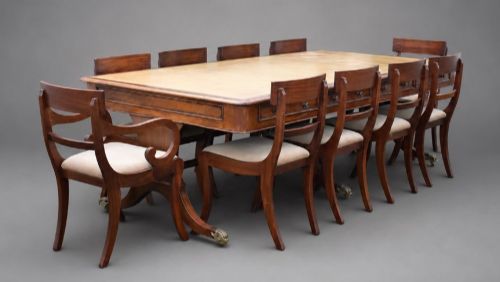
An antique executive chair delivers sturdy working comfort through heavy mahogany, walnut, and supple leather.
Antique Executive Chair
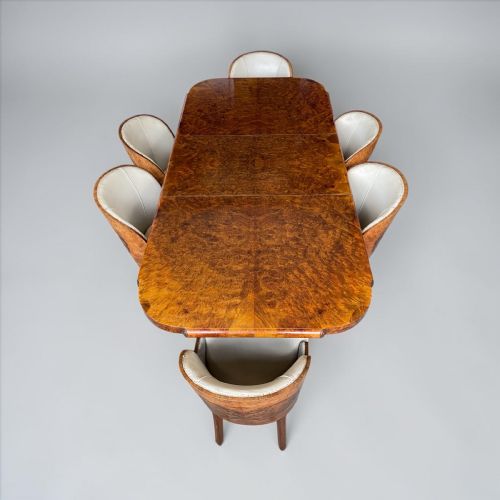
An antique executive chair serves as a substantial seat designed for office work, libraries, and boardrooms. When searching for an antique executive chair, buyers encounter revolving models, swivel mechanisms, and stationary library armchairs.
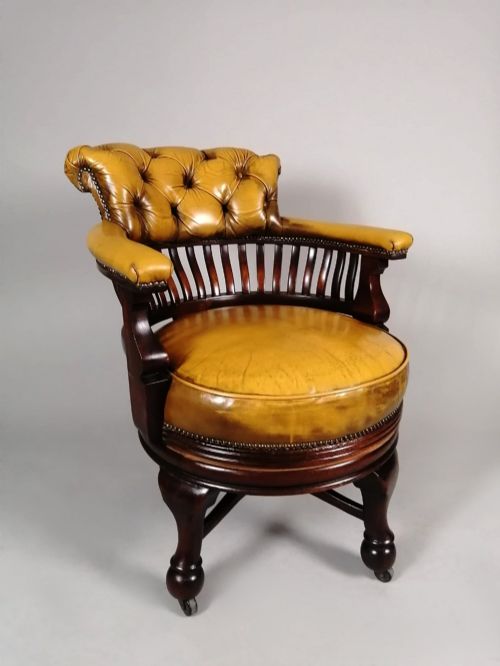
Many examples feature buttoned leather upholstery paired with wooden frames. Originating across the nineteenth and early twentieth centuries, these chairs combine functional office utility with period cabinetmaking.
Materials and construction
Makers utilised dense timbers such as mahogany, walnut, and solid oak for the primary frames and bases. These woods provided the necessary structural strength for heavy daily use in offices and libraries.
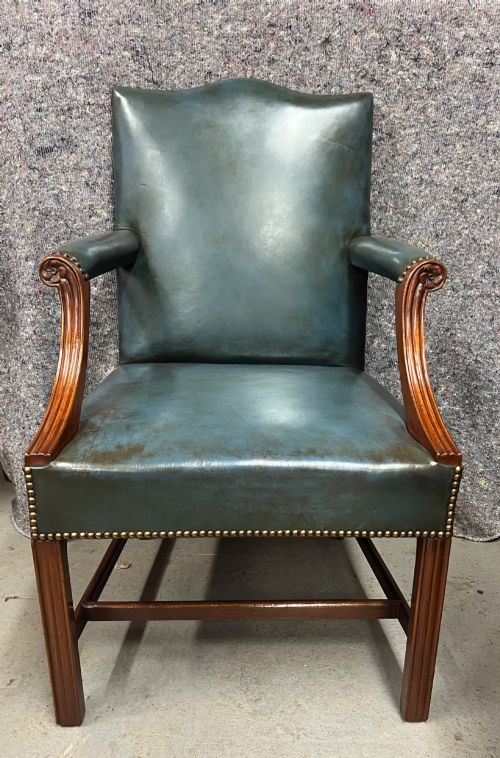
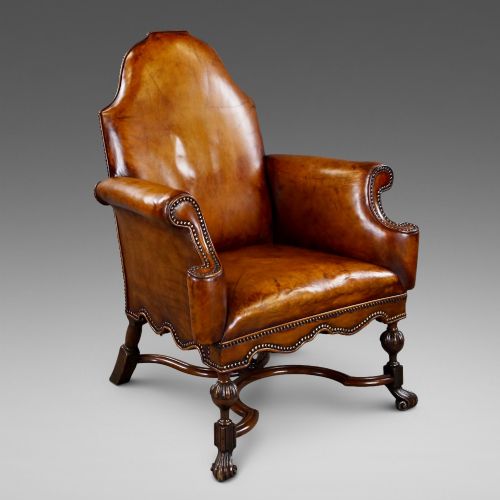
Upholstery typically involved durable leather secured with brass nailheads over supportive padding. Swivel and revolving mechanisms integrated cast iron and brass components to enable smooth movement.
Listings feature pieces spanning the 1850s to the 1930s, utilising leather, mahogany, walnut, oak, brass, and cast iron.
Distinctions in quality
Quality rests on the selection of timber and the precision of the joinery within the frame. Dense mahogany and figured walnut indicate superior cabinetmaking compared to standard utility woods.
The sophistication of the revolving or swivel mechanism dictates the mechanical standard of the piece. Intricate buttoning, well-preserved leather, and robust cast iron hardware distinguish finer library and office seating.
Maurice Adams·Mercier Frères·Harry and Lou Epstein·Boston Chair Company of Massachusetts·Gillows
The Antique Executive Chair Glossary
- Revolving desk chair
- A seat fitted with a central spindle and base allowing the sitter to turn. These often incorporate cast iron and brass swivel apparatus.
- Library armchair
- A wide, comfortable seat intended for reading and study. They frequently feature upholstered arms and buttoned leather panels.
- Bow back
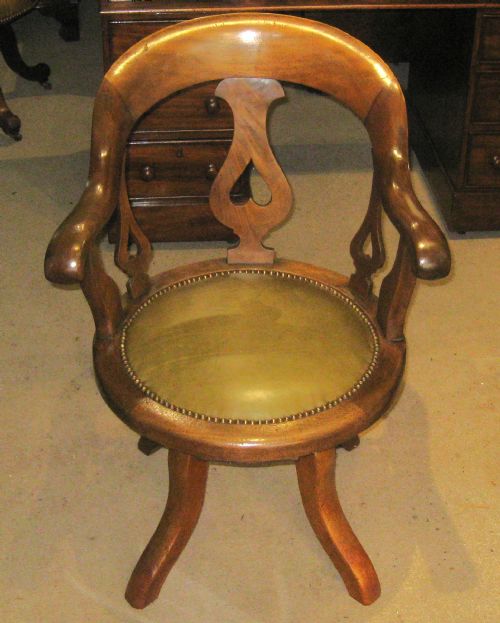
- A curved wooden backrest wrapping around the upper portion of the chair. This shape provides ergonomic support for extended periods at a desk.
- Bentwood
- Wood steamed and bent into curved structural forms. This technique appears in swivel desk chairs from the late nineteenth century.
Antique Executive Chair: Frequently Asked Questions
What is an antique executive chair?
An antique executive chair is a sturdy desk seat or library armchair dating from the nineteenth or early twentieth century. They are built from timbers like mahogany, walnut, and oak.
These pieces often feature revolving mechanisms, swivel actions, and leather upholstery designed for study and office environments.
How do I date an antique executive chair?
Dating relies on timber selection, style influences, and mechanical hardware such as cast iron swivels. Victorian pieces often use heavy golden mahogany, while Edwardian examples show lighter oak framing.
Reference to specific periods like the nineteenth century or the 1930s in the listing helps establish the era of manufacture.
Did antique office chairs swivel?
Many desk chairs from the nineteenth and early twentieth centuries feature revolving and swivel functions. These mechanisms utilised brass and cast iron components.
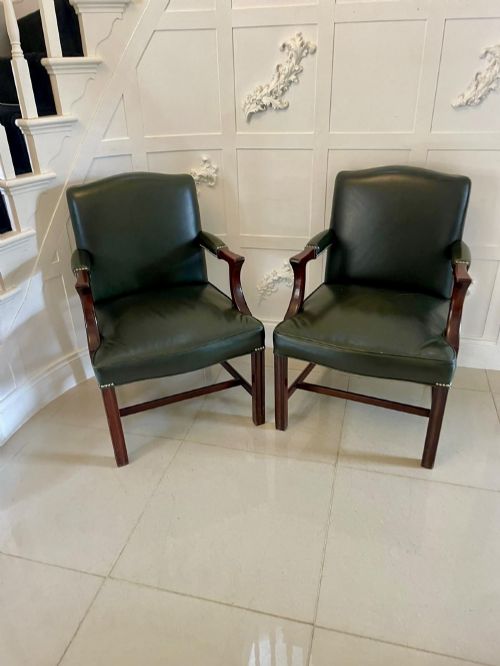
Stationary library armchairs and Gainsborough style seats were also common alternatives used at desks.
What leather is used on these chairs?
Upholstery typically consists of durable leather, frequently decorated with buttoning and brass nailhead trim. Shades of brown and green leather appear regularly across the seating.
The leather provides a hard-wearing surface suited to daily office and boardroom tasks.