


Antique European Tapestry
These antique european tapestry examples bring centuries of textile artistry into a room, offering rich visual history through woven wool, silk, and metal threads.
Antique European Tapestry
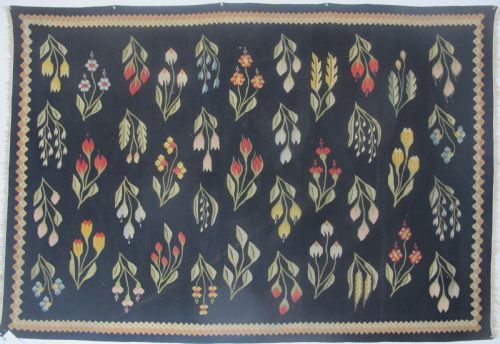
When you search for an antique european tapestry, you encounter a diverse group of textiles spanning several centuries of craftsmanship. The selection encompasses large wall hangings, framed silk and metal thread embroidery, North German cushions, and flat-woven Bessarabian kilims.
Pieces on this page originate from workshops across Europe, including French, Flemish, Dutch, German, Romanian, and Eastern European folk art traditions. Dating ranges from the sixteenth century through to the early twentieth century, incorporating styles such as French Baroque, Renaissance Revival, and verdure landscapes.
The most frequently met forms within these listings are Bessarabian kilims and wool wall panels. Buyers often choose these textiles to introduce texture, historic narrative, and traditional regional patterns into interior spaces.
Materials and construction
These textiles rely primarily on natural fibres such as wool, silk, cotton, and linen to form their intricate pictorial and geometric fields. Artisans combined these soft elements with metallic threads and metal threads to add glint and structural emphasis to specific design areas.
Gilded wood appears in the framing of certain textile pieces, complementing the woven surface. Weaving and needlework techniques varied by region, from the flat-woven structure of kilims to the dense needlework and tapestry looms of seventeenth-century Flanders and eighteenth-century France.
North German weavers occasionally turned their historic tapestry panels into comfortable cushions, letting people sit directly upon centuries of textile art.
Distinctions in quality
Quality in these textiles rests upon the fineness of the weave, the complexity of the design, and the survival of the original materials. Pieces incorporating silk and metal threads demand exceptional skill from the weaver, distinguishing them from simpler folk art constructions.
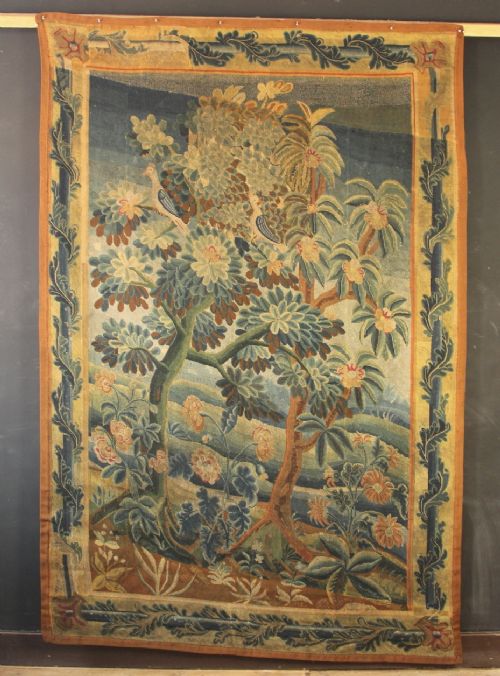
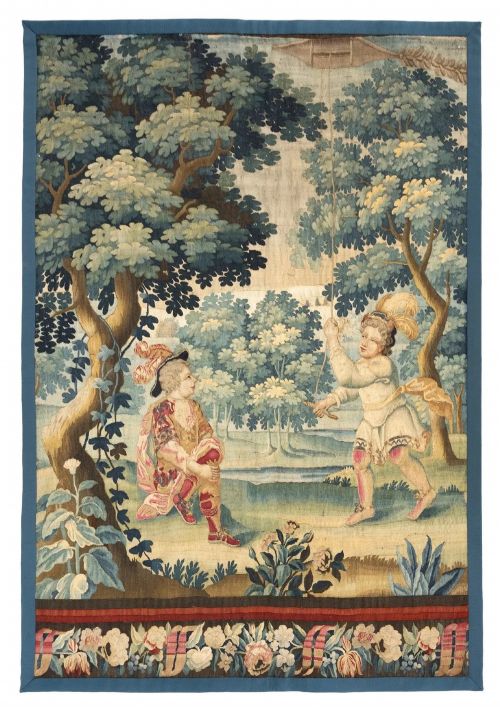
The integrity of the fibres and the clarity of the imagery also separate standard examples from superior works. Early Flemish verdure scenes or detailed needlework panels demonstrate a high degree of artistic execution that elevates their standing among collectors.
The Antique European Tapestry Glossary
- Kilim
- A flat-woven carpet or rug produced in regions including Bessarabia. These textiles lack a pile, relying instead on interlocking warp and weft threads to create flat geometric or floral patterns.
- Verdure
- A type of tapestry featuring a heavily wooded landscape as its primary subject. These scenes often incorporate foliage, trees, and occasional animals rendered in muted green and earthy tones.
- Needlework
- A textile decorated with hand-stitching applied to a ground fabric rather than woven on a loom. Eighteenth-century examples frequently utilise this method to achieve painterly detail.
- Metal thread
- A fine filament of gold, silver, or gilt metal wrapped around a core fibre. Used in embroidery and weaving to introduce reflective highlights.
- Warp
- The vertical threads held stationary on a loom before the weft is passed through. The density of the warp dictates the foundational structure of a woven tapestry.
Antique European Tapestry: Frequently Asked Questions
How do I hang a heavy tapestry?
Large woven panels require careful weight distribution across a supportive wooden batten or hidden metal bar. Sewing a heavy-duty fabric sleeve to the reverse top edge prevents undue strain on the historic fibres.
Avoid hanging textiles in direct sunlight or damp environments, as wool and silk are susceptible to fading and moisture damage over time.
What is a Bessarabian kilim?
A Bessarabian kilim is a flat-woven textile originating from the historical Bessarabia region in Eastern Europe. These pieces typically feature dark backgrounds adorned with naturalistic floral motifs.
Unlike Middle Eastern kilims, the European variants often display distinct floral sprays influenced by French design traditions.
How do I tell sixteenth-century work apart from later revivals?
Early pieces from the sixteenth or seventeenth centuries usually feature hand-spun wools, organic dye palettes, and narrative iconography typical of Flemish or German workshops. Renaissance Revival works from the nineteenth century often show machine-spun uniformity and different backings.
Examining the reverse side reveals knotting structures, dye penetration, and fibre preparation characteristic of specific historical eras.