

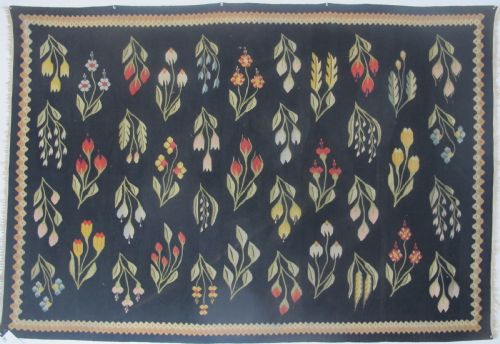
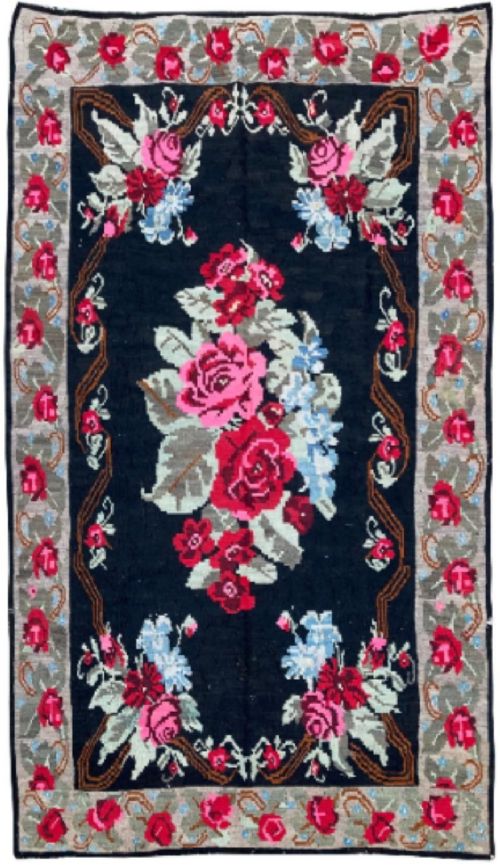


Antique European Rug
An antique european rug brings floor-bound warmth and folk history into a room, offering heavy wool weave and rich floral patterns.
Antique European Rug
An antique european rug encompasses flatwoven kilims and tapestries hailing from regions across the continent, particularly Eastern Europe and the Caucasus. When searching for an antique european rug, buyers encounter traditional regional styles such as Bessarabian, Ukrainian, Caucasian, and Balkan folk weaves.
The selections span the late nineteenth century through to the early decades of the twentieth century, bringing distinct regional motifs to floors and walls. Most examples recorded on this page take the form of floor rugs, kilim rugs, hallway runners, and occasional tapestry hangings.
How They Were Made
These textiles are built primarily from wool and cotton, utilising traditional hand-weaving and flatweave techniques passed down through generations. Artisans employed natural materials to construct durable floor coverings designed for daily domestic use.
Weavers utilised sturdy foundations of cotton or wool, working dense wool yarns into flat surfaces and floral tapestries. The structure relies on precise tension and hand-tied or flatwoven construction methods characteristic of regional folk traditions.
Antique European Rug Retail Price Guide 2026
Typical asking prices for european rug among the pieces listed under this phrase on Sellingantiques today, from the lower quarter to the upper quarter. They describe what is for sale here now, not the wider market.
Listed items span several decades from the 1870s through to the 1930s, capturing late nineteenth and early twentieth-century folk traditions.
What Varies in Quality
The standard of an antique european rug depends upon the tightness of the weave and the clarity of the regional design. Finer pieces demonstrate careful attention to composition, whether depicting dense floral arrangements or structured banded layouts.
Materials and dye preservation dictate the visual impact of each weaving, with certain wools holding richer depth over decades of use. The integrity of the original edges and the balance of the regional palette set superior examples apart from standard work.
The Antique European Rug Glossary
- Kilim
- A flatwoven textile produced without a pile, commonly utilised as a floor covering or wall hanging. These pieces rely on interlocking weft threads to form crisp geometric or floral patterns.
- Bessarabian
- A regional style originating from historical Bessarabia, known for dark grounds and naturalistic floral motifs. These rugs often display striking roses and scrolling foliage.
- Runner
- A long, narrow carpet format designed specifically for hallways and corridors. Such pieces accommodate restricted spaces while displaying continuous border and field patterns.
- Tapestry
- A heavy woven textile featuring pictorial or floral designs created by hand on a vertical loom. Unlike standard pile carpets, these function as dense decorative panels.
Antique European Rug: Frequently Asked Questions
Where were these rugs made?
The pieces originate across Eastern and southeastern Europe, including regions such as Bessarabia, Ukraine, the Caucasus, and the Balkans.
Local workshops and village weavers produced these textiles using native wool and traditional regional motifs.
How do I care for an antique rug?
Protect the weave by placing a breathable underlay beneath the textile on hard floors. Regular gentle vacuuming without a rotating brush roll helps remove embedded dust.
Professional cleaning tailored for flatwoven wool textiles preserves the integrity of the natural fibres. Avoid exposing older dyes to direct, prolonged sunlight.
What is the difference between a kilim and a standard rug?
A kilim is constructed as a flatweave textile without any raised pile surface. This technique produces a lighter, thinner covering that lies flat upon the floor.
Traditional pile carpets feature vertical tufts of wool knotted onto a foundation warp and weft. Kilims instead rely on visible interlocked weft threads to create their patterns.
How are periods determined for these textiles?
Dating relies upon stylistic markers, regional weaving characteristics, and structural materials recorded across comparable examples. Natural dye palettes and specific floral compositions offer key clues to the era of production.
Most surviving pieces date from the late nineteenth century through to the early twentieth century.