


Antique Etagere Shelves
Antique etagere shelves bring tiered display space into a room, offering open platforms for books and decorative objects.
Antique Etagere Shelves
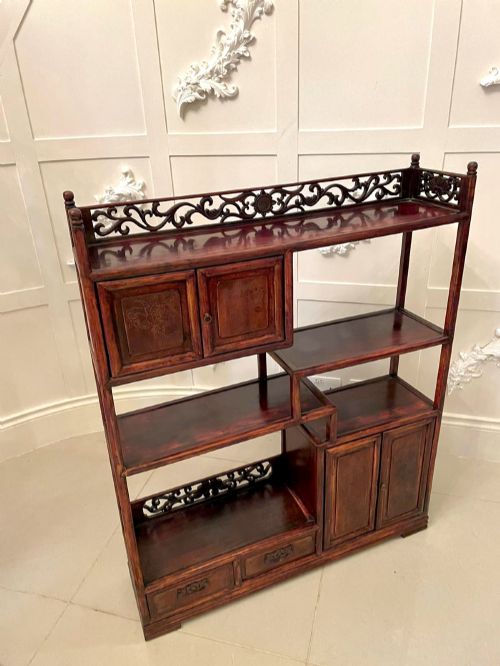
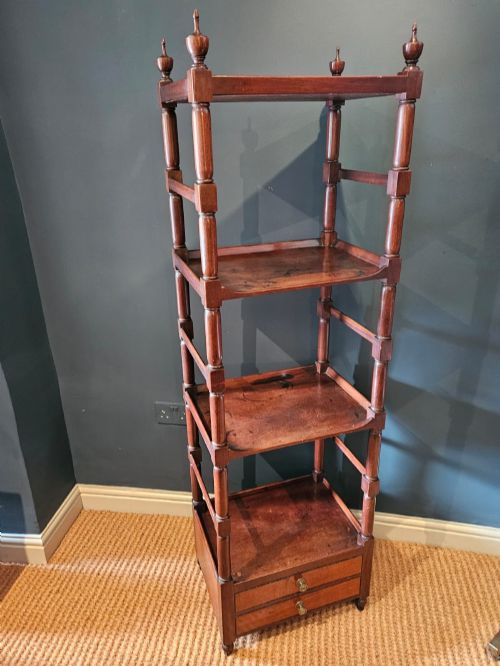
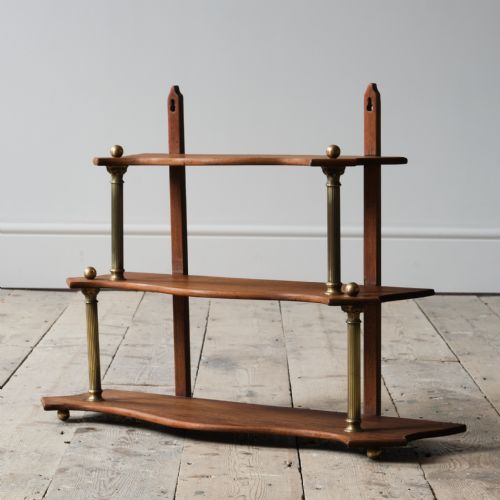
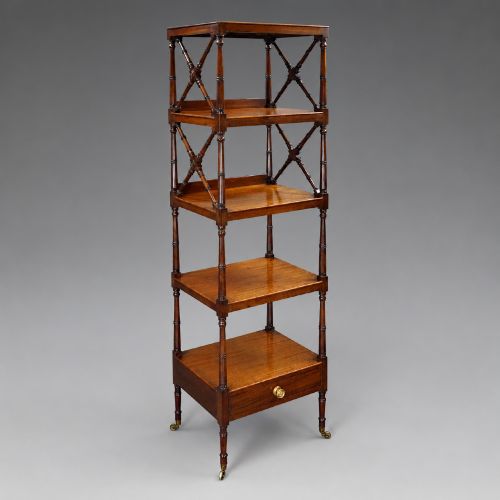
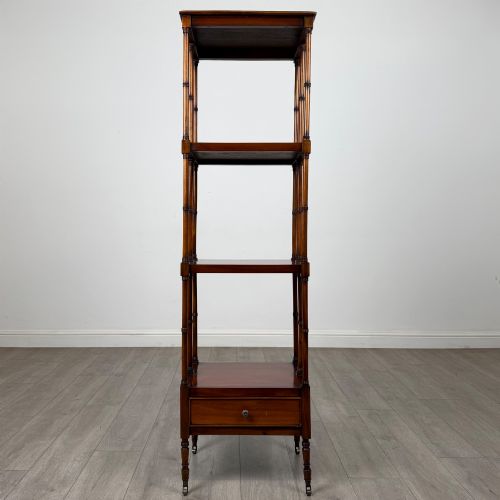
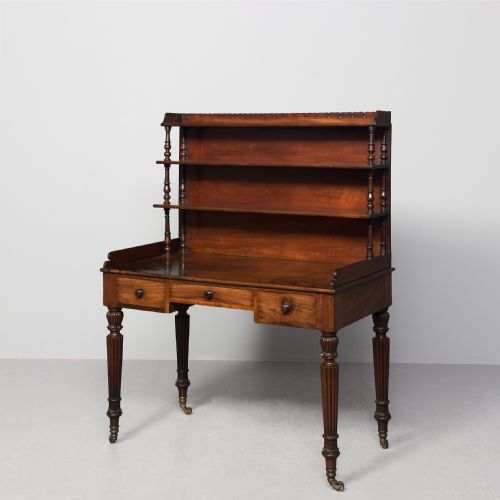
Antique etagere shelves comprise multi-tiered open furniture designed for displaying ornaments, books, and small possessions across various levels. When searching for antique etagere shelves, buyers encounter tiered pieces ranging from compact corner units to large multi-shelf bookcases.
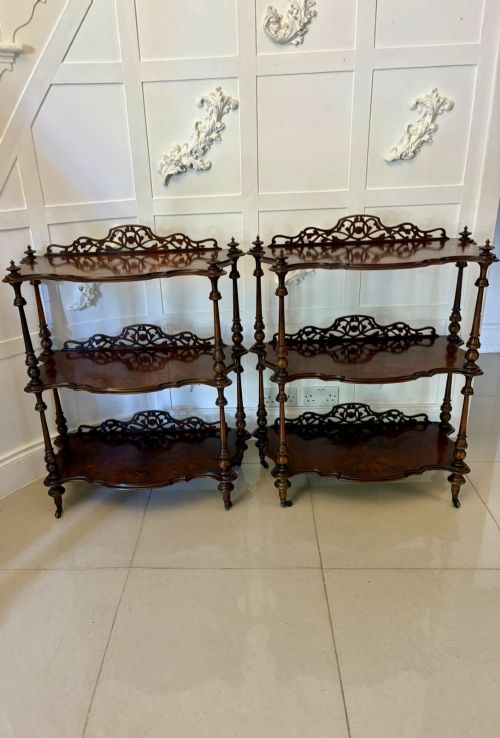
The selections span the Regency, Victorian, and Edwardian eras, alongside George III pieces. Buyers most commonly meet Victorian mahogany and walnut examples featuring three or four tiers.
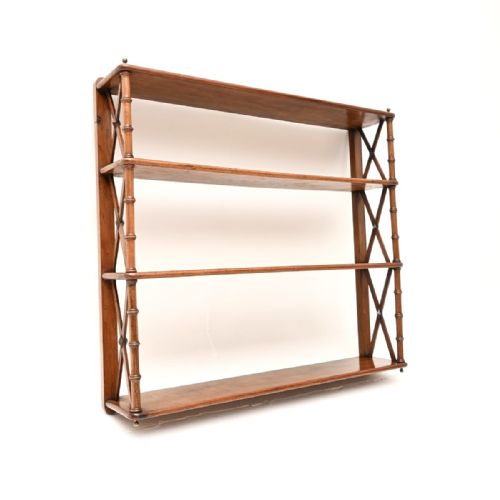
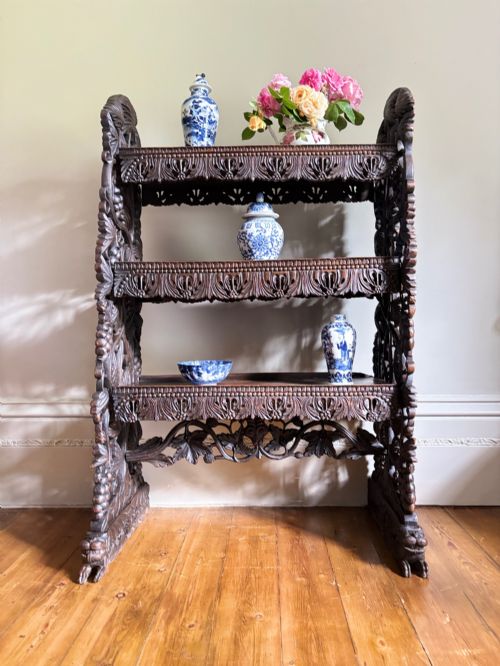
Makers and cabinetmakers produced these display stands in forms including wall-hanging shelves, corner units, and freestanding bookcases. The inventory includes specialised items such as music stands, side tables, and trolley formats.
How they were made
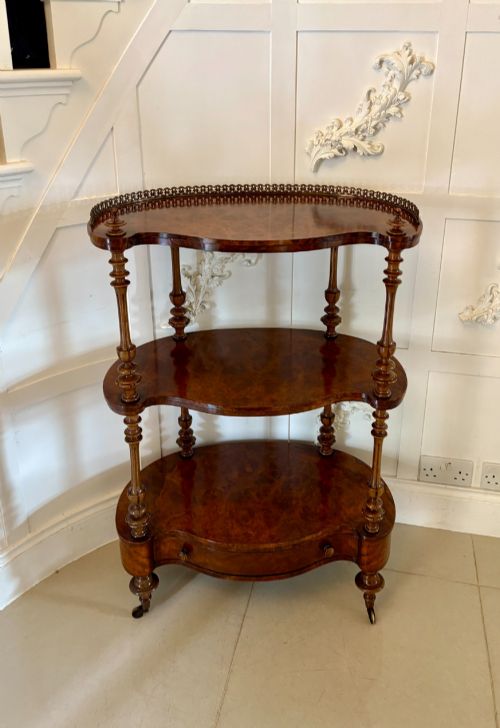
Cabinetmakers constructed these tiered pieces primarily from dense timbers like mahogany, walnut, rosewood, and burr walnut, often utilising ebonised wood for specific aesthetic effects. Selection of high-grade wood veneers provided rich grain patterns across the visible shelf surfaces and upright supports.
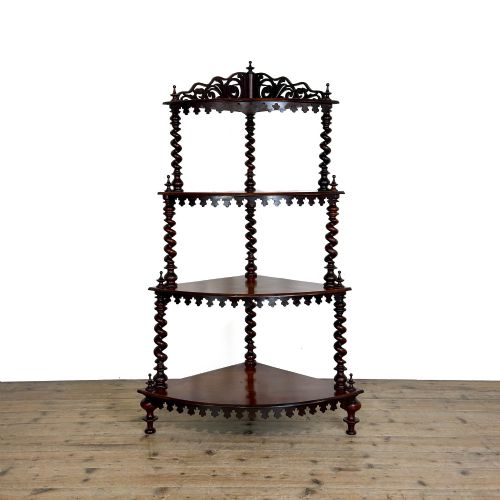
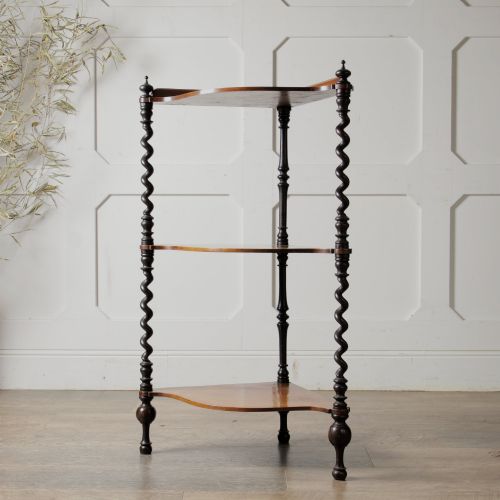
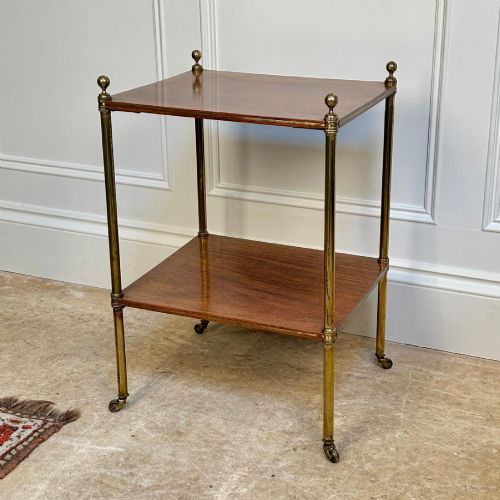
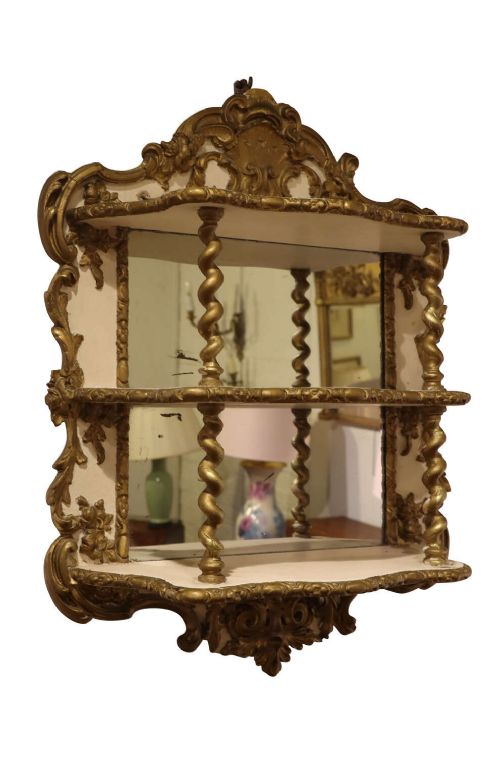
Makers integrated brass fixtures, metal components, and glass elements to reinforce structural tiers and adorn display surfaces. Turned legs, barley twist supports, and parcel gilding added ornamental detail to the framework of the shelving units.
Styles represented on the site span George III, Regency, Victorian, Anglo-Indian, Japonisme, and Victorian Chinoiserie.
What varies in quality
The standard of timber selection and veneer matching defines the upper tier of these pieces, where burr walnut or figured mahogany displays exceptional grain depth. Superior examples demonstrate precise joinery in the tiered platforms and sturdy upright supports without structural wobble.
Refined decorative details such as parquetry inlay, carved turning, and original brass hardware distinguish finer workshops from standard production. The overall proportion and balance of the stacked tiers govern the visual success of the piece.
Gabriel Viardot·James Mein of Kelso·Gillows
The Antique Etagere Shelves Glossary
- Etagere
- A piece of furniture consisting of a set of open shelves for displaying small objects. The form originated in France and gained popularity during the nineteenth century.
- Whatnot
- A tiered open shelving unit used for displaying ornaments or books. It developed in the eighteenth century and remained a staple through the Victorian period.
- Burr walnut
- Wood taken from a walnut tree outgrowth, producing intricate, swirling grain patterns. Cabinetmakers utilised veneers of this material on high-status Victorian furniture.
- Barley twist
- A type of turned wooden column resembling a twisted rope. This decorative feature appears frequently on Victorian shelf supports.
- Parcel gilded
- Partially coated or decorated with gold leaf. This technique highlights carved details and mouldings on ebonised or mahogany frames.
Antique Etagere Shelves: Frequently Asked Questions
What is an etagere?
An etagere is a freestanding piece of furniture composed of multiple open tiers designed for holding decorative items or books.
Originating in France, these tiered display stands provide accessible surface area across several vertical levels.
How were whatnot shelves used?
Nineteenth-century households utilised whatnots in reception rooms and parlours to display porcelain, silver, and collection pieces.
The open design allowed ornaments to remain visible from multiple angles within a furnished interior.
Where should I place a corner shelf?
Corner shelves fit into unused room angles to maximise display capacity without obstructing floor space.
These pieces suit smaller rooms or tight wall junctions where a standard rectangular bookcase would prove too bulky.
How do I identify a Victorian piece?
Victorian etageres typically feature dense timbers such as mahogany or burr walnut, often with turned supports or barley twist columns.
The construction methods and decorative flourishes reflect the design preferences of the nineteenth century.