



Antique Equestrian Watercolours
These antique equestrian watercolours capture horses, hunts and coaching scenes on paper through the nineteenth and early twentieth centuries.
Antique Equestrian Watercolours
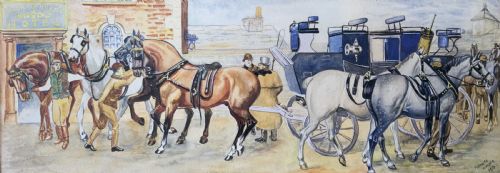
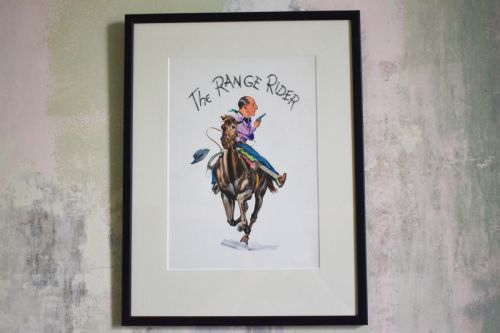
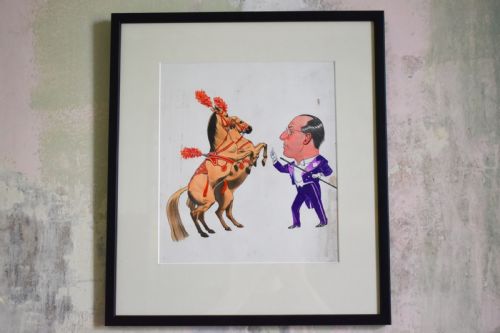
These works depict horses, hunts, coaching scenes and military subjects rendered in pigment on paper. When browsing this selection, collectors meet pieces ranging from Victorian monochrome hunt scenes to Edwardian sporting illustrations.
The assortment spans diverse British and continental depictions, including framed artwork from the nineteenth century and early twentieth century. Common subjects feature hounds, stable yards, horse fairs and mounted soldiers.
Framed watercolours on paper dominate the listings, often housed beneath glass in period oak frames. Many bear signatures or attributions to notable sporting artists of the period.
How they were made
Artists applied watercolour pigment and ink directly onto paper sheets, sometimes combining gouache for opaque highlights. Works were then mounted behind glass to protect the delicate water-soluble pigments from moisture and fading.
Finished paintings were secured inside timber surrounds, frequently utilising oak frames that complement the rustic or sporting subject matter. The paper support itself varies in weight, from sketch sheets to heavier watercolour paper.
Look closely for the stray whiskers and muddy hooves captured by artists who clearly knew their horses.
What varies in quality
The skill of the draughtsman dictates the anatomical precision of the horses and the dynamism of the composition. Stronger examples display confident brushwork and accurate perspective in complex multi-figure hunt or military scenes.
Condition of the paper and pigment vibrancy separate standard items from superior pieces. Works preserved well away from damp retain crisp ink lines and bright watercolour tones without fading.
Herman S Melville·Basil Nightingale·John Augustus Atkinson·Helena Maguire·Thomas Mackay·Adrian Jones·Charles Clifford Turner·John Sanderson Wells·Snaffles·Tom Carr·Thomas Ivester Lloyd·Charles Johnson Payne·William J Hodgson·Henry Charles Fox·Johan Noah Bemmel·George Cattermole·Frank Dadd·Charles James Adams·George Soper
The Antique Equestrian Watercolours Glossary
- Watercolour pigment
- Finely ground colour particles mixed with a water-soluble binder. This medium allows for transparent washes and delicate layering on paper.
- Gouache
- An opaque water-based paint often used alongside watercolour to add solid highlights. It provides greater coverage and density than standard watercolour pigment.
- British Sporting Art
- A genre focusing on horses, hounds, shooting and hunting. This tradition produced detailed records of rural pursuits and equine portraiture.
- Monochrome
- A colour scheme based on a single hue or tint. In these listings, such works typically rely on dark inks or grey washes on paper.
- Provenance
- The documented history or origin of a piece. It traces ownership and attribution back to the artist or studio.
Antique Equestrian Watercolours: Frequently Asked Questions
How should I hang antique watercolours?
Keep framed pieces out of direct sunlight to prevent the watercolour pigments from fading over time. Direct heat sources from fireplaces and damp walls should also be avoided.
Ensure the oak frame is securely hung from proper wall fixings. Glass protection helps shield the delicate paper surface from dust and household humidity.
What subjects appear in these paintings?
The works predominantly feature horses, foxhunting fields, coaching inns and agricultural scenes with plough teams. Military subjects involving cavalry regiments also feature.
Artists captured everyday rural life alongside formal portraits of hunters and hounds. Many pieces document specific regional races and horse fairs.
How do I date these watercolours?
Dates are often indicated by artist signatures, period framing styles and costume details depicted in the scene. Victorian and Edwardian clothing styles offer clear chronological markers.
Many pieces carry inscriptions, artist dates or gallery labels on the reverse. Stylistic shifts between nineteenth-century academic work and early twentieth-century illustration provide further clues.
Are these works original paintings?
The selection consists of original hand-painted watercolours and drawings rather than mass-produced prints. Each piece represents a unique application of pigment to paper by the artist.
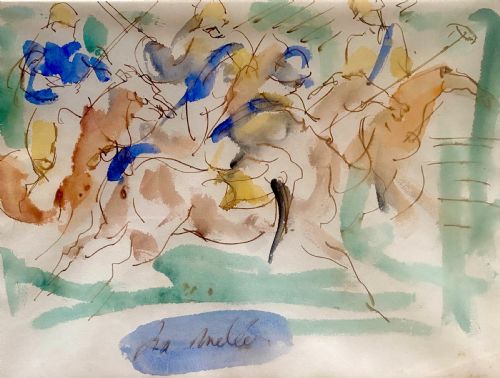
Brushstrokes and pigment pooling are visible under close inspection. Signatures and preliminary pencil underdrawings confirm their status as unique artworks.