



Antique Epergne Centrepiece
An antique epergne centrepiece brings multi-tiered glass trumpets and elaborate metal stands to the dining table for dramatic floral displays.
Antique Epergne Centrepiece
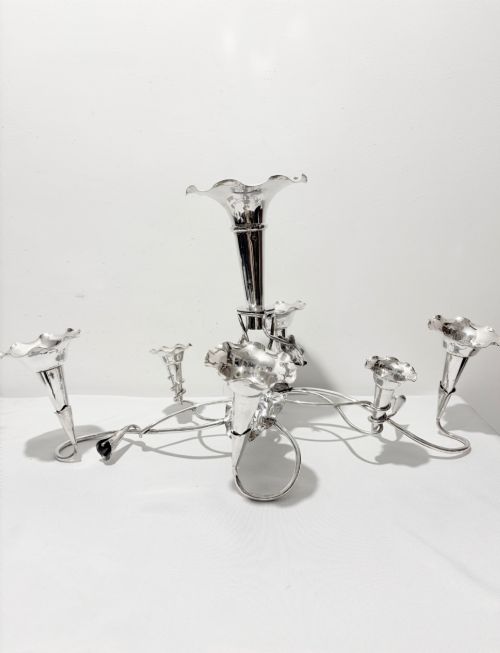
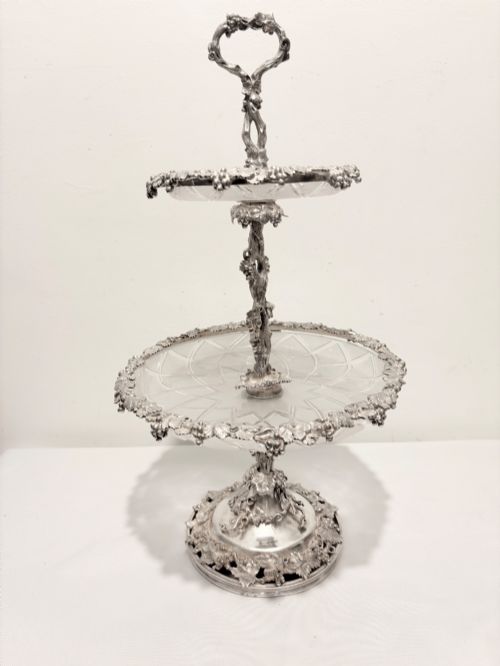
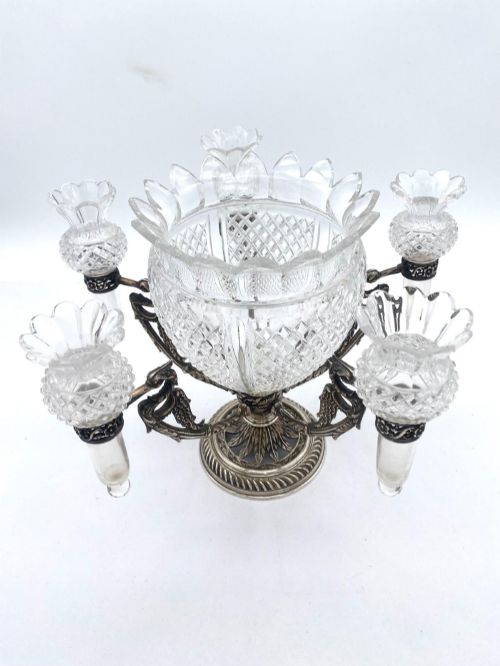
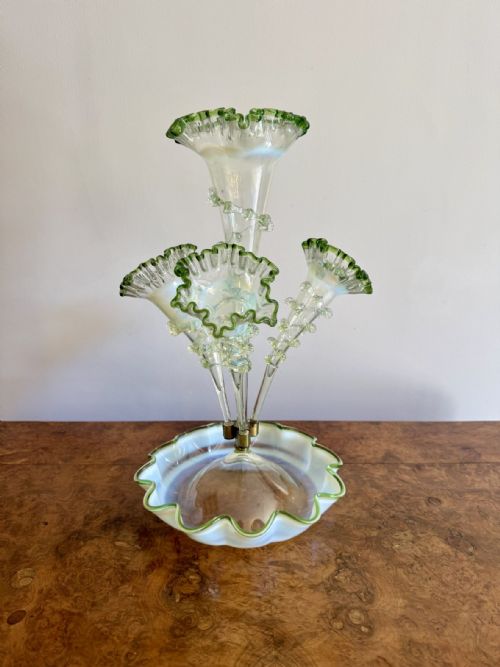
An antique epergne centrepiece is a multi-vased dining table ornament designed to hold flowers, fruit or sweetmeats across a central bowl and several detachable trumpets. The examples found here span the Victorian, Edwardian and Art Deco periods, drawing on English, French and German workshops.
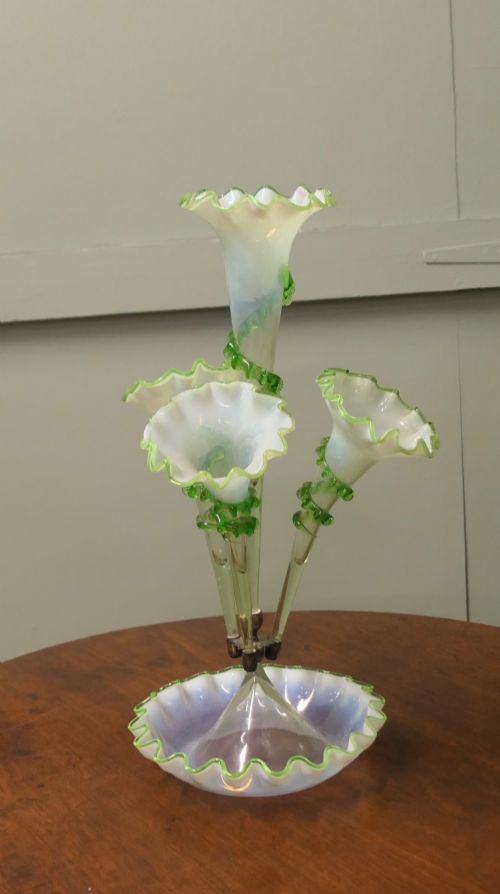
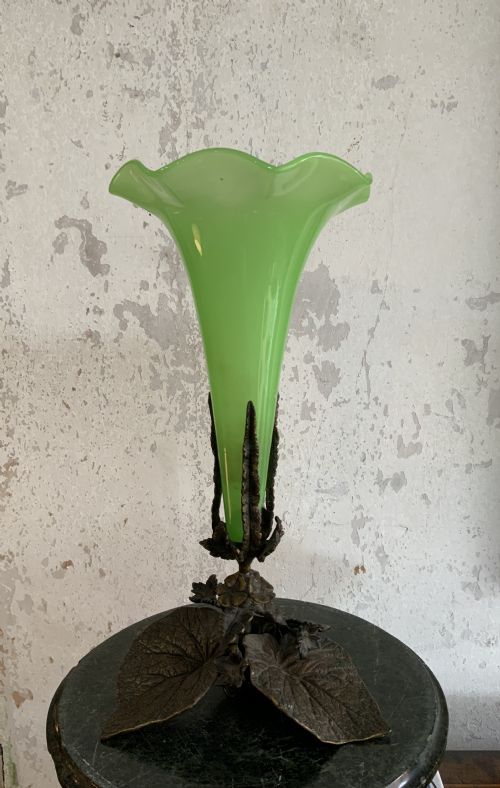
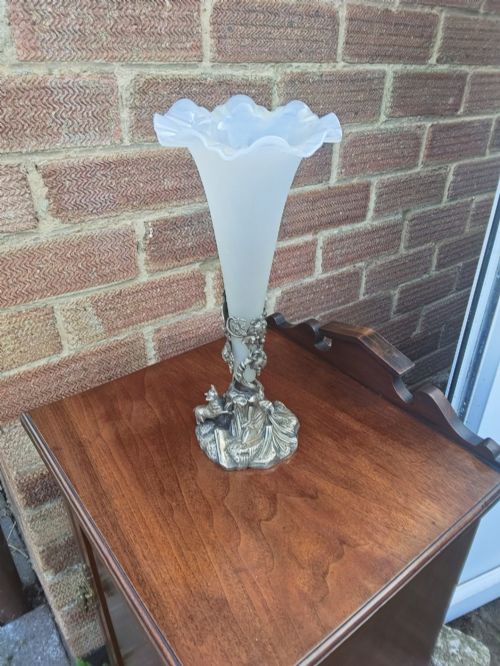
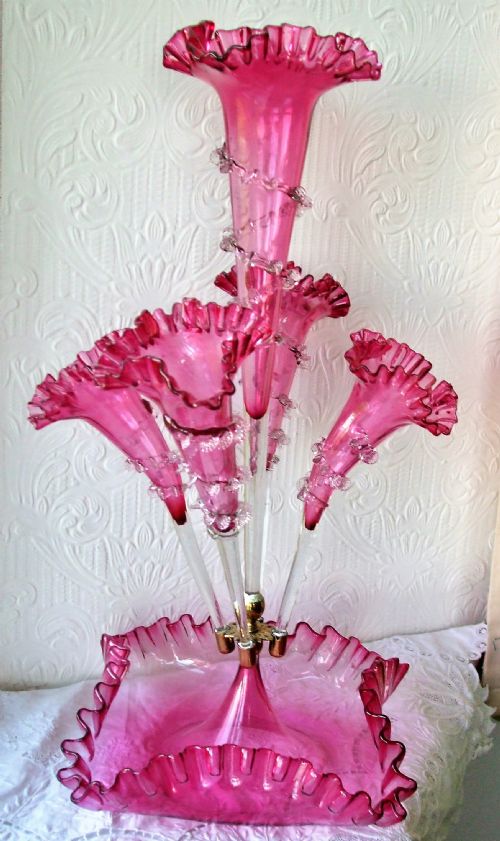
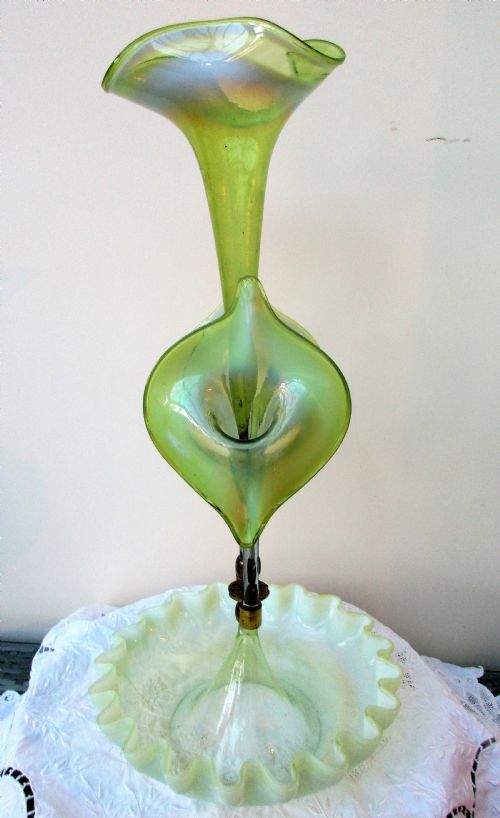
The most common type met on this page pairs a silver plated or brass base with vibrantly coloured glass components. Cranberry glass, vaseline glass, and cut crystal dominate the forms, ranging from single trumpet vases to elaborate five-trumpet configurations with hanging baskets.
Distinguishing quality
Quality rests in the weight and clarity of the glass, the crispness of the metal casting, and whether the set remains entirely original. Heavier gauge silver plate and deep, even colouration in the glass distinguish superior pieces from standard production.
Complete sets with matching trumpets, undamaged rims, and fully articulated branch mounts command greater regard than pieces with replaced components or mismatched glass inserts.
Antique Epergne Centrepiece Retail Price Guide 2026
Typical asking prices for epergne centrepiece among the pieces listed under this phrase on Sellingantiques today, from the lower quarter to the upper quarter. They describe what is for sale here now, not the wider market.
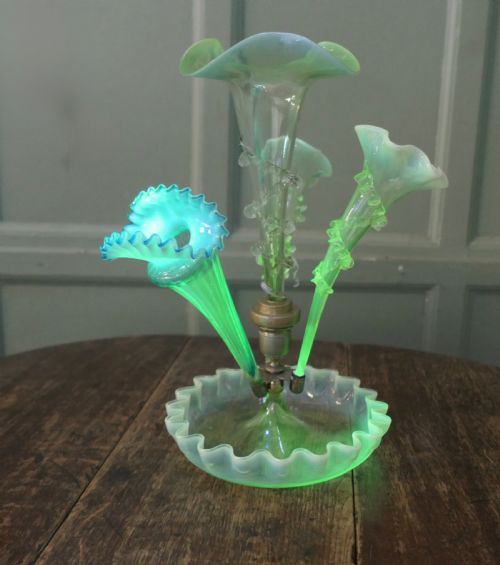
Some Victorian glass trumpets glow an unexpected neon green when evening lamps catch their hidden uranium content.
Walker & Hall·James Deakin·James Dixon & Sons·Royal Worcester
The Antique Epergne Centrepiece Glossary
- Epergne
- A large table centrepiece featuring multiple detachable arms or trumpets for holding fruit, flowers or sweetmeats. This form dominated formal dining tables throughout the nineteenth century.
- Cranberry glass
- A rich red-pink glass created by adding gold chloride to the molten batch. It is widely seen in Victorian table ornaments.
- Uranium glass
- A yellowish-green glass containing trace amounts of uranium oxide that glows brightly under ultraviolet light. Victorian and Edwardian makers utilised it extensively for decorative tablewares.
- Silver plate
- A layer of pure silver bonded to a base metal such as copper, brass or white metal. Many nineteenth-century tablewares rely on this technique for durability.
- Baccarat crystal
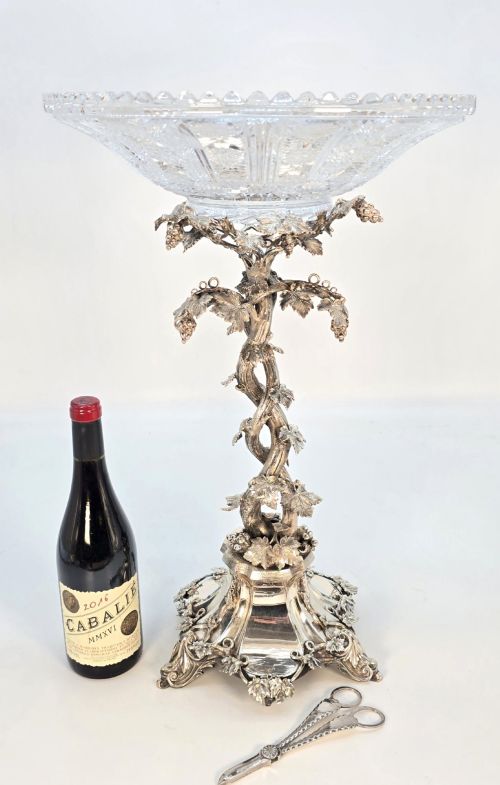
- High-clarity lead crystal produced by the French glassworks. It frequently appears mounted in bronze or silver frames on large centrepieces.
Antique Epergne Centrepiece: Frequently Asked Questions
Were these pieces used for food or flowers?
Victorian households utilised these centrepieces for both floral arrangements and serving small sweetmeats, fruit or confectionery. The hanging baskets and side dishes held dry goods while water filled the central bowls for fresh stems.
Today, owners primarily display them as decorative table ornaments with seasonal flowers or foliage. The detachable trumpets make arranging stems straightforward.
How can I date an epergne centrepiece?
Examine the metal mounts for maker marks, hallmarks, and registration numbers that indicate specific production years. The presence of vibrant cranberry or vaseline glass typically points to Victorian manufacture.
Art Nouveau and Edwardian examples feature whiplash curves or lighter pierced silver frames. Simpler geometric lines and moulded French glass indicate later Art Deco origins.
Are the glass trumpets original to the base?
Check the fit of each trumpet inside its metal collar and inspect the hue and thickness of the glass across all sections. Original glass pieces share identical manufacturing quirks, bubbling, and exact colour density.
Mismatched replacements often sit loosely in the sockets or show slight variations in tint and weight.