


Antique Entryway Mirror
An antique entryway mirror welcomes visitors into a hall, combining practical glass with timber, brass and iron to set the tone of a period home.
Antique Entryway Mirror
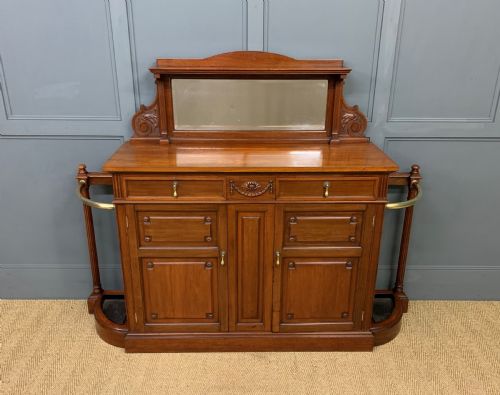
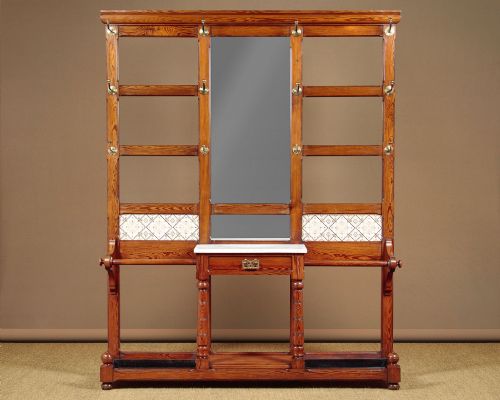
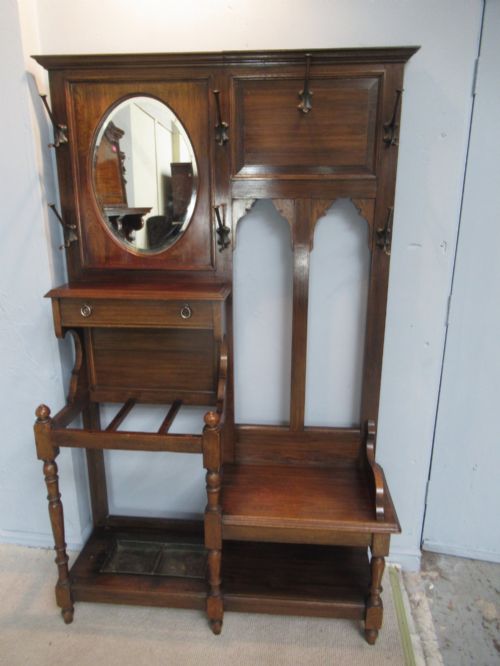
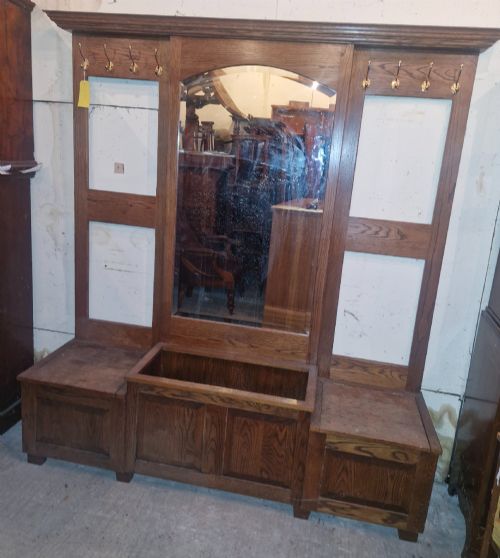
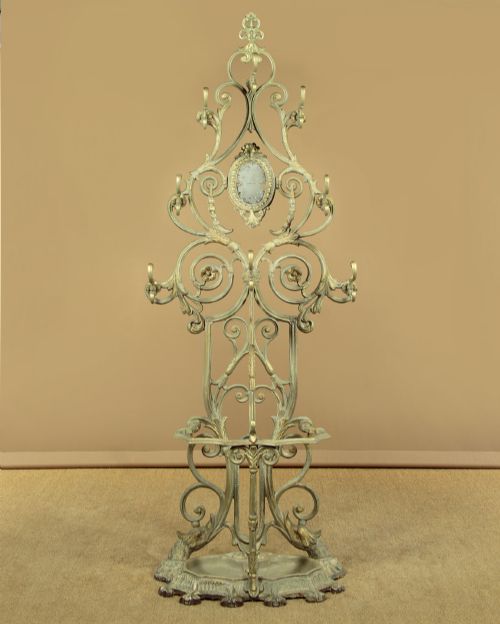
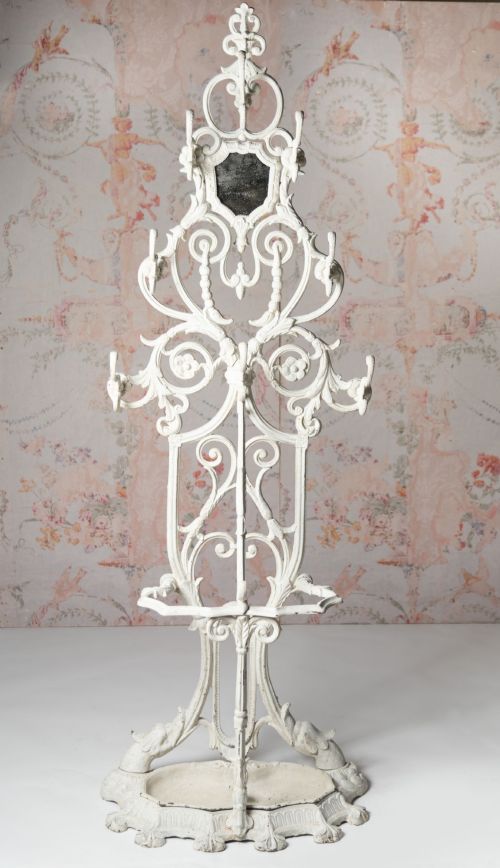
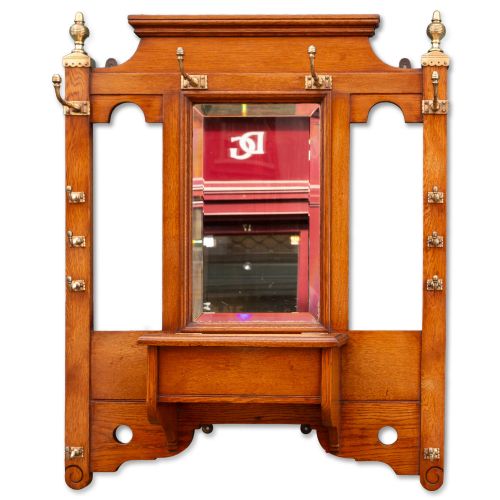
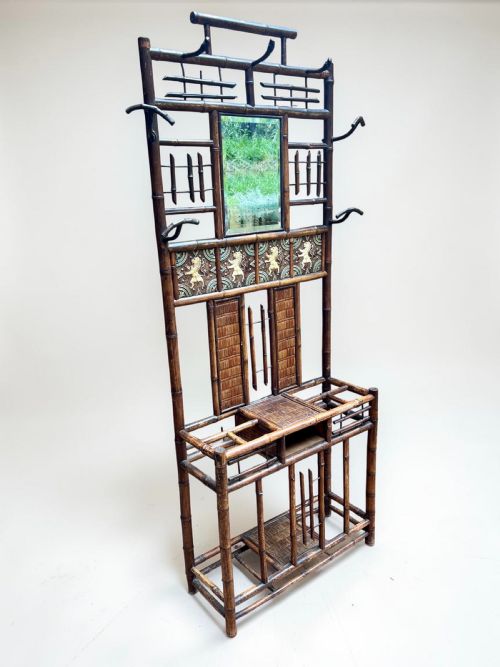
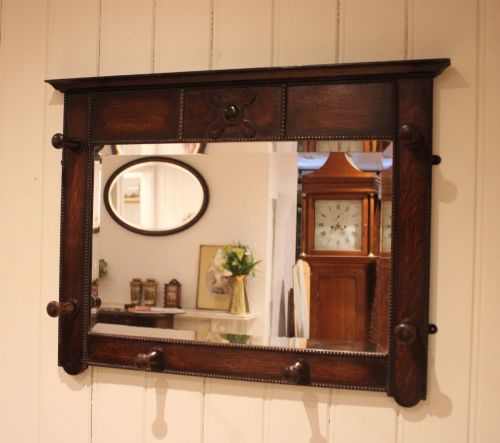
An antique entryway mirror serves the dual purpose of checking one's appearance before leaving the house while brightening a narrow hall. These pieces appear across this page primarily as wall-mounted mirrors with integrated coat hooks, or as part of larger hall stands featuring umbrella storage and console elements.
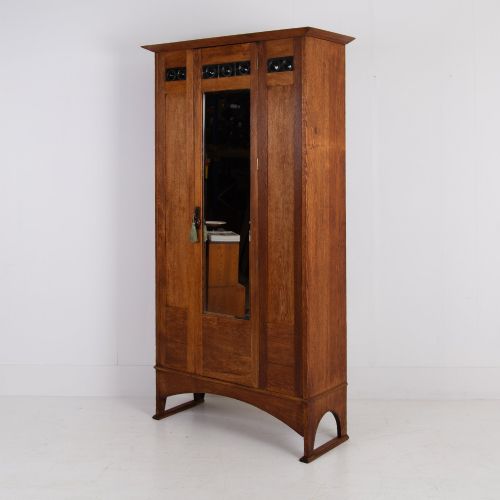
The selection draws heavily from the Victorian and Edwardian eras, alongside Arts and Crafts and Aesthetic Movement designs. Oak, mahogany and walnut dominate the timber frames, frequently accompanied by cast iron or brass fittings.
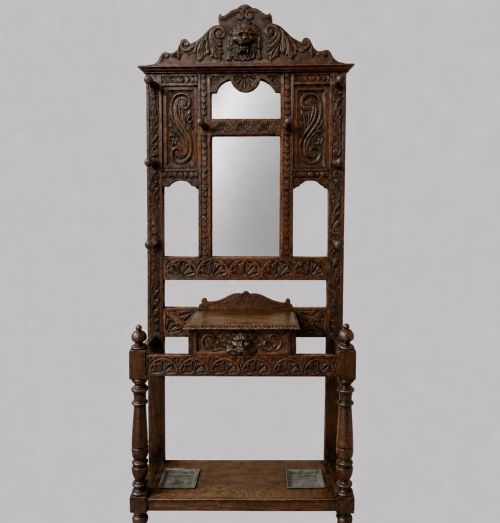
Makers and designers of these utilitarian objects ranged from large firms like Shoolbred and Co. to makers of bentwood such as Fischel. Simpler wall-hanging variants sit alongside monumental carved oak pieces featuring coat hooks and marble surfaces.
What varies in quality
The standard of carving and timber selection dictates the hierarchy of these pieces, moving from utilitarian pine and standard oak to richly figured walnut and mahogany. Finer examples display crisp detail in classical motifs or distinctive stylistic markers associated with designers like Christopher Dresser.
Structural integrity also separates standard hall furniture from exceptional work, particularly where heavy mirror glass, marble slabs and numerous coat hooks place continuous strain on the joints and wall fixings.
Listings feature oak, mahogany, walnut, and pine, demonstrating the dominance of native and imported hardwoods in entrance hall furniture.
Shoolbred and Co.·Gillingtons of Dublin·Christopher Dresser·Fischel
The Antique Entryway Mirror Glossary
- Hallstand
- A multi-functional piece of hallway furniture combining a mirror, coat hooks, umbrella wells, and frequently a small seat or console shelf. These items formed the central storage hub of a nineteenth-century entrance hall.
- Console Table
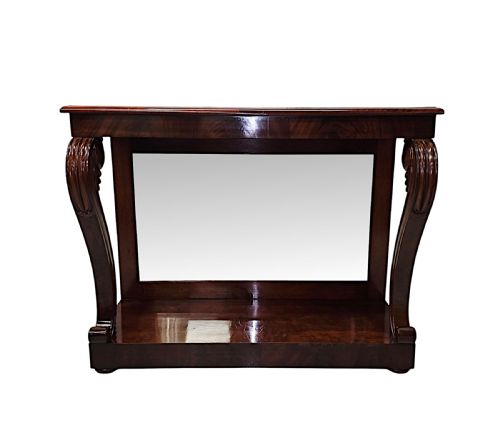
- A table designed to stand flat against a wall, often featuring a marble top and sometimes paired with an inset mirror back. They offer a narrow surface for keys and correspondence in compact spaces.
- Aesthetic Movement
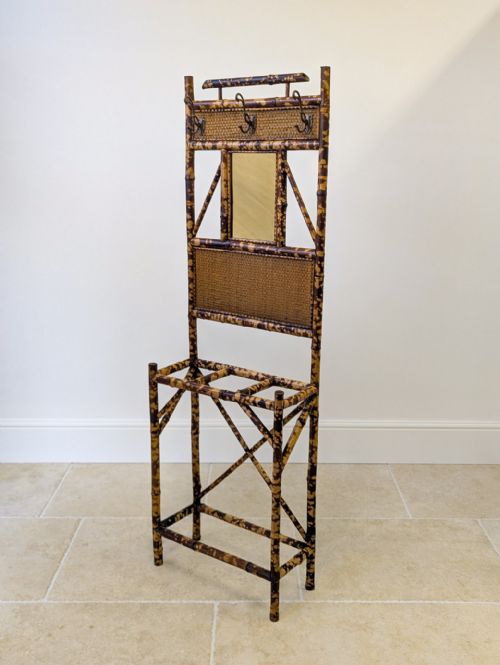
- A late nineteenth-century design style focusing on visual beauty rather than narrative meaning, frequently incorporating bamboo structures and stylized floral motifs. Pieces from this movement prioritize artistic form over orthodox historical revival.
- Faux Bamboo
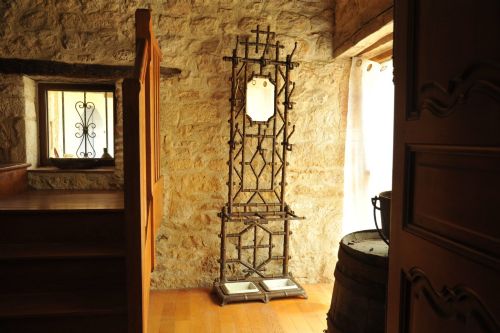
- Wood or cast iron carved, turned, or moulded to imitate the segmented stalks of natural bamboo. This decorative technique became particularly popular in French and Victorian hall stands.
- Bentwood
- Wood softened by steam and bent into curved structural shapes, championed by manufacturers like Fischel. It allowed for lightweight yet durable frames in hallway coat racks and stands.
Antique Entryway Mirror: Frequently Asked Questions
What is a last look mirror?
A last look mirror is a small wall-hanging glass positioned near a front door for a final check before stepping outside. They often include a small shelf for gloves or calling cards.
These compact mirrors date predominantly from the Edwardian period and reflect the practical needs of the domestic hallway.
How do I secure a heavy hall mirror?
Large wooden frames and cast iron stands require fixing directly into solid masonry or substantial wall studs. The weight of the integrated mirror glass and timber necessitates robust brackets.
Professional installation prevents the piece from shifting when coats and hats are loaded onto the surrounding hooks.
Did all hall stands include mirrors?
While the majority of Victorian and Edwardian hall stands incorporate a central mirror plate, simpler versions relied purely on rows of brass or iron coat hooks. Mirrors were added to reflect light into dark entranceways and assist with outerwear.
Pieces designed specifically as umbrella stands or basic coat racks often omitted glass entirely.
How do I clean an antique mirror plate?
Historic mirror plates require gentle cleaning with a soft microfibre cloth and mild, non-ammonia glass cleaner applied to the cloth rather than the glass. Avoid spraying liquid directly onto the edges where moisture can seep behind the silvering.
Original mercury or early silvered glass develops natural foxing and speckling over time, which forms part of the authentic character.