




Antique Entomology Chest
An antique entomology chest is a disciplined piece of scientific furniture built to safeguard delicate specimens through precise drawer construction.
Antique Entomology Chest
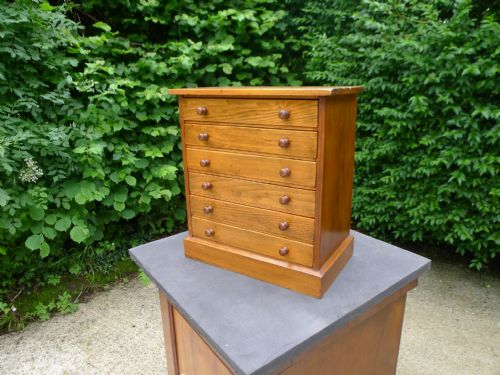
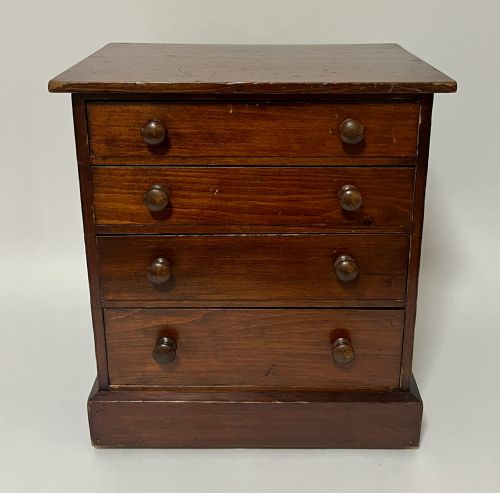
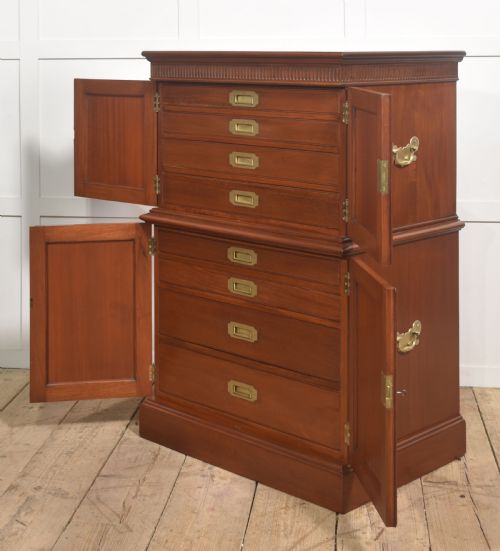
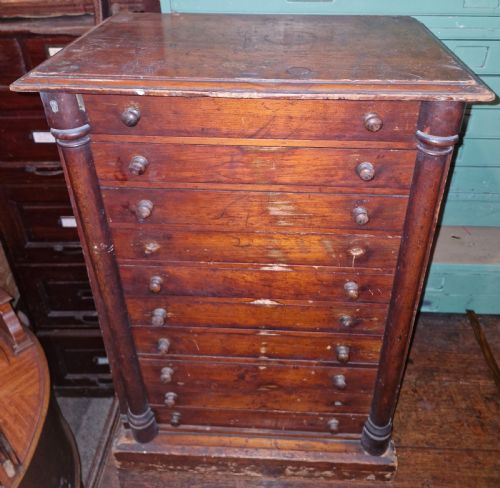
An antique entomology chest serves primarily as a secure housing for natural history specimens, ranging from butterflies to botanical samples, organised across multiple shallow drawers. Buyers seeking an antique entomology chest will encounter forms varying from compact table-top cases with half a dozen drawers to monumental pieces holding forty or more tiers. The pieces appearing here span the Georgian, Victorian, and Edwardian periods, reflecting the height of amateur and professional natural history collecting in Britain.
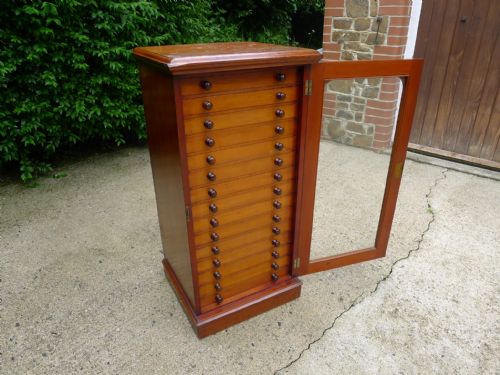
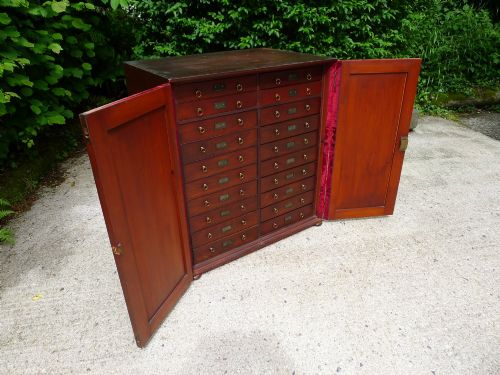
Most examples rely on dense timbers such as mahogany, walnut, or oak to prevent warping and protect the contents from environmental changes. Interiors typically feature glazed panel doors and closely fitted glass-topped drawers that slide smoothly on runners to preserve the fragile paper-lined floors within. Brass drop handles, flush campaign mounts, and matching locking mechanisms are standard fittings designed for functional utility and security.
Materials and Construction Methods
Makers constructed these cabinets using solid timbers and select veneers like flame mahogany, burr walnut, and satin birch over secondary woods such as pine and deal. The drawers demand exceptional joinery, utilising fine dovetailing and precise interior framing to ensure complete airtightness against insect pests.
Glass panels are fitted into panelled doors and individual drawer frames, allowing examination without exposing delicate specimens to air movement or handling. Brass hardware, from recessed campaign handles to secure locks with original keys, anchors the heavy timber frames.
Drawer counts range widely across the inventory, from compact five-drawer specimens to large architectural units containing forty drawers.
Distinctions in Quality
The distinction between a standard cabinet and an exceptional one lies in the scale of the piece, the choice of timbers, and the attribution to a known specialist maker. Cabinets featuring upwards of thirty or forty drawers in figured mahogany or burr walnut indicate high-tier workshop production commissioned by serious naturalists.
Execution of the internal drawer fit dictates practical utility, where uniform drawer movement and original glazed frames elevate a piece above utilitarian storage chests. Provenance linked to notable historical collectors or documented makers adds considerable weight to the evaluation of an individual cabinet.
Watkins & Doncaster·Brady of Edmonton·Charles William Schofield·J.T. Crockett
The Antique Entomology Chest Glossary
- Specimen cabinet
- A purpose-built piece of furniture with numerous shallow drawers designed to hold natural history collections. These units protect fragile items from light, dust, and pests.
- Deal
- A softwood timber, typically pine or fir, commonly used for the secondary framing and internal carcass work of 19th-century cabinets. It provides a stable, lightweight structure behind finer exterior veneers.
- Pitch pine
- A durable, resinous softwood with a prominent grain pattern utilised by cabinet makers during the Victorian era. It offers robust strength for large multi-drawer storage units.
- Flame mahogany
- A veneer cut from the fork of the mahogany tree, displaying a distinctive flamy or plume-like figure. Cabinet makers selected this decorative wood for the primary facades of high-status furniture.
- Dovetail
- A traditional wood joint interlocking wedge-shaped fingers, prized for its tensile strength in drawer construction. This joint prevents the drawer corners from pulling apart under repeated use.
Antique Entomology Chest: Frequently Asked Questions
What were antique entomology chests used for?
These cabinets housed scientific collections of insects, eggs, and botanical specimens gathered during the 18th and 19th centuries. Naturalists relied on the dust-proof drawers to preserve fragile specimens for study and display.
Today, the secure internal environment and shallow drawers make these cabinets adaptable for organising small collectables, jewellery, or flat artwork in a domestic setting.
How do I date an antique entomology chest?
Dating relies on observing timber choices, construction techniques, and hardware styles across the Georgian, Victorian, and Edwardian eras. Earlier pieces from the late 18th century often feature Cuban mahogany and hand-cut dovetails, while later Victorian examples introduce pitch pine and varied satinwood accents.
Maker stamps, paper trade labels pasted inside drawer runs, and cabinet maker signatures provide direct chronological markers. Structural clues, such as the transition from solid secondary woods to machine-planed veneers, further narrow down the period of manufacture.
Are the drawers interchangeable?
Drawer entomology drawers are individually fitted to specific cabinet slots during original construction to maintain an airtight seal against pests. Swapping drawers between different cabinets or even rearranging tiers within the same carcass often results in uneven gaps.
Keeping each drawer in its designated position ensures proper sliding action and preserves the historical integrity of the piece.
How should I maintain the wood and glass?
Maintenance involves dusting timber surfaces with a soft, dry cloth and applying microcrystalline wax sparingly to nourish dry wood. Avoid liquid polishes and keep the cabinet away from direct sunlight and heat sources to prevent timber splitting.
Glass panels require gentle cleaning with standard glass cleaner applied to a cloth rather than sprayed directly, protecting the surrounding timber and internal paper linings.