
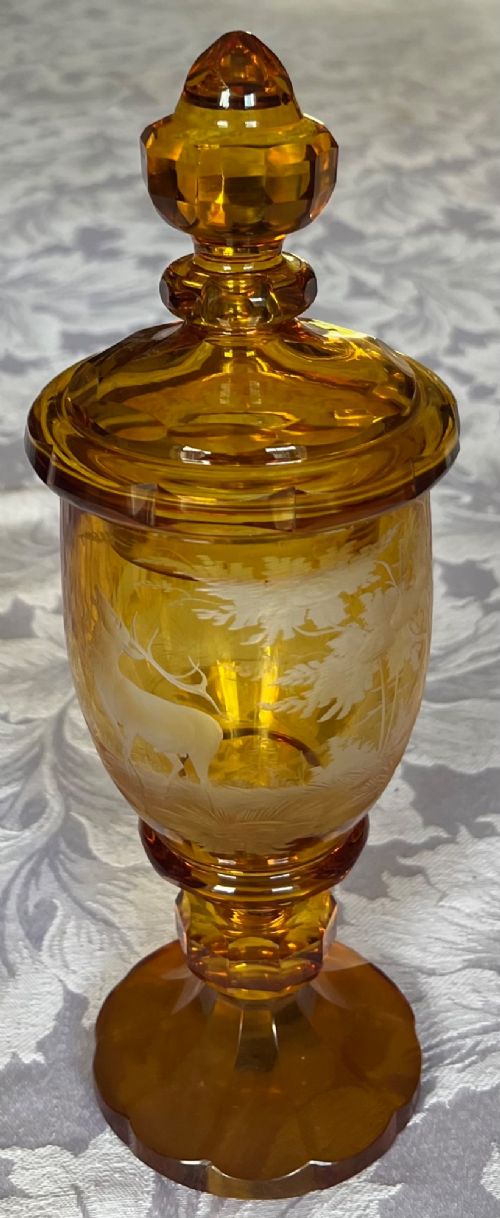
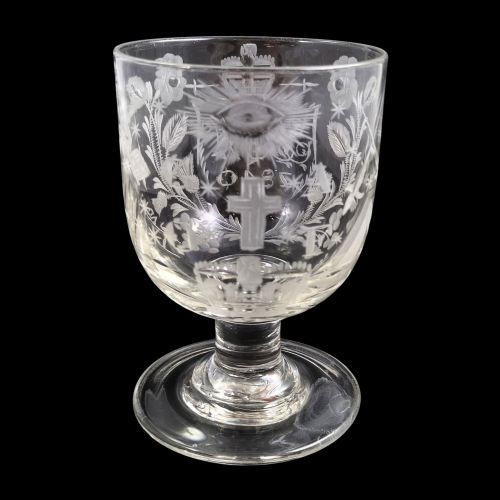


Antique Engraved Glass Glasses
These antique engraved glass glasses bring the tactile weight and hand-cut clarity of past centuries directly to the modern table.
Antique Engraved Glass Glasses
These items range from delicate 18th-century balustroid wine glasses with pan-top bowls to sturdy 19th-century rummers and whiskey tumblers. Collectors also find specialised ceremonial beakers, firing glasses, and matched suites intended for dining and social toasts.
How they were made
The material foundation rests on lead glass, lead crystal, and clear glass formulas melted in pot furnaces and shaped by hand blowing. Many examples incorporate folded feet, faceted stems, or applied elements before secondary cooling.
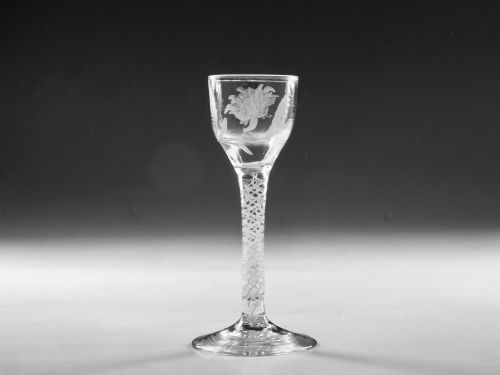
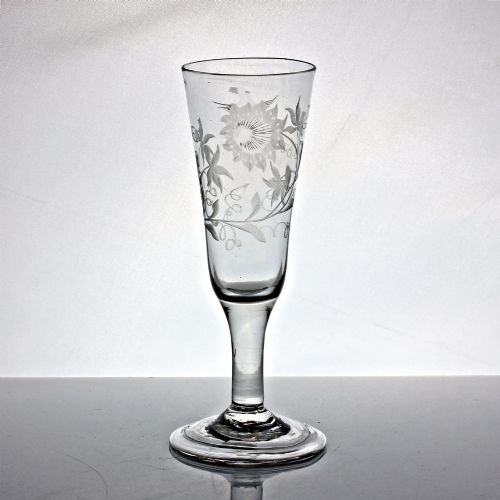
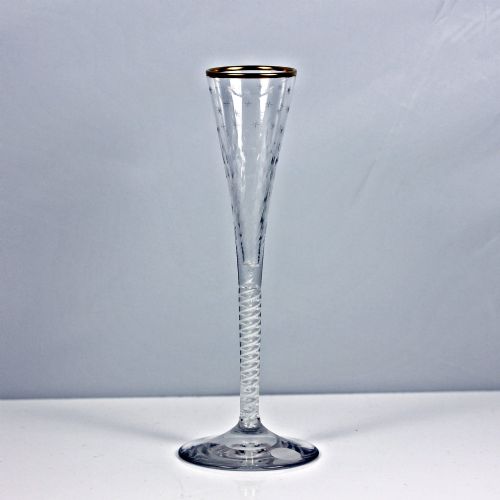
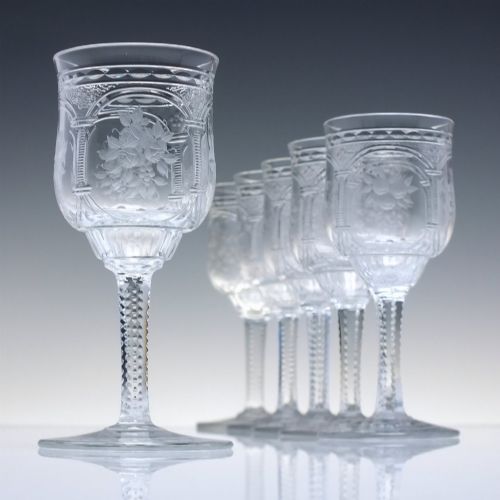
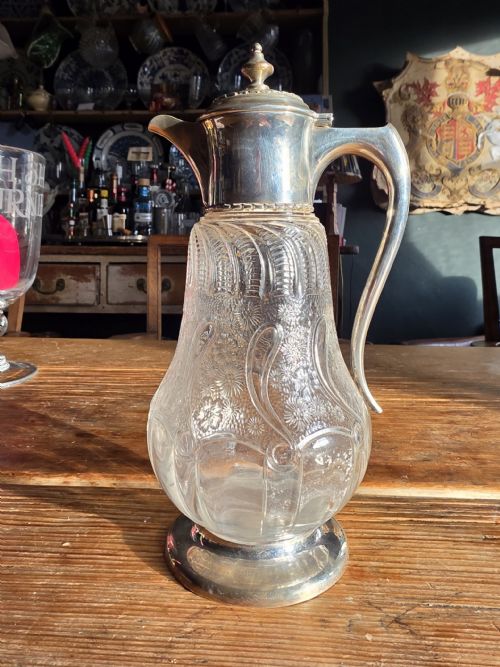
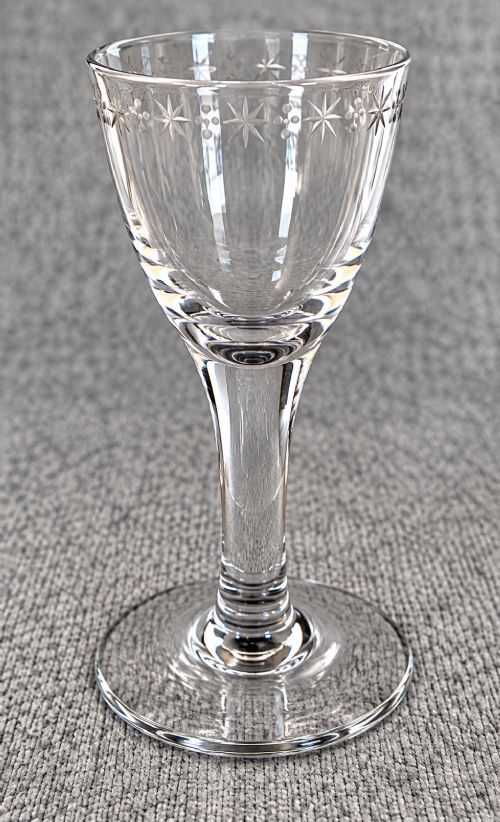
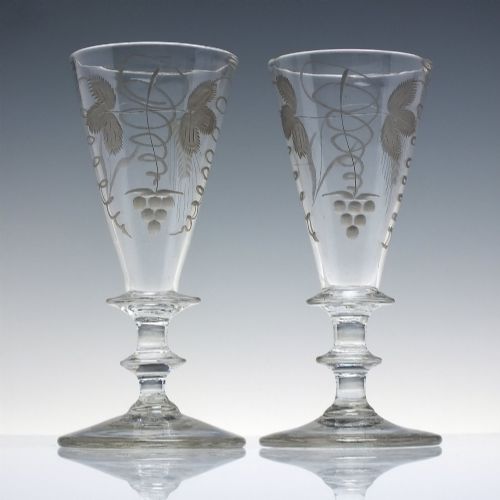
Decoration relied on skilled hand engraving, utilising rotating copper wheels or diamond points to cut floral, heraldic, or narrative motifs directly into the vessel wall. Finishing touches sometimes involved gilding or silver-mounted hardware applied to the rims and bases.
Some glasses were built with bases thick enough to survive being slammed onto tavern tables during toasts.
What varies in quality
Quality rests on the depth and precision of the wheel engraving, where crisp lines and well-defined shading distinguish master workshops from standard production. The clarity of the metal itself, free from excessive cloudiness or heavy bubbles, dictates the initial standard of the piece.
Proportion and weight also govern value, with balanced stem thickness, neatly finished pontil marks, and intact rims separating superior drinking vessels from lesser examples.
Asprey and Co. Ltd·Stevens and Williams·Moser·Joseph Keller
The Antique Engraved Glass Glasses Glossary
- Rummer
- A large, sturdy drinking glass popular in the 18th and 19th centuries, typically used for ale, wine, or punch. They often feature short stems and generous bowls.
- Balustroid
- A stem form resembling a baluster, featuring nodes and swellings characteristic of English drinking glasses from the 18th century. This silhouette provides a secure grip.
- Firing glass
- A heavy-bottomed drinking glass designed to be banged on a table rather than set down gently during toasts. The thick base absorbs the shock of communal tavern celebrations.
- Pontil mark
- A rough scar on the base of blown glassware where the pontil rod was attached during manufacture. Skilled makers often ground or polished this mark smooth.
- Lead crystal
- A high-clarity glass containing lead oxide, which increases the weight, refractive index, and resonance of the vessel. This material holds sharp engraved details particularly well.
Antique Engraved Glass Glasses: Frequently Asked Questions
Can I still use these glasses for wine?
You can certainly use sturdy Georgian and Victorian glasses for special occasions. Their robust lead glass construction handles daily use well if treated with care.
Keep in mind that older glasses often have smaller bowl capacities than modern stemware, reflecting historical drinking habits.
How do I tell an 18th-century glass from a Victorian copy?
Examine the weight, the tint of the metal, and the wear patterns on the foot rim. Genuine 18th-century pieces often show random bottom wear from generations of table use.
Tool marks and the specific style of the stem, such as air twists or balusters, also help experts confirm the period of manufacture.
What is the pontil mark and does it matter?
The pontil mark is the rough spot left on the base where the glassblower snapped the pontil rod away from the vessel. Its presence indicates traditional hand-blown manufacturing techniques.
While many pieces had their pontil scars polished flat later, an untouched or neatly smoothed pontil helps confirm authenticity.