
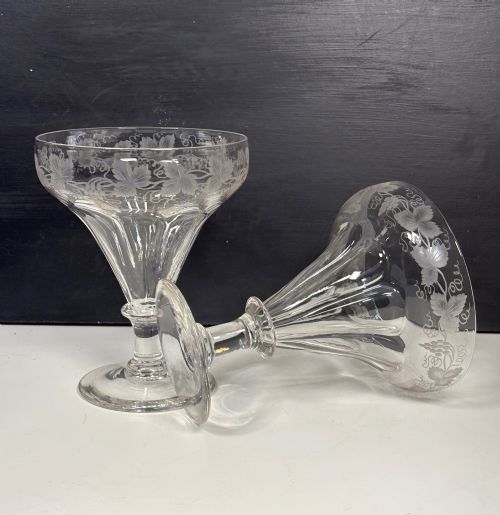


19th Century Glassware Pair
A 19th century glassware pair brings matched symmetry and deep colour to a table, offering paired decanters, vases, and drinking vessels.
19th Century Glassware Pair
A 19th century glassware pair comprises matched sets of functional and decorative vessels created for the table, the sideboard, and the interior. These duos survive from periods including the Georgian, William IV, and Victorian eras.
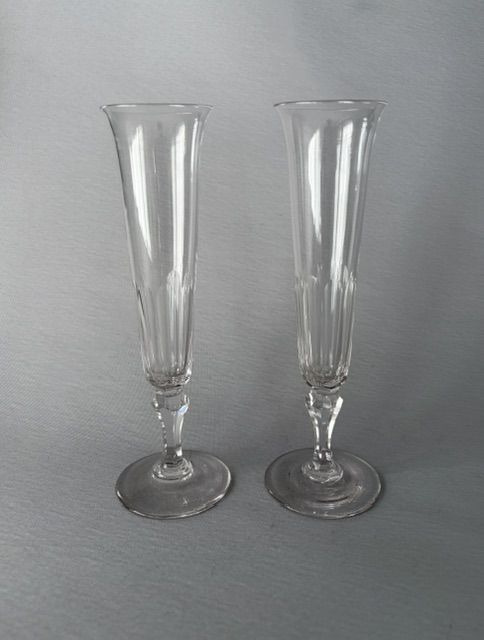
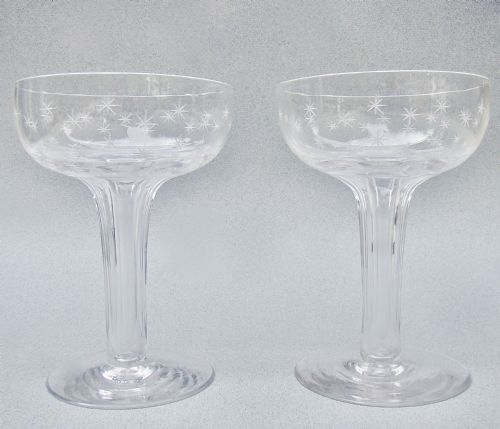
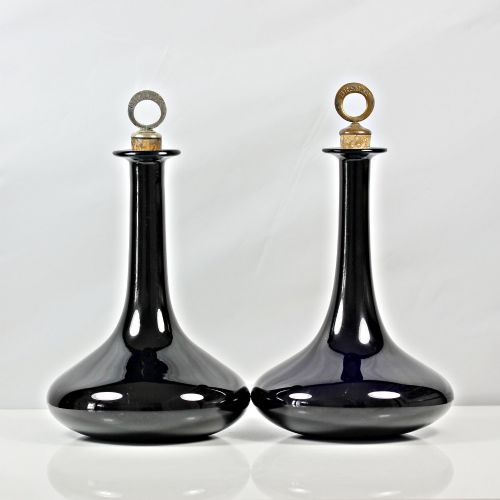
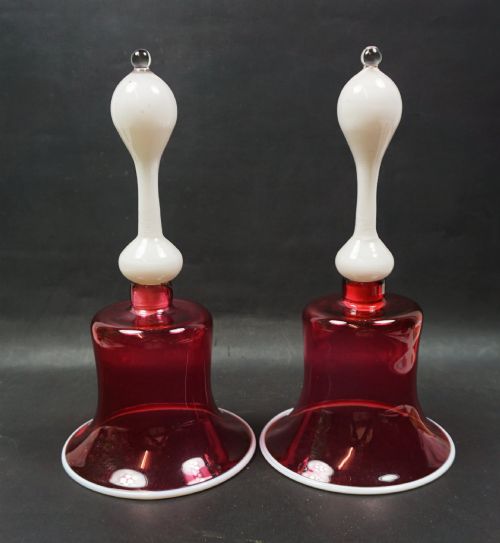
The selections on this page centre heavily upon drinking vessels such as wine glasses, rummers, and champagne coupes, alongside decanters, apothecary jars, and decorative vases. Hand bells and cabinet items also appear frequently across these listings.
Origins stretch from English workshops to French, German, and Bohemian centres of production. Buyers encounter deep colourways like Bristol blue, cranberry, ruby, and green, alongside clear lead crystal.
Materials and production methods
Glassmakers utilised lead glass and crystal alongside coloured metal oxides to create deep hues of amethyst, turquoise, and aqua green. Molten metal was blown into moulds or free-blown before undergoing hand-finishing.
Decoration relied heavily on wheel-cutting, pillar cutting, and star-etching to catch the light on facets. Artisans applied gold leaf, enamel work, acid-cutting, and opaline layers to enrich the surface texture of vases and goblets.
The listings feature coloured glass alongside clear lead crystal across Victorian and Georgian eras.
Distinguishing quality in matched pairs
Quality rests in the precision of the match between the two objects, as hand-blown pairs often display subtle variations in height, wall thickness, and pontil mark execution. Superior examples maintain strict symmetry in form and balance.
The crispness of the wheel-cut facets or the delicacy of the enamel and gold leaf application distinguishes finer work from standard output. Depth of colour and clarity within the lead glass further separate workshop standards.
Stevens & Williams·Baccarat·Harrach
The 19th Century Glassware Pair Glossary
- Rummer
- A large, heavy drinking glass with a short stem, used for ale, wine, or punch during the Georgian and Victorian periods.
- Decanter
- A stoppered vessel designed for holding and serving wine or spirits, often featuring heavy pillar cutting or engraved decoration.
- Opaline
- An opaque or translucent glass, typically pastel in tone, popular in France and England for decorative vases and scent bottles.
- Pontil mark
- The rough scar left on the base of a vessel where the punty rod was detached after blowing.
- Cameo glass
- A technique involving layers of different coloured glass acid-cut or carved to create a relief design.
- Peachblow
- A nineteenth-century art glass shading from pink to a pale yellow or white finish.
19th Century Glassware Pair: Frequently Asked Questions
Were these pairs always used together?
Many matched pairs were created specifically for symmetrical placement on dining tables, mantelpieces, or sideboard trays. Decanters and rummers served guests during formal meals in matching configurations.
Over time, some companion pieces became separated, making surviving pairs sought after by collectors seeking original harmony.
How do I tell Georgian from Victorian glass?
Georgian glass often displays heavy lead weight, simple pillar cutting, and pontil scars with deep kick-ups in the base. The forms tend toward robust functionality suited to the dining room.
Victorian pieces introduce brighter coloured metal oxides, complex etching techniques, and ornate enamel work reflecting changing industrial capabilities.
Can I use antique wine glasses?
Many collectors prefer to display these delicate drinking vessels rather than risk damage during modern dining use. The thin walls of 19th-century champagne coupes and wine glasses require careful handling.
If utilised, hand washing remains essential, and users should avoid stacking or using mechanical dishwashers.