



Vintage Coupe Champagne Glasses
These vintage coupe champagne glasses bring shallow bowls and elegant stems from Victorian, Edwardian, and Art Deco eras to your table.
Vintage Coupe Champagne Glasses
Vintage coupe champagne glasses are shallow-bowled vessels designed for sparkling wine, combining historical charm with functional elegance. When you search for vintage coupe champagne glasses, you encounter versatile forms that span the Victorian, Edwardian, and Regency periods.
The most common versions on this page are sets of matching bowls and coupes fashioned in clear glass, lead crystal, and coloured overlay glass. These pieces range from intimate pairs to larger sets suitable for entertaining.
Originating in Britain and spanning decades from the mid-nineteenth century into the twentieth, these glasses reflect changing dining habits and decorative tastes. They bridge the gap between ornamental display and practical use in modern settings.
How they were made
Glassmakers utilised clear glass, lead crystal, and layered coloured glass, known as overlay, to create the distinctive body of each vessel. Cranberry, green, and red glass layers were cut back to reveal the clear crystal underneath.
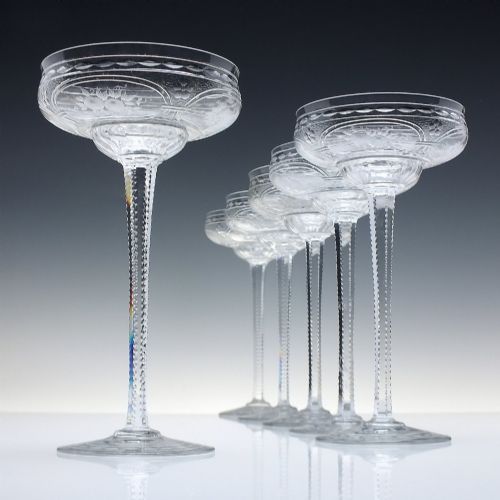
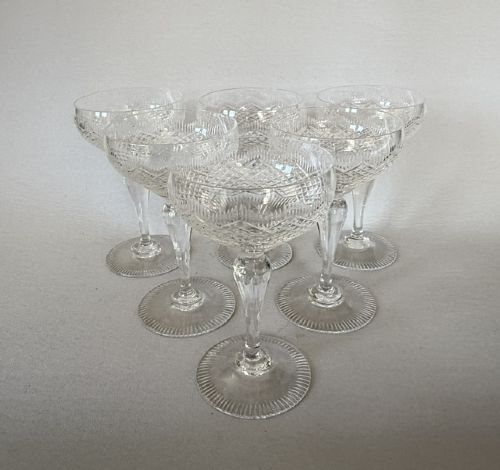
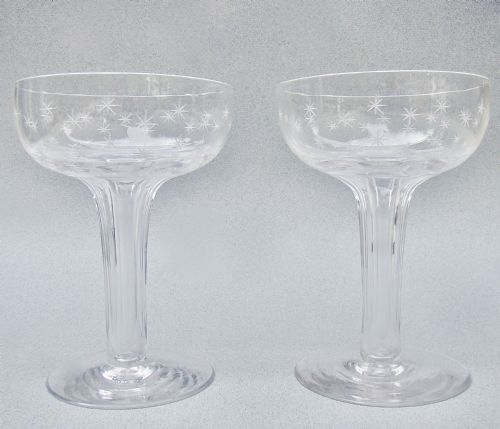
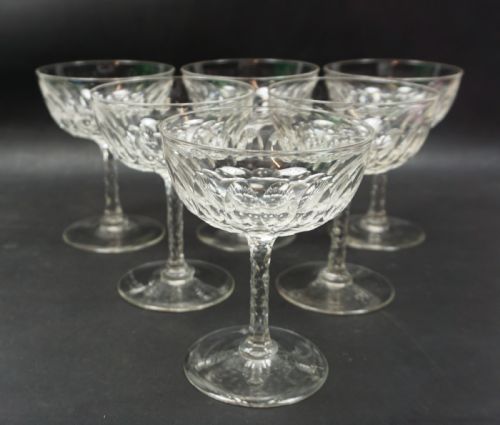
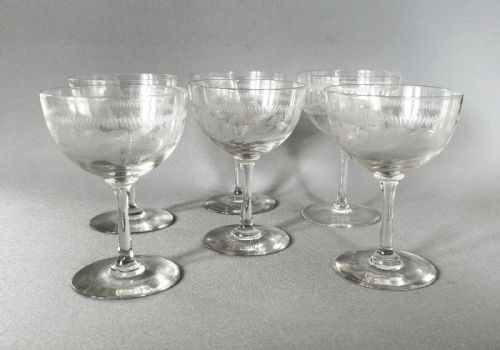
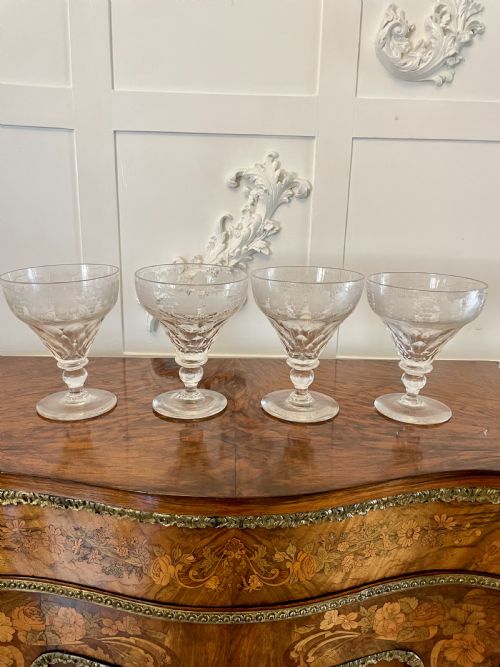
Techniques such as wheel-cutting, star-cutting, and acid-etching brought intricate patterns like Greek keys, fruiting vines, and convolvulus flowers to the surface. Stems were frequently facet-cut or hollowed to add weight and tactile interest to the handle.
Victorian glasses with hollow stems allowed drinkers to watch the bubbles travel right down into the base.
What varies in quality
The clarity of the material and the crispness of the cutting distinguish the finer examples from simpler glassware. Deep wheel-cutting and precise engraving require steady hands and sharp execution, resulting in sharp lines that catch the light.
Uniformity across a set elevates the desirability, particularly when multiple glasses share identical bowl proportions and stem facets. The depth of colour in overlay pieces and the absence of cloudiness in the crystal dictate the upper tier of the range.
The Vintage Coupe Champagne Glasses Glossary
- Coupe
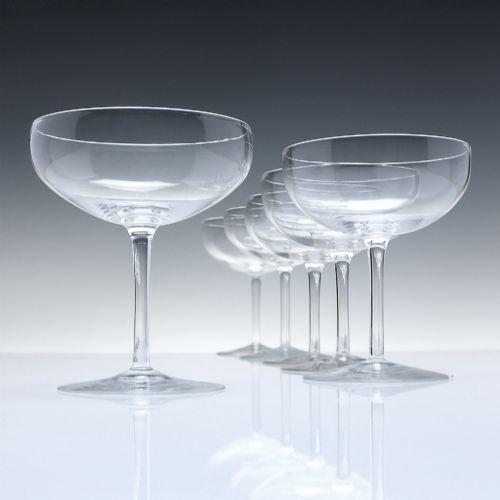
- A shallow saucer-like glass with a short stem, traditionally used for serving champagne and sparkling wine. Its wide brim allows the bubbles to dissipate quickly.
- Overlay
- A technique where a thin layer of coloured glass is fused over a clear crystal base before portions are cut away. This creates striking contrast and depth.
- Facet cut
- Geometric planes ground into the surface of the glass to reflect light from multiple angles. It is commonly found on stems and the lower portions of bowls.
- Star-cut
- A motif engraved into the base or bowl of glassware, resembling a multi-pointed star. This traditional decoration requires skilled wheel work.
- Etched glass
- Glass decorated by applying acid to eat away exposed areas, leaving a frosted pattern. It creates delicate designs without deep cutting.
Vintage Coupe Champagne Glasses: Frequently Asked Questions
How do I clean vintage champagne coupes?
Wash them gently by hand in warm soapy water using a soft cloth. Avoid sudden temperature changes to protect the older glass.
Dry them immediately with a lint-free linen cloth to prevent water spots and preserve the clarity of the cut patterns.
Can I use these glasses for modern sparkling wine?
Yes, though the shallow bowl allows carbonation to escape faster than a modern flute. This traditional shape suits sweeter styles and vintage cocktails.
Using them adds historical character and theatrical flair to contemporary gatherings and celebratory toasts.
How do I tell Victorian glasses from Edwardian ones?
Victorian pieces often feature heavier cutting, star motifs, and rich cranberry or red overlay colours. They tend to feel substantial in the hand.
Edwardian examples frequently showcase lighter etched patterns, such as Greek keys, reflecting a shift toward neoclassical refinement and airier designs.
Are mismatched sets acceptable for a table setting?
Mismatched sets of matching types create an eclectic and charming tablescape for dinner parties. Grouping similar heights or cuts maintains visual harmony.
Consistency in era or material ties disparate pieces together while showcasing individual character.