



Antique English Tea Box
An antique english tea box preserves the ritual of storing and protecting expensive dried leaves.
Antique English Tea Box
An antique english tea box encompasses wooden caddies, silver canisters, and porcelain receptacles designed to hold loose leaf tea in domestic interiors. Surviving examples span from the mid-eighteenth century through the Georgian, Regency, and Victorian periods into the early twentieth century.
Makers constructed these receptacles with internal compartments, mixing bowls, and locking lids to control access to valuable dry leaves. The selection reflects changing dining and drawing room habits across successive decades.
Materials and Construction Methods
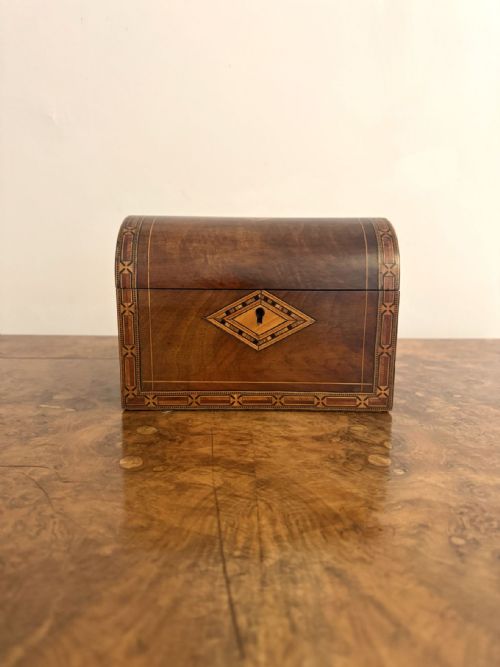
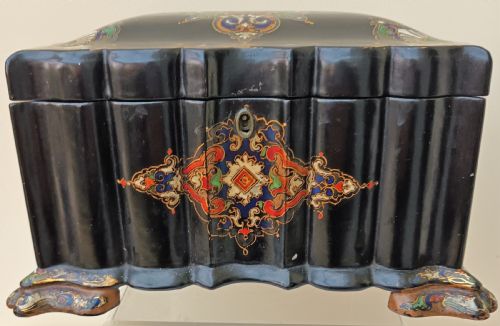
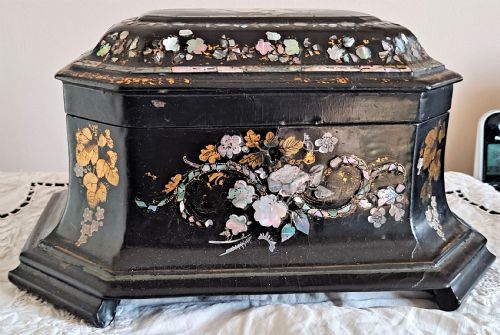
Joiners and cabinetmakers utilised dense exotic timbers like rosewood, coromandel, and padouk, applying meticulous brass inlay, mother-of-pearl, and Tunbridge mosaic work to exterior surfaces. Lacquer work, gesso decoration, and papier-mâché represent alternative finishing techniques found across the collection.
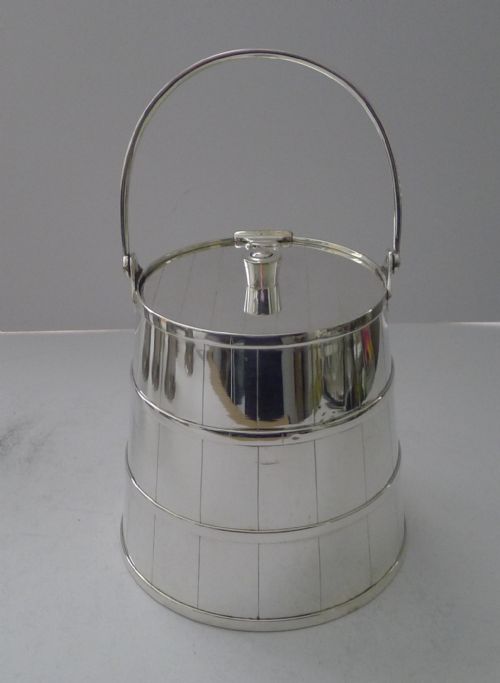
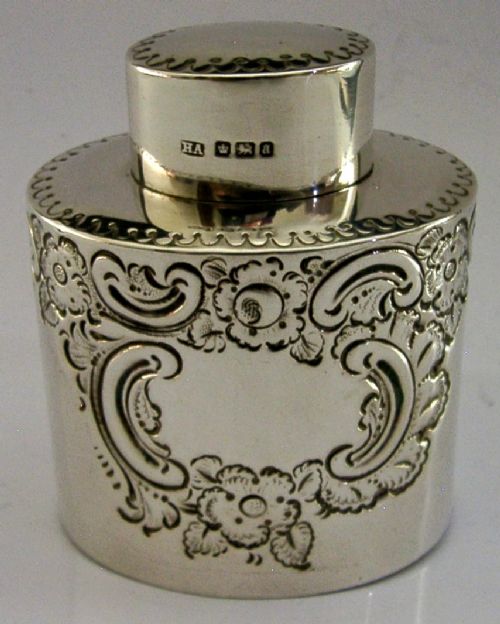
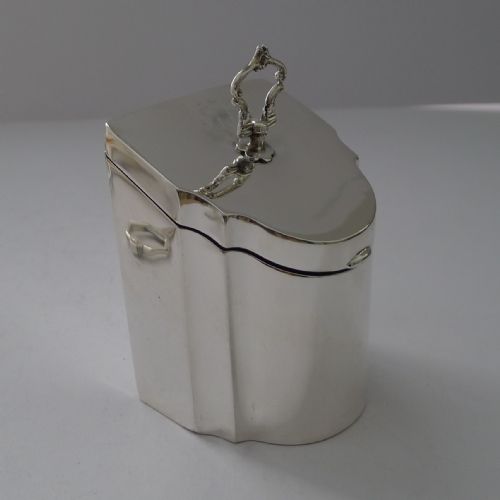
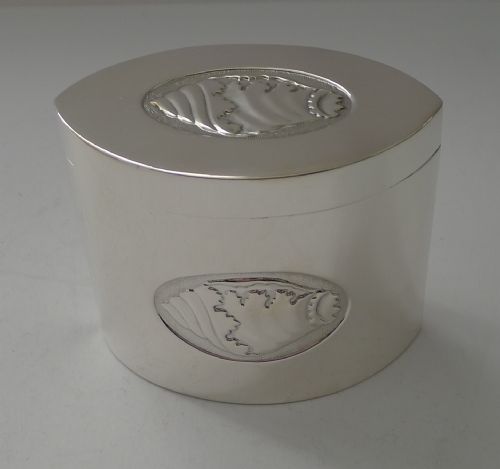
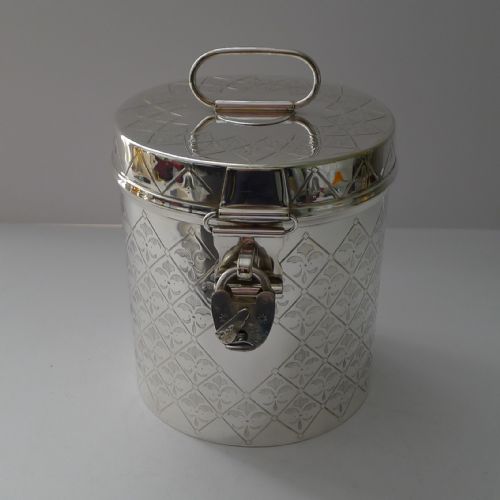
Silversmiths and metalworkers shaped sterling silver and silver-plated copper into hallmarked canisters, biscuit boxes, and novelty forms using spinning, casting, and hand-chasing methods. Internal fittings frequently incorporated bone, glass mixing bowls, and foil linings to preserve the aroma of the leaf.
The inventory spans Georgian, Regency, Victorian, and Edwardian periods.
Quality and Craftsmanship Markers
The integrity of timber veneers, the precision of brass stringing, and the survival of original interior mixing glasses or foil linings separate standard containers from exceptional ones. Superior examples retain working locks with matching keys and tight-fitting internal lids.
Metal vessels display quality through crisp hallmark stamps, heavy gauge sterling silver, and detailed hand-engraved chased decoration rather than thin plating. The complexity of Tunbridge mosaic patterns and the depth of papier-mâché lacquer further distinguish workshop output.
Henry Hollamby·Mappin and Webb·Thomas Hayes·William Rudkins
The Antique English Tea Box Glossary
- Tea Caddy
- A container designed specifically for storing dry tea leaves. Early examples often featured multiple internal compartments for blending different varieties.
- Sarcophagus
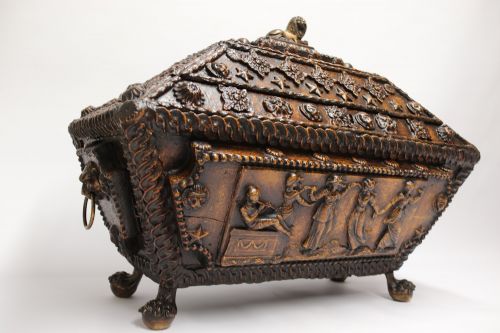
- A box shape featuring a domed or sloping hinged lid resting on a rectangular base, popular during the Regency and William IV periods.
- Teapoy
- A small table fitted with a box top or canisters for holding tea, standing on a central pillar or multiple legs.
- Tunbridge Ware
- Woodworking characterised by tiny mosaic tiles formed from differently coloured natural timbers to create geometric or pictorial scenes.
- Hallmark
- An official stamp applied to precious metals indicating the standard of purity, the assay office, and the date of manufacture.
Antique English Tea Box: Frequently Asked Questions
What is an antique tea box?
An antique tea box is a secure container built to store expensive loose leaf tea in domestic settings. These vessels guarded dry leaves from moisture and light while locking away valuable commodities.
Craftsmen constructed them in wood, silver, and ceramic forms equipped with internal compartments and mixing bowls. They served as decorative objects on drawing room tables and sideboards.
How were tea boxes used historically?
Households used these receptacles to keep loose leaf tea safe under lock and key. The lady of the house typically held the key, measuring out portions for daily consumption.
Internal canisters held different leaf varieties, while central glass bowls allowed mixing or sugar storage. Servants brought the caddy to the drawing room when preparing afternoon beverages.
How do I date an English tea caddy?
Dating relies on stylistic clues, construction methods, and materials characteristic of specific periods. Regency examples often feature brass inlay and sarcophagus shapes, while Victorian versions favour heavy burr walnut and Tunbridge mosaic.
Silver examples carry hallmarks indicating the assay office and year of manufacture. Examining internal fittings and hinges provides additional chronological evidence.
How should I care for a wooden tea box?
Wooden containers require stable humidity levels away from direct sunlight and heat sources to prevent veneer lifting. Dusting with a dry microfiber cloth maintains the surface without introducing moisture.
Occasional application of appropriate wax protects historic polished finishes. Metal hardware and silver elements benefit from minimal handling and specialised cleaning cloths.