


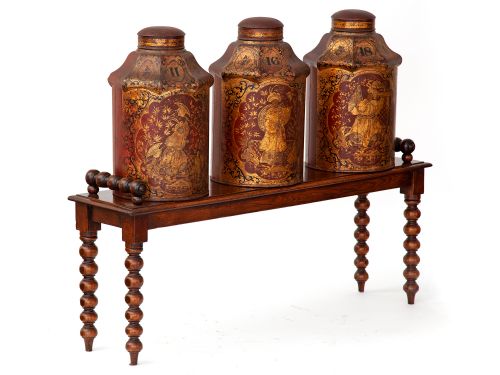


Victorian Lacquered Caddy
These Victorian lacquered caddy pieces bring nineteenth-century hand-painted charm and refined storage to a modern room.
Victorian Lacquered Caddy
A victorian lacquered caddy is a nineteenth-century storage vessel designed originally for dry tea leaves and fashioned with glossy decorated surfaces. These pieces frequently take the form of tea caddies and decorative boxes made during the Victorian era. Buyers searching this phrase encounter nineteenth-century examples decorated with lacquer and painted finishes.
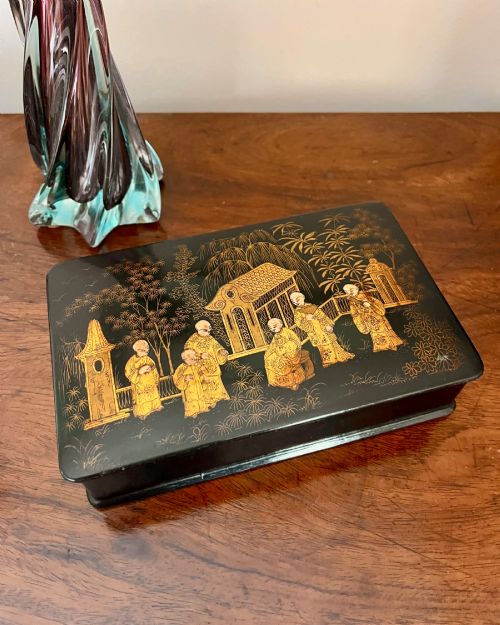
The selection on this page centres primarily on papier-mâché tea caddies alongside related keepsake boxes and tea canisters. Many examples originate from nineteenth-century English workshops while others display diverse regional styles such as Chinoiserie and Kashmiri work. Such items served as ornamental desk or table accessories in period homes.
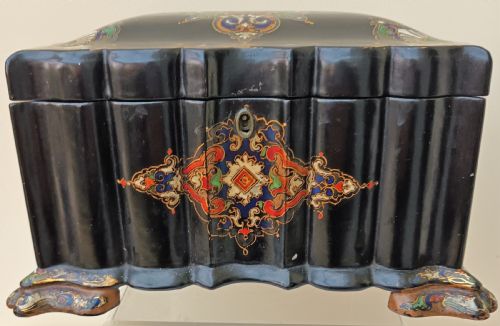
Beyond standard tea caddies, the category extends to painted and gilt decorated boxes and table lamps adapted from earlier canisters. The prevailing aesthetic combines practical compartmentalised storage with rich surface ornamentation suited for display. Each piece reflects the nineteenth-century taste for exotic motifs and meticulous hand-finishing.
How they were made
Maker's workshops built the foundation of these pieces using papier-mâché or solid wood such as oak, applying layers of dark lacquer to achieve a smooth, glossy shell. Artisans then built up surface decoration using hand-applied paint, gold leaf, and metallic pigments. This construction method allowed for durable yet lightweight boxes capable of holding delicate dry goods.
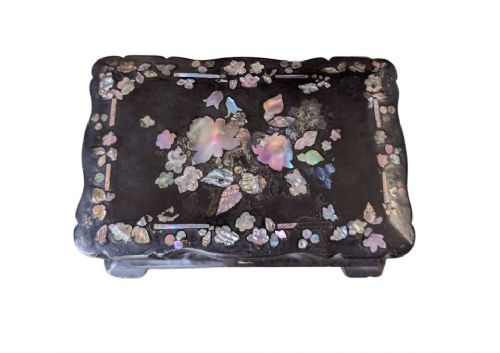
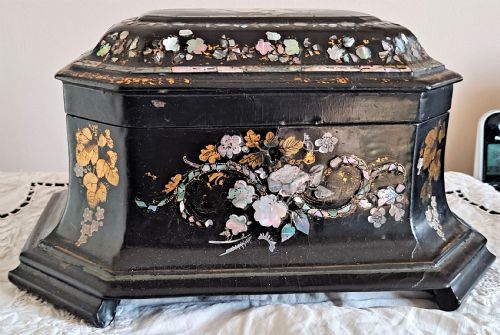
Workers integrated decorative elements like mother-of-pearl inlay and brass fittings directly into the lacquered body to create tonal contrast and textural depth. Chinoiserie and Italian Rococo Revival motifs were meticulously rendered by hand across the lids and panels. Protective varnishes sealed the painted details, preserving the rich colours over successive generations.
Several boxes disguise themselves as miniature oriental pagodas, proving the Victorians took their afternoon tea very seriously indeed.
What varies in quality
The refinement of the hand-painted details and the precision of the gold leaf application distinguish finer examples from simpler production. Superior pieces exhibit intricate Chinoiserie scenes or delicately cut mother-of-pearl inlay that sits flush with the surrounding lacquer. The depth and clarity of the original lacquer finish directly reflect the skill of the nineteenth-century artisan.
Structural integrity of the papier-mâché core and the survival of original brass hardware influence the overall calibre of a piece. Well-preserved interiors, complete with functioning compartments or lids, indicate careful handling and superior initial manufacture. Lesser examples suffer from extensive lacquer crazing or losses to the painted and gilt decoration.
The Victorian Lacquered Caddy Glossary
- Papier-mâché
- A composite material made from paper pulp or layers of paper reinforced with glue, moulded and dried to form a rigid body suitable for lacquering. This technique allowed nineteenth-century makers to produce smooth, curved boxes that resisted warping.
- Chinoiserie
- A European decorative style reflecting Chinese artistic traditions, characterised by painted landscapes, figures, and pagodas rendered in gold and colour upon dark lacquer. Makers utilised this aesthetic to impart an exotic character to domestic tea storage.
- Mother-of-pearl
- The iridescent inner layer of mollusc shells, sliced thin and inlaid into lacquer surfaces to catch the light. Artisans shaped these fragments into floral or geometric patterns on tea caddy lids.
- Tea caddy
- A small container or box originally built with internal compartments to securely hold and preserve valuable tea leaves. Victorian iterations elevated these utilitarian objects into decorative centrepieces for the drawing room.
Victorian Lacquered Caddy: Frequently Asked Questions
What were victorian lacquered caddy pieces used for?
These containers were manufactured to store precious loose tea leaves away from moisture and light in the nineteenth-century home. Wealthy households kept them locked in the drawing room to control access to expensive tea.
Over time, many of these boxes transitioned into general keepsake cases for letters, jewellery, and small valuables. Today they function primarily as decorative objects that add period character to mantelpieces and side tables.
How do I care for a lacquered box?
Keep nineteenth-century lacquer away from direct sunlight and excessive heat sources to prevent the glossy finish from fading or cracking. Dust the surface gently with a dry, soft microfibre cloth without applying modern liquid polishes or chemical cleaners.
Maintain a stable room humidity to protect the underlying papier-mâché or wooden structure from expanding and damaging the delicate paintwork. Handle the lids and internal compartments with care to preserve original hinges and fragile inlay work.
Are all these boxes made of papier-mâché?
While papier-mâché serves as the primary material for many nineteenth-century examples, other pieces utilise solid woods like oak beneath their lacquer skin. Workshops selected materials based on the desired shape and the intended function of the container.
Items such as table lamps and large canisters also incorporate brass and metal components alongside painted surfaces. Checking the interior construction reveals whether the core is moulded paper pulp or traditional timber.