




Antique English Painted Server
An antique english painted server brings enduring utility and provincial charm to a room, offering surface space and storage shaped by centuries of domestic life.
Antique English Painted Server
An antique english painted server encompasses functional timber furniture designed for domestic service, featuring prominently in dining rooms, kitchens, and halls. These pieces bridge the gap between heavy utility and decorative presence.
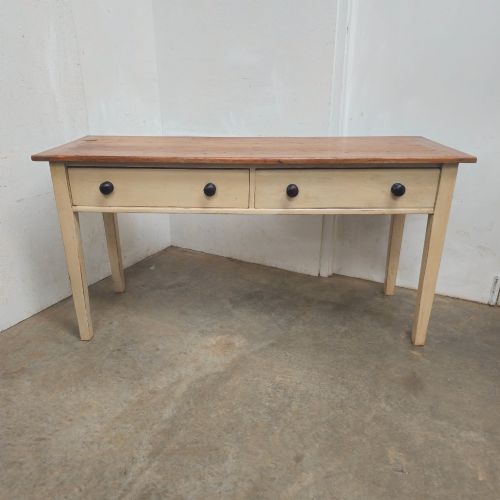
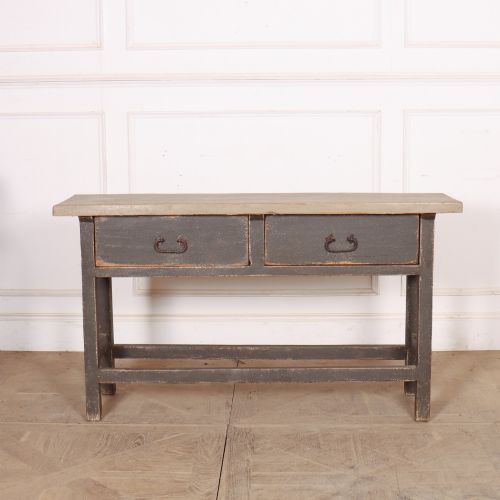
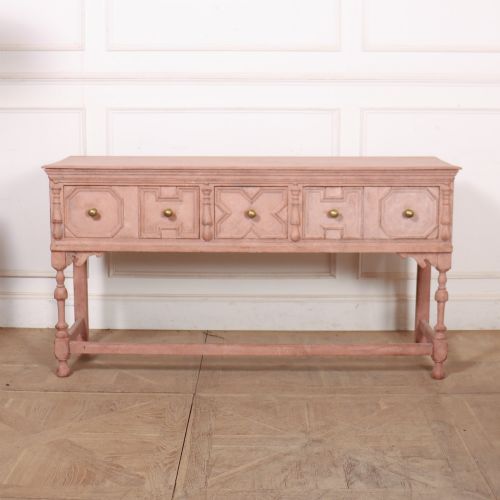
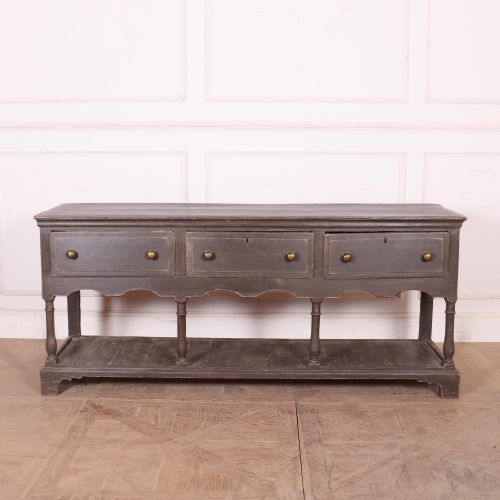
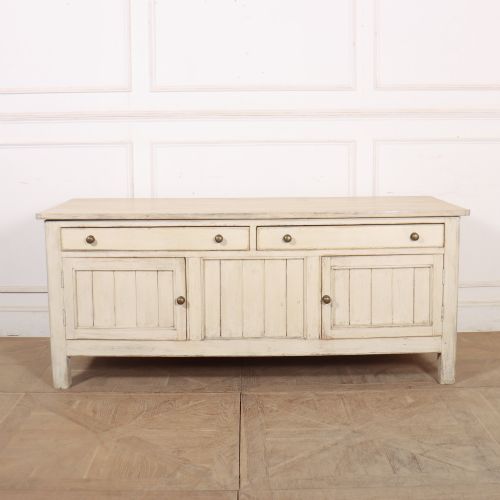
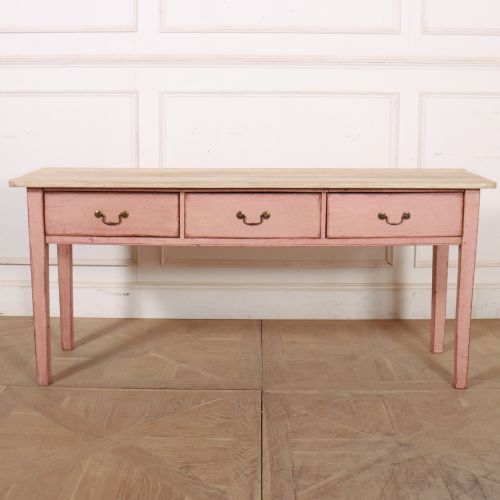
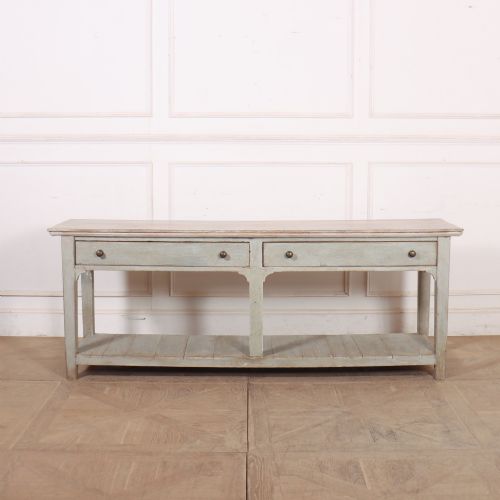
The version most commonly encountered on this page is the painted pine or timber dresser base and serving table dating from the eighteenth and nineteenth centuries. These items reflect traditional English country house and rustic farmhouse aesthetics.
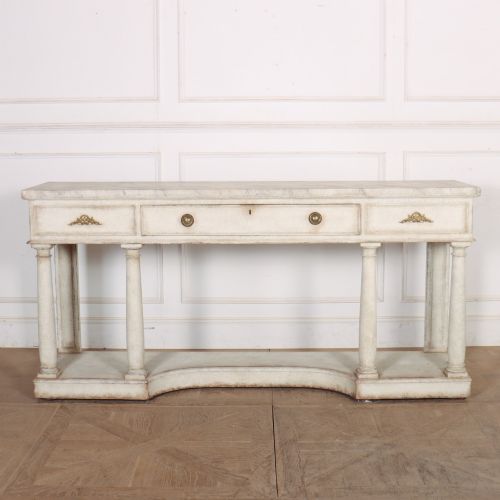
Forms range from simple potboard dresser bases to console tables and serving tables equipped with drawers. Each variation serves the fundamental purpose of food preparation, display, and storage.
How they were made
Construction relies heavily on timber such as pine and oak, built by joiners using traditional framing and joining techniques suited to heavy daily use. Surfaces receive layers of paint that age over time, developing a patinated finish.
Hardware additions often incorporate brass fixtures, whilst some later or specialised examples integrate marble tops. The integration of structural wood with decorative painted finishes defines the manufacturing approach.
Materials across the selection include painted timber, pine, brass, and marble, reflecting both utilitarian country workshops and refined domestic spaces.
What varies in quality
Quality rests upon the integrity of the original timber frame and the authenticity of the painted surface rather than a pristine appearance. Pieces that retain their early or original paint layers command greater interest among collectors.
Proportion and structural balance separate standard utilitarian workshop pieces from finer country house examples. The handling of mouldings, drawer construction, and potboard design all indicate the standard of craftsmanship.
David Dewsberry
The Antique English Painted Server Glossary
- Potboard dresser base
- An open lower shelf built into the base of a dresser or serving table, traditionally used for storing pots and pans. This lower tier provides structural stability and visible storage.
- Dresser base
- The lower portion of a traditional kitchen or dining room dresser, functioning independently as a sideboard or serving table. These units typically feature drawers along the upper section.
- Pine
- A softwood commonly utilised in English country furniture for its accessibility and workability. It accepts painted finishes readily and forms the primary material for many regional pieces.
- Breakfront
- A piece of furniture where the central section projects forward from the flanking outer sections. This architectural arrangement adds depth and visual rhythm to larger serving tables.
Antique English Painted Server: Frequently Asked Questions
What is an antique english painted server used for?
These pieces functioned historically for food preparation, serving meals, and storing kitchen or dining equipment in large country houses and modest homes alike.
Today, they serve equally well as sideboards in dining rooms, hallway consoles, or media units, providing substantial surface area and concealed storage.
How do I distinguish eighteenth century from nineteenth century pieces?
Earlier eighteenth century examples often display heavier timber construction, simpler lines, and deeper patination acquired through centuries of domestic service.
Nineteenth century pieces frequently incorporate revival styles, lighter pine framing, and varied painted finishes influenced by Victorian and Georgian tastes.
Are the painted finishes original on these servers?
Many pieces retain layers of historic paint that have worn down naturally over generations, revealing the underlying timber beneath softened edges.
Some items have undergone later repainting or touch-ups, which contributes to their decorative appeal whilst reflecting their long operational history.
How should I care for a painted wooden surface?
Maintenance requires gentle dusting with a dry or slightly damp cloth, avoiding harsh chemical cleaners that might strip the historic painted layers.
Keeping the furniture away from direct heat sources and drastic humidity changes protects the timber frame and prevents the paint from cracking.