
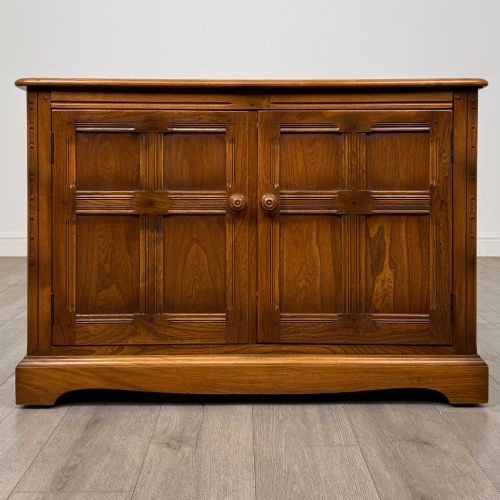
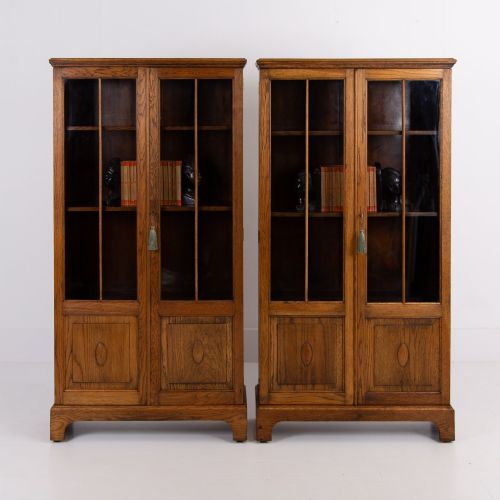
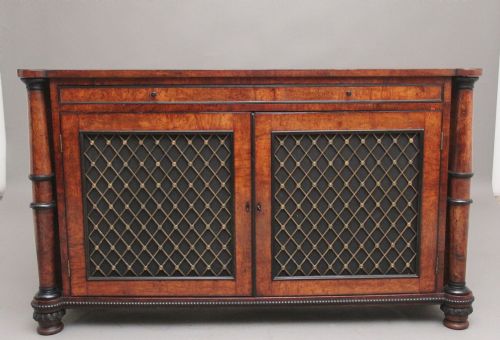
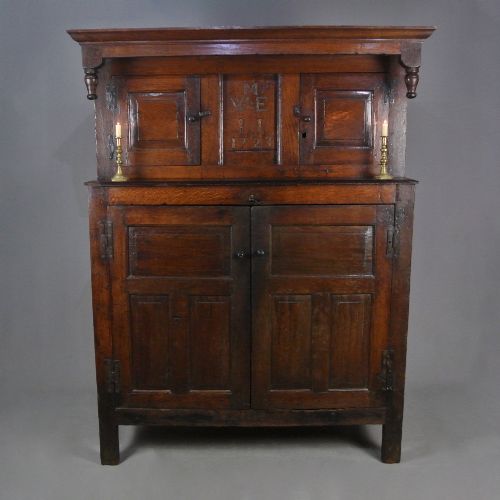

Antique English Oak Cabinet
An antique English oak cabinet brings centuries of tactile grain and domestic utility into a room.
Antique English Oak Cabinet
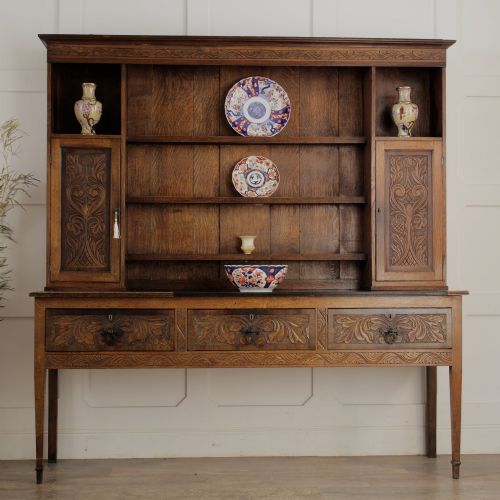
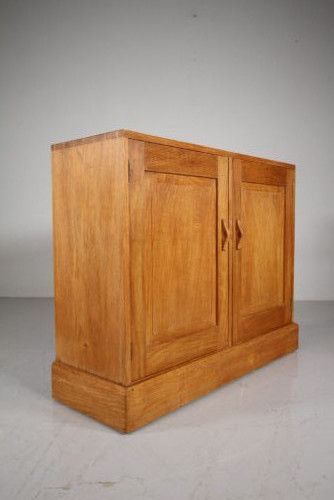
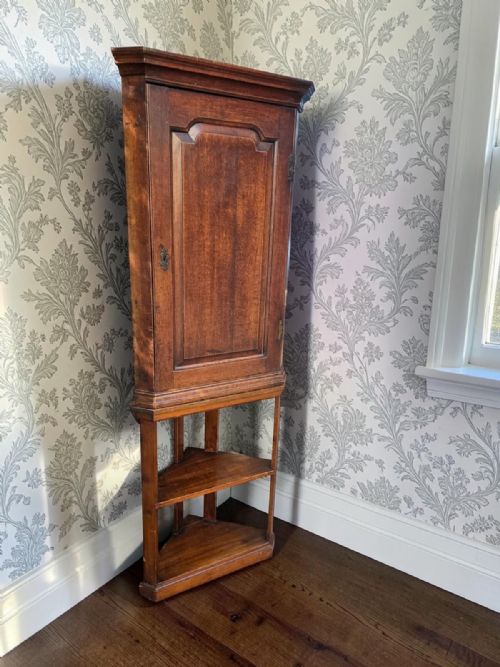
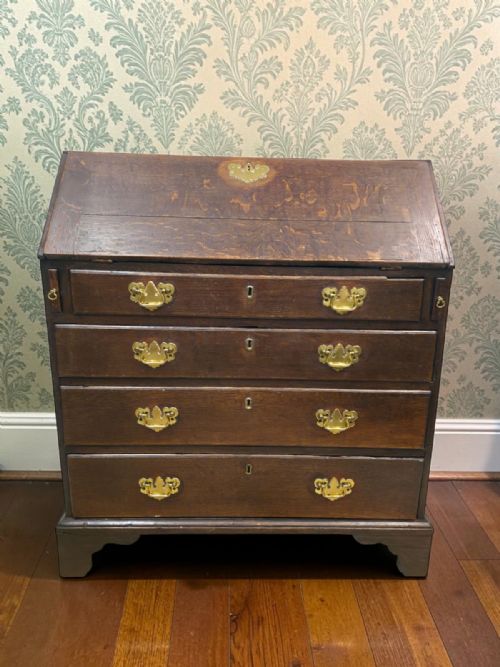
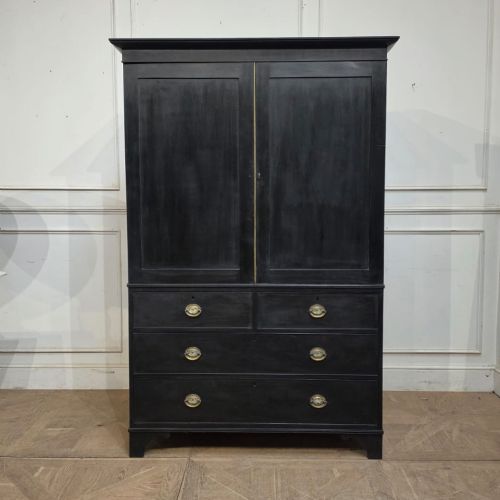
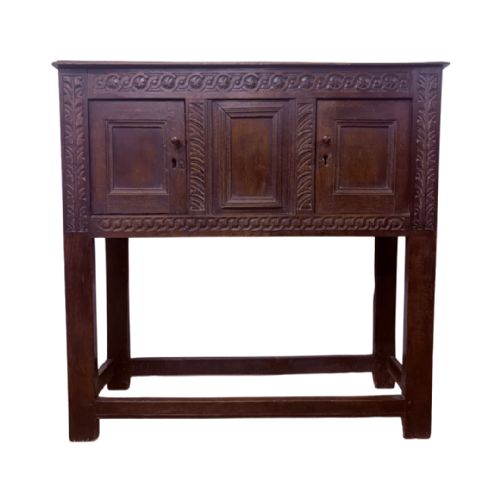
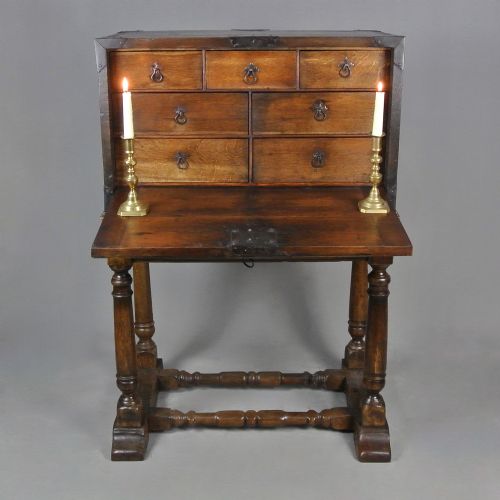
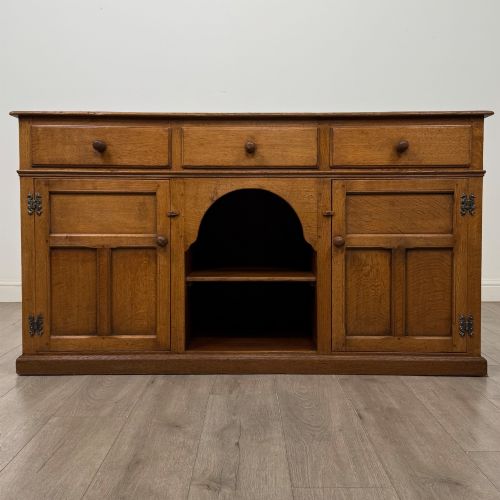
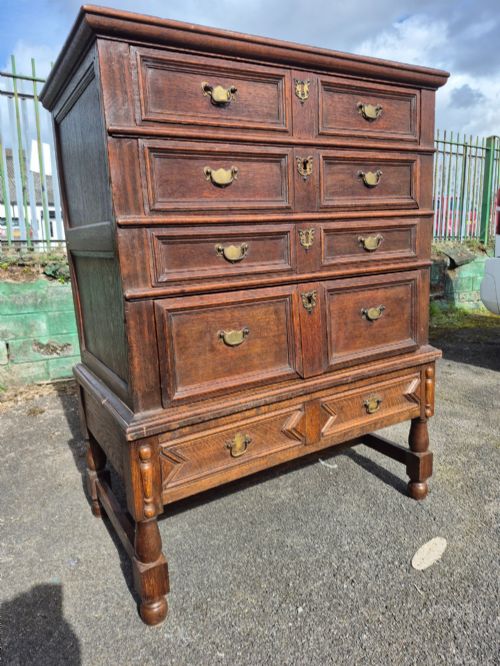
An antique English oak cabinet encompasses a diverse group of storage furniture spanning from the seventeenth century through to the twentieth century. Buyers encounter forms ranging from floor-standing court cupboards and press cupboards to corner cabinets, writing bureaux, and glazed bookcases.
The material identity centres firmly on English oak, supplemented occasionally by pollard oak, elm, and mahogany accents. Many examples reflect domestic country house traditions alongside formal Georgian, Victorian, and Arts and Crafts design movements.
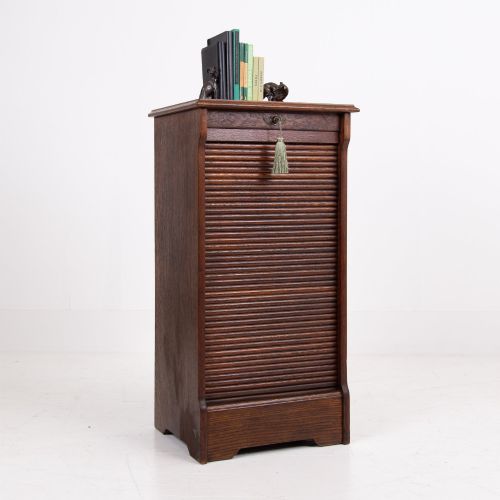
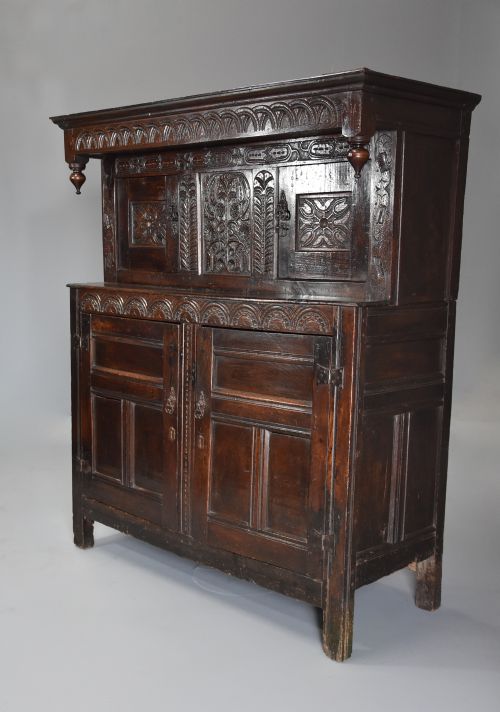
Earlier seventeenth-century pieces often feature joined construction and carved panels, while later nineteenth and twentieth-century examples incorporate tambour doors, glass panels, and specialised compartments for stationery or books.
How They Were Made
Makers constructed these pieces primarily using solid English oak, frequently employing pegged tenon joints on seventeenth and eighteenth-century examples for structural integrity. Timber selection often displayed the characteristic medullary rays of quarter-sawn oak, lending distinct figuring to the surfaces.
Secondary materials such as brass for handles, iron for hinges and strong box fittings, and glass for glazed bookcase doors complemented the primary woodwork. Later periods introduced ebonised details, bronze mounts, and decorative inlays of mahogany or ebony to enhance the visual depth of the cabinet fronts.
Listings feature oak alongside elm and pollard oak across periods from the 17th century to the 1930s.
What Varies in Quality
The distinction between ordinary and exceptional examples rests upon the integrity of the timber and the depth of the carving. Superior pieces display carefully chosen boards with matched grain patterns and crisp, hand-chiselled detailing rather than mechanical uniformity.
Originality of surface and hardware dictates much of the standing of a piece. Cabinets retaining untouched historic patina, original brasses, and unaltered stands command greater respect from collectors than those subject to heavy restoration or replacement elements.
Stanley Webb Davies·Minty and Co
The Antique English Oak Cabinet Glossary
- Court Cupboard
- A traditional seventeenth-century storage piece featuring an enclosed upper section supported by pillars above a lower cabinet or open stage. These sturdy oak items formed the administrative and display centre of a prosperous early modern household.
- Livery Cupboard
- A specialised medieval and seventeenth-century cabinet designed for ventilating and storing food or candles. The doors frequently incorporated turned spindles to allow air circulation around perishable contents.
- Press Cupboard
- A large two-part storage unit used historically for pressing and storing household linens and garments. The upper and lower sections provide substantial capacity enclosed by heavy panelled doors.
- Tambour
- A flexible sliding door constructed from narrow vertical strips of wood glued to a canvas backing. This mechanism allowed makers to enclose cabinet fronts cleanly without requiring clearance for swinging doors.
- Patina
- The lustrous surface sheen developed on old wood over centuries through oxidation, handling, and wax polishing. This quality reveals the true age and history of the timber.
- Medullary Ray
- A cellular structure in oak timber that appears as silvery flecks and flashes across the grain when the log is quarter-sawn. Cabinet makers highlighted this figure to demonstrate superior cutting technique.
Antique English Oak Cabinet: Frequently Asked Questions
What is a court cupboard?
A court cupboard is an early form of storage furniture consisting of an upper tier supported by heavy pillars above a lower section. These pieces served both display and storage purposes in seventeenth-century homes.
They stand out for their robust joined oak construction and carved decorative panels.
How do I date an oak cabinet?
Dating relies on observing construction methods, handle types, and stylistic motifs. Seventeenth-century examples typically use pegged mortise and tenon joints with hand-split panels, whereas Victorian and Edwardian pieces show machine sawing and different hinge mechanisms.
Secondary woods and drawer linings also provide clues to the period of manufacture.
Where were corner cabinets placed?
Corner cabinets were designed to fit neatly into domestic room angles to maximise floor space. Eighteenth and nineteenth-century homes utilised them primarily in dining rooms and parlours for displaying porcelain and glassware.
Versions range from wall-hanging spice cupboards to tall floor-standing architectural units.
What is pollard oak?
Pollard oak comes from trees that were cut back close to the trunk to encourage dense, knobbly branching. This pruning method produces timber with swirling, highly figured grain patterns.
Cabinet makers used these distinctive veneers on prominent surfaces during the nineteenth century.
How should I care for antique oak?
Antique oak benefits from stable indoor humidity levels away from direct heat sources and strong sunlight. Regular application of traditional beeswax helps maintain the moisture and lustre of the timber.
Avoid silicone-based polishes that can penetrate the grain and alter the surface finish.