


Antique Enamelled Decanter
An antique enamelled decanter brings vibrant colour and painted detail to a sideboard, combining glass vessels with fired pigment.
Antique Enamelled Decanter
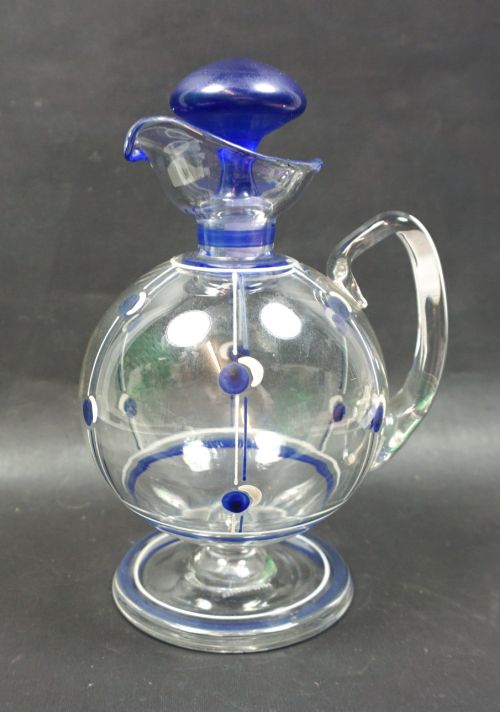
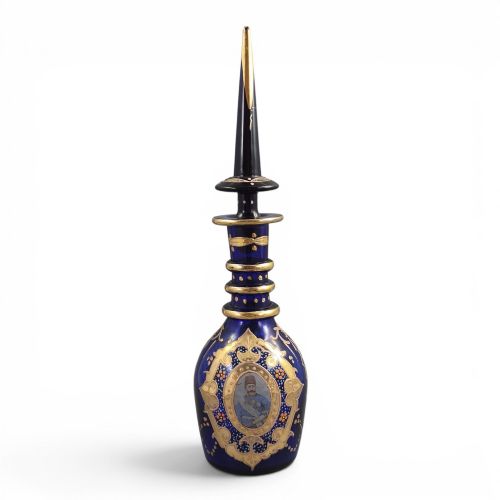
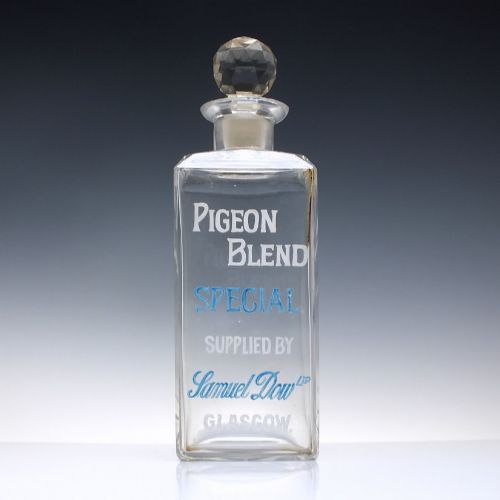
An antique enamelled decanter spans production from eighteenth century Bohemian and German glass bottles to twentieth century Art Deco Czech barware and Victorian Mary Gregory pieces. Collectors find clear, green, cranberry, opaline and cobalt glass vessels decorated with fired polychrome enamel pigments.
The selection ranges from single wine jugs and whisky decanters to complete liqueur sets with matching glasses and trays. Forms include ewers, cocktail shakers, personal gin flasks and Schnapps containers originating from Britain, Bohemia, Austria and the Netherlands.
How they were made
Glassmakers formed vessels through free-blowing or mould-blowing using clear, coloured or opaline glass substrates, sometimes incorporating sterling silver mounts, brass fittings or pewter details. Art Deco examples utilise hand enamelled lead crystal alongside chrome elements.
Decoration relies on opaque and translucent enamel paints applied directly to the glass surface and subsequently fired in a kiln to fuse the colours. Artisans also integrated gilding with gold leaf alongside raised enamel dots and detailed brushwork depicting figures, landscapes and botanical motifs.
Materials span clear glass, cranberry glass, opaline, sterling silver, gold leaf and chrome across Victorian and Art Deco eras.
What varies in quality
Quality rests upon the crispness of the enamel painting, the complexity of the glass body and the integrity of any associated metalwork or stoppers. Pieces featuring finely rendered figural scenes, such as Mary Gregory style silhouettes or Persian market motifs, demonstrate superior artistic execution compared to simple geometric bands.
The weight and clarity of the base glass, whether lead crystal, cranberry glass or opaline, alongside the preservation of the delicate surface pigments, dictates the standing of an individual vessel within its period.
Karl Palda·Archibald Knox for Liberty·Salviati·Mappin and Webb·Daum
The Antique Enamelled Decanter Glossary
- Mary Gregory glass
- Victorian glassware decorated with white or tinted enamel silhouettes of children amidst foliage. The technique gained popularity across British and Bohemian factories during the nineteenth century.
- Opaline glass
- An opaque or translucent pale glass developed in France and Bohemia. It provides a smooth pastel background well suited to polychrome enamel painting.
- Bohemian glass
- Glassware produced in the Bohemia and Silesia regions, known for coloured glass bodies and elaborate enamel or gilt decoration. These pieces frequently supplied export markets including Persia and Britain.
- Enamel
- A glass-like substance fused to the surface of glass or metal through kiln firing. It offers durable colour that resists fading.
- Lead crystal
- Glass containing lead oxide to increase refractive index and weight. This material provides the clear resonant body utilised for twentieth century decanter sets.
Antique Enamelled Decanter: Frequently Asked Questions
Are original stoppers important?
Original stoppers matching the exact glass colour and enamel style maintain the integrity of the piece. Finding a decanter retaining its proper fitted stopper remains a significant advantage for collectors.
Replacements do occur due to breakage over the decades, so checking the fit and glass tone helps confirm originality.
How can I tell Victorian from Art Deco pieces?
Victorian examples tend to feature rich cranberry, green or blue glass with heavy gilding, floral motifs or white Mary Gregory silhouettes. Their forms lean towards ornate ewers and wine jugs.
Art Deco decanters from the twentieth century display geometric shapes, streamlined contours and modernist Czech designs, often in clear or coloured crystal with stark enamel patterns.
Were these decanters meant for display or use?
Many of these vessels served practical functions for serving wine, whisky, schnapps or liqueurs during nineteenth century dining and twentieth century cocktail parties. Their decorated surfaces also made them ornamental display items on sideboards and trays.
Owners utilised them within matching sets alongside glasses for formal entertaining.