




Antique Enamel Glass Jar
These antique enamel glass jar pieces combine bright enamel colour with cut or blown glass vessels for dressing tables and display.
Antique Enamel Glass Jar
When you search for an antique enamel glass jar, you encounter vanity items, dressing table pieces, trinket boxes, and biscuit barrels spanning the Victorian, Edwardian, and Art Deco periods. These vessels primarily served domestic toilet and dressing table uses, holding powders, pins, or small personal items.
You are most likely to meet pieces pairing clear, cranberry, or Bristol blue glass with sterling silver lids and colourful enamel decoration. The forms range from small cylindrical pots to larger lidded jars and scent bottles created in England, France, and Germany.
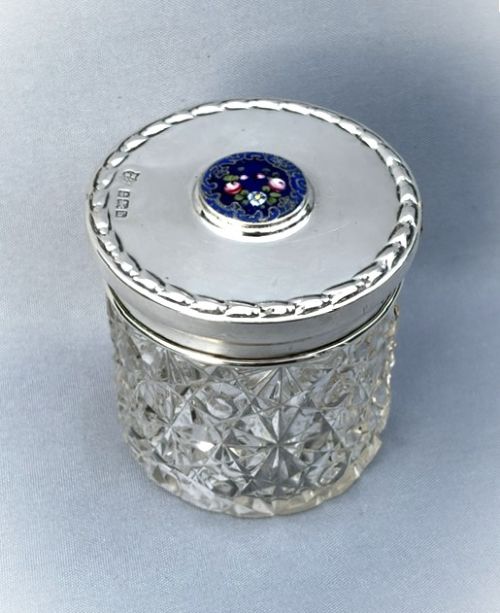
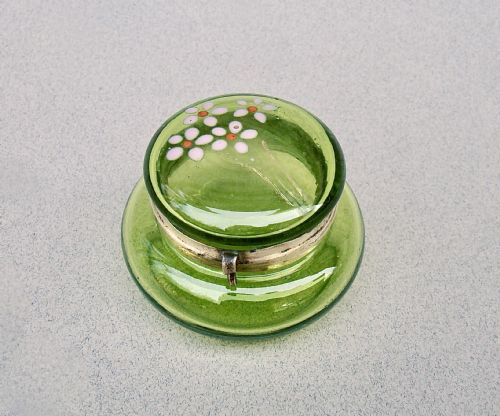
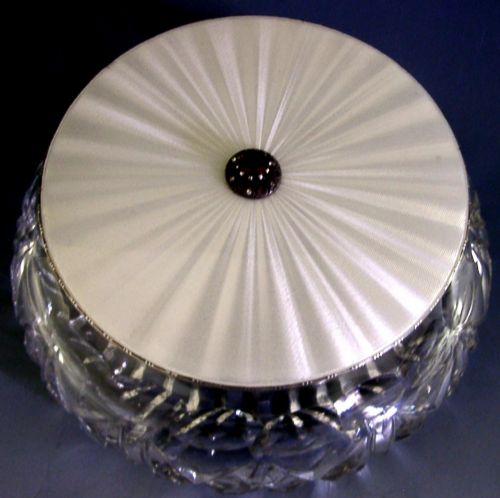
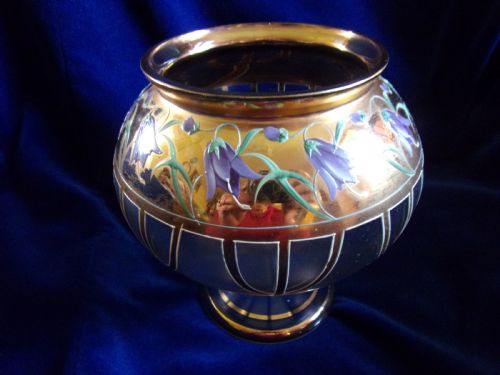
The selections here reflect both nineteenth-century hand-painted floral motifs and twentieth-century geometric guilloche designs. Each specimen demonstrates the shifting tastes of Victorian, Art Nouveau, and Art Deco makers.
How they were made
Craftsmen utilised techniques involving blown or cut glass combined with sterling silver mounts and applied enamel work. Glass bodies were frequently etched, engraved, or tinted in shades such as cranberry and blue before receiving painted or fired enamel decoration.
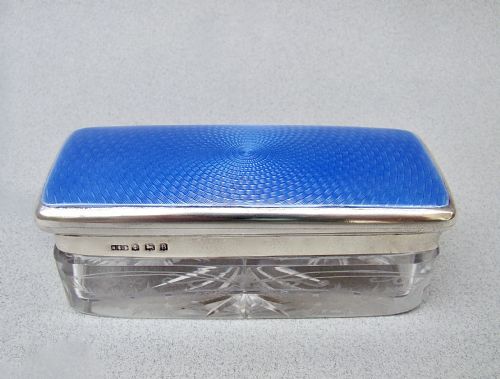
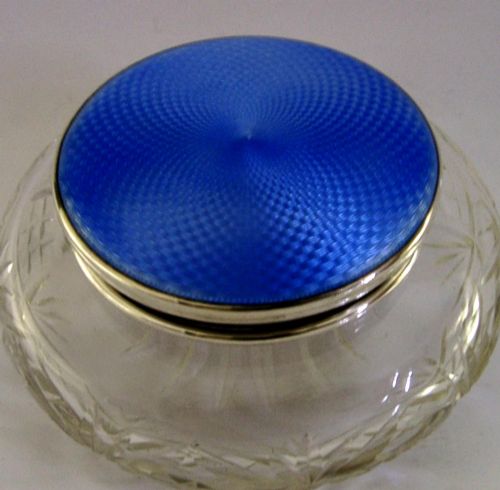
Silver lids and collars were fashioned from sterling silver, often hallmarked in assay offices like Birmingham and London. Guilloche enamel required machine-turning the silver base to create repeating patterns beneath a translucent enamel coating.
Some Victorian dressing table jars still retain traces of ancient scented powder inside their snug silver lids.
What varies in quality
Quality rests upon the crispness of the glass cutting, the weight of the sterling silver mount, and the intricacy of the enamel work. Finer examples display precise engine-turned guilloche patterns under clear translucent enamel rather than flat painted surfaces.
The presence of clear hallmarks on the silver components indicates the exact year of manufacture and the workshop responsible. Superior vessels maintain crisp etching on the glass and secure, well-fitted metal lids without distortion.
Henry Clifford Davis·Henry Perkins·Asprey and Co
The Antique Enamel Glass Jar Glossary
- Guilloche Enamel
- A decorative technique where an intricate geometric pattern is mechanically engraved into metal before translucent enamel is applied over the top. This allows the underlying pattern to show through the glossy coloured surface.
- Cranberry Glass
- A rich red glass created by adding gold chloride to the molten batch during production. It gained popularity during the Victorian era for decorative tableware and dressing table items.
- Bristol Blue
- A deep cobalt blue glass traditionally associated with West Country production in England. Makers utilised this intense hue for finger bowls, scent bottles, and vanity jars.
- Biscuit Barrel
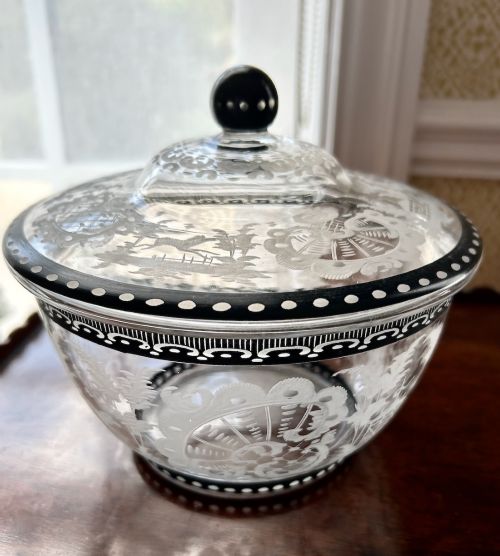
- A ceramic or glass container fitted with a metal lid and swing handle, designed for storing dry biscuits at the dining table. Enamelled glass versions frequently date from the late nineteenth and early twentieth centuries.
- Mary Gregory
- A style of glassware decorated with white enamel silhouettes depicting Victorian children in pastoral settings. The technique appeared on green, blue, and clear glass vessels.
Antique Enamel Glass Jar: Frequently Asked Questions
What are antique enamel glass jars?
These items are small lidded containers made from glass and mounted with sterling silver or metal, featuring decorative enamel work. They were designed for domestic dressing tables to hold cosmetics, pins, or trinkets.
Craftsmen produced them across the Victorian, Edwardian, and Art Deco periods in various colours including cranberry, blue, and clear glass. Their surfaces often display hand-painted flowers or machine-turned guilloche patterns.
How were these jars used?
Owners placed them on dressing tables and vanity sets to store small personal accessories, powders, and hairpins. Larger versions functioned as biscuit barrels or decorative display pieces in the Victorian parlour.
Their sturdy glass bodies and secure metal lids protected delicate contents from dust and moisture in the bedchamber. They served both a practical daily function and an aesthetic role in interior decoration.
How do I date an antique enamel glass jar?
Dating relies heavily on the silver hallmarks stamped onto the mounts, which reveal the assay office and year of manufacture. Stylistic indicators like Art Deco geometric patterns or Victorian floral motifs also narrow down the era.
Examining the manufacturing techniques and glass colours provides further clues regarding whether a piece originates from the nineteenth or early twentieth century.
How do I care for antique glass and enamel?
Cleaning requires gentle handling with a soft, dry cloth to remove dust from the glass and silver surfaces. Avoid immersing pieces with enamel or bonded metal mounts in water to protect the adhesives and paint.
Keep them away from direct sunlight and extreme temperature fluctuations to preserve the vibrant colours of the glass and enamel.