


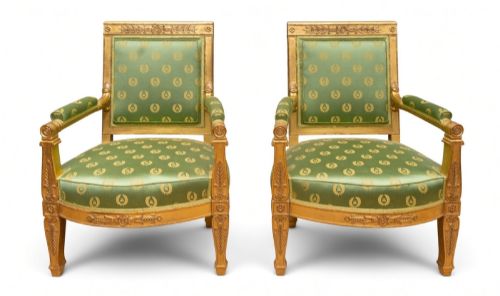
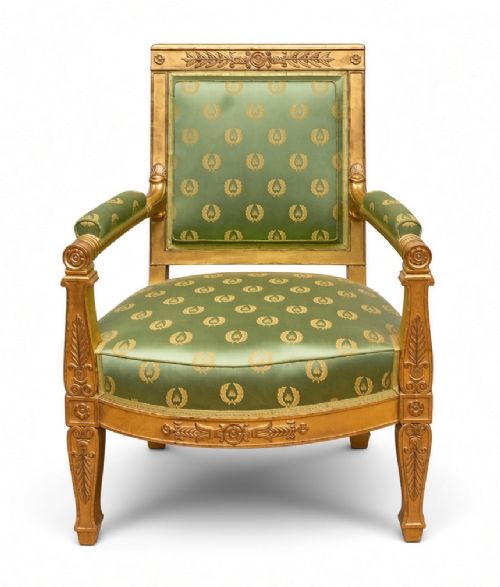
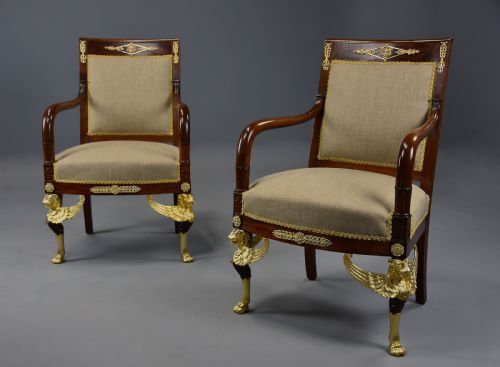
Antique Empire Chairs
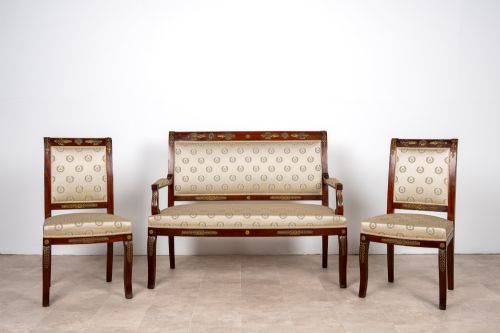
These antique empire chairs bring monumental classical lines and rich mahogany framing into modern interiors.
Antique Empire Chairs
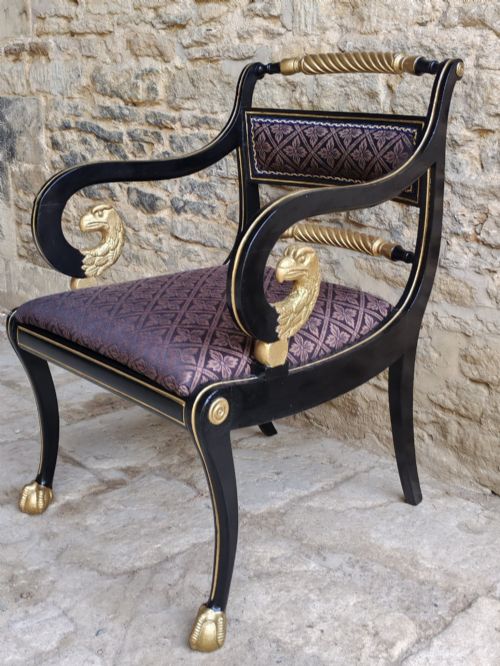
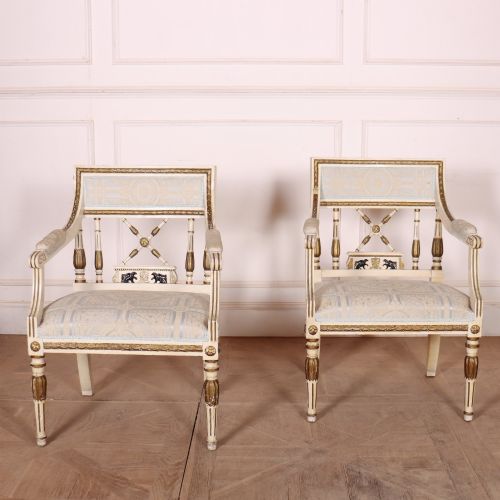
Antique empire chairs comprise formal seating built to neoclassical designs across the nineteenth and early twentieth centuries. Pieces span French, Swedish, and Regency iterations, reflecting strict symmetrical proportions and classical restraint.
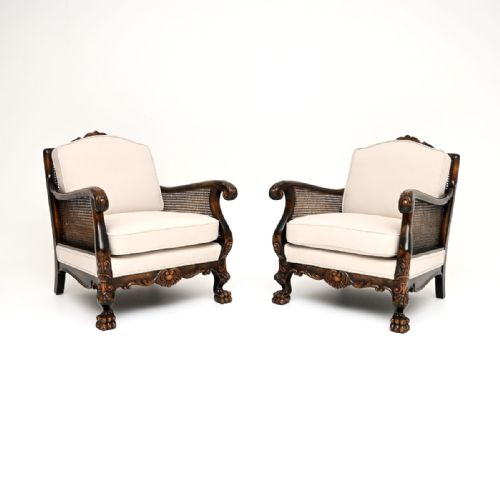
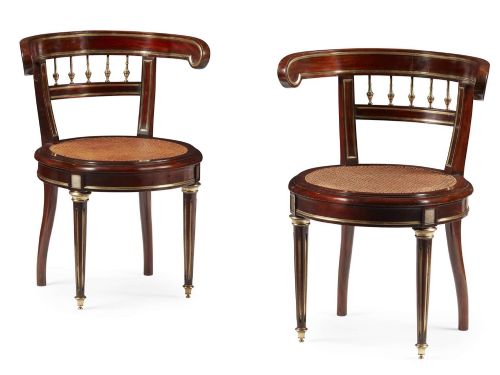
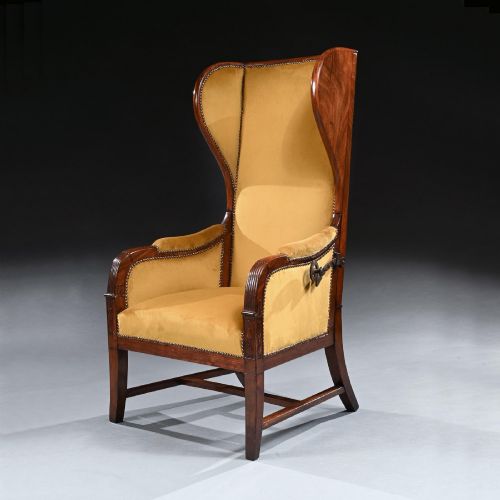
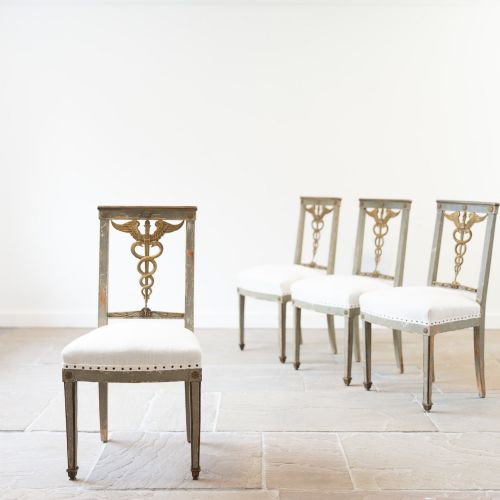
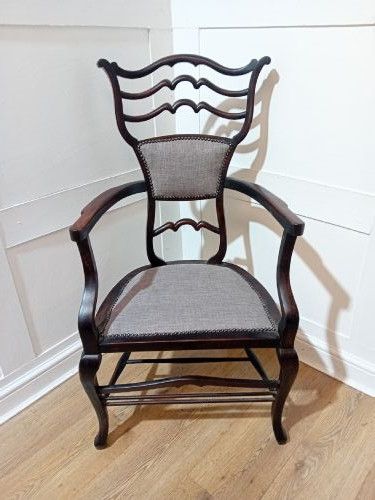
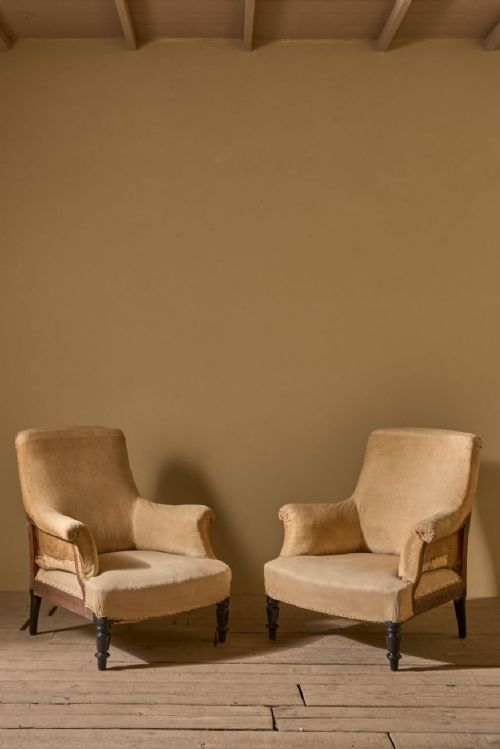
The selections here lean heavily toward French Napoleon III armchairs, alongside Swedish neoclassical models and revival pieces. Forms range from open fauteuils and library chairs to side chairs and dedicated desk seats.
Makers drew heavily on classical antiquity, pairing monumental architectural silhouettes with rich timber frames. Buyers encounter both original period pieces and later revival iterations spanning into the twentieth century.
How they were made
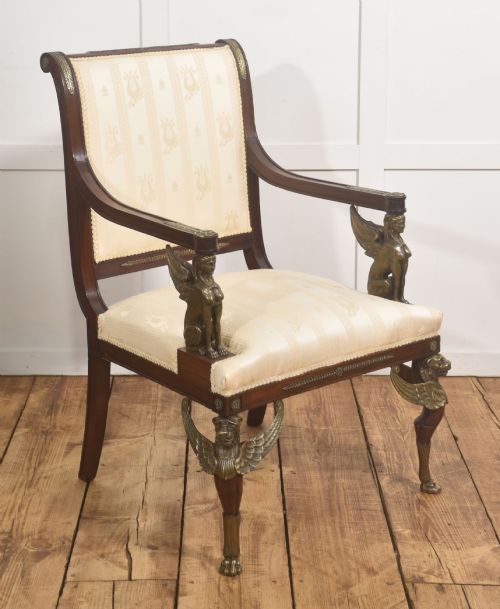
Workshops utilised solid mahogany, birch, and elm for foundational frames, frequently applying giltwood, ormolu, and gilt bronze mounts for classical contrast. Metal ornamentation highlights structural joints, arm terminals, and scrolling supports.
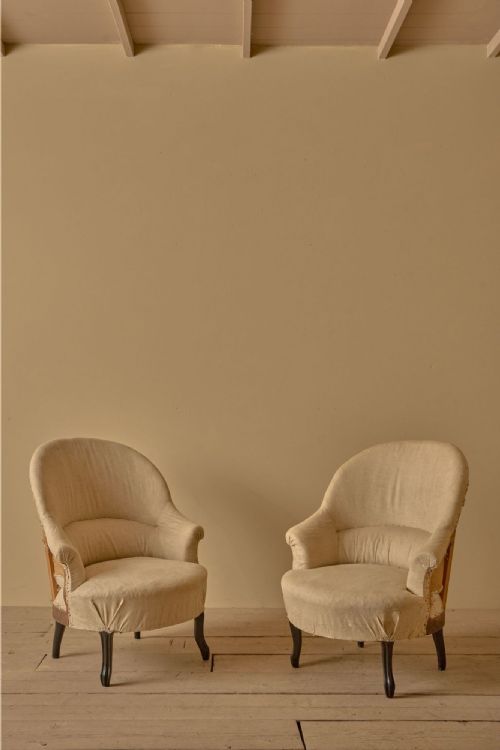
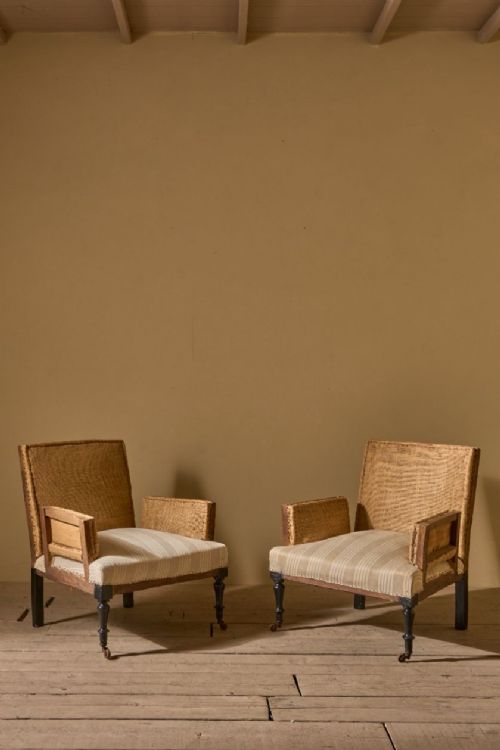
Upholstery techniques involve traditional stuffing secured beneath textile layers, utilising diverse coverings from leather and velvet to patterned fabric. Craftspeople executed carved details by hand, shaping scroll backs and fluted legs to match architectural archetypes.
Antique Empire Chairs Retail Price Guide 2026
Typical asking prices for empire chairs among the pieces listed under this phrase on Sellingantiques today, from the lower quarter to the upper quarter. They describe what is for sale here now, not the wider market.
Several chairs retain hidden chambers beneath their squab cushions, once reserved for stowing clandestine love letters.
What varies in quality
Carving precision and timber selection separate standard production from exceptional examples, with dense mahogany grain and crisp hand-chased ormolu mounts elevating a frame. The integration of period bronze work versus later cast replacements alters the character of individual pieces.
Structural integrity depends upon original joinery holding firm under use, while surviving period upholstery schemes or correct historic textiles add contextual weight to a seating pair.
Jacob Desmalter·Mercier Frères
The Antique Empire Chairs Glossary
- Fauteuil
- An open-armed upholstered armchair originating in France, characterised by exposed wooden framing around the back and seat.
- Ormolu
- Gilt bronze applied to furniture mounts, cast and chased to produce crisp metallic ornamentation against dark timber.
- Giltwood
- Timber coated with gold leaf or powder over a prepared gesso ground, creating a bright reflective surface on carved frames.
- Neoclassical
- A style drawing direct inspiration from the art and architecture of ancient Greece and Rome, prioritising symmetry and restraint.
- Regency
- An English design period spanning the early nineteenth century, marked by bold classical references and dark woods.
Antique Empire Chairs: Frequently Asked Questions
How do I identify a true period piece?
Examine the timber shrinkage, hand-cut joinery, and the weight of bronze or ormolu mounts. Period examples from the early nineteenth century display distinct hand tool marks beneath the frame.
Later revival pieces often utilise machine-cut elements and standardised metal castings, revealing a different standard of workshop production.
Can I use these chairs at a desk?
Certain forms, notably designated bureau chairs and library armchairs, were specifically engineered for reading and writing tasks. Their lower backs and supportive arms suit study spaces.
Ensure seat heights align with modern writing surfaces before placing them into daily service.
How should I care for giltwood and ormolu?
Dust gilded surfaces gently with a soft dry brush, avoiding all chemical polishes and moisture. Moisture degrades fragile gold leaf layers.
Ormolu mounts require similarly light maintenance to preserve the original chased patination without stripping the surface.
What is the difference between French and Swedish empire styles?
French designs tend toward heavier ornamentation, utilising deep mahogany and elaborate ormolu mounts to project grand imperial authority. Swedish variations often favour lighter birch or elm timbers.
Swedish pieces reflect a more restrained, rustic neoclassical interpretation suited to paler domestic interiors.