





Antique Embroidery Sampler
An antique embroidery sampler brings hand-stitched needlework and textile art from past centuries directly onto your wall.
Antique Embroidery Sampler
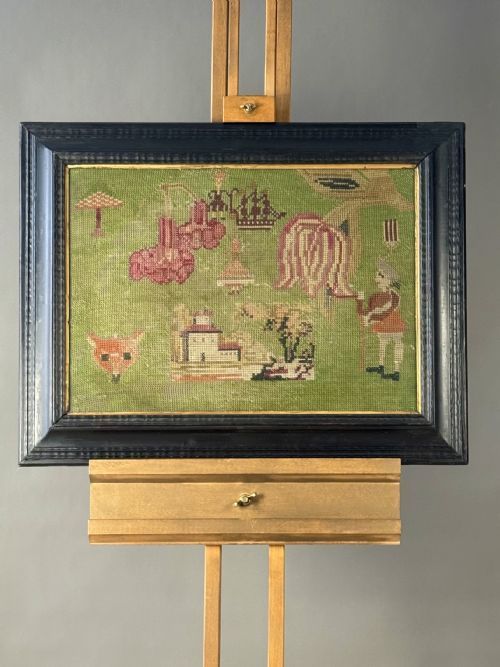
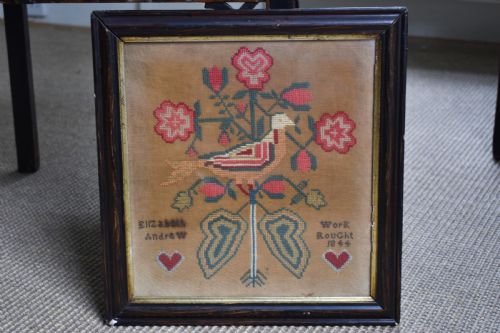
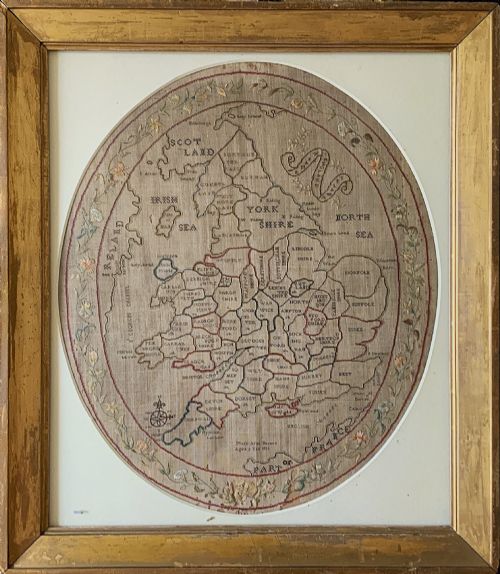
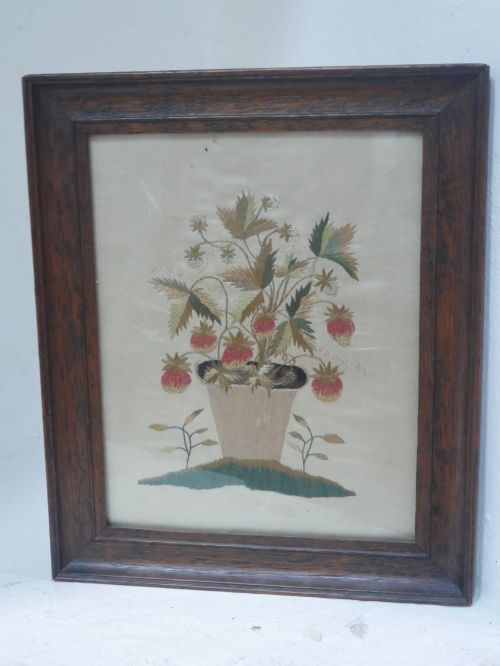
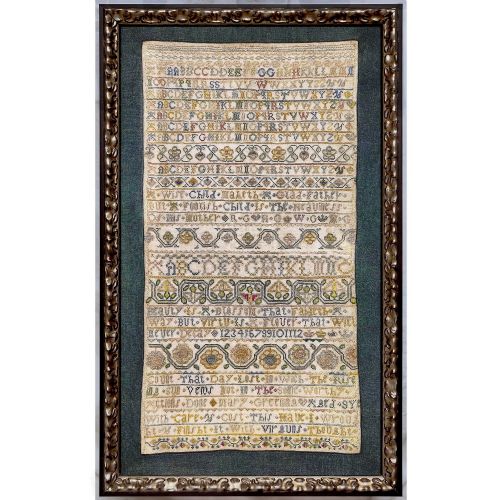
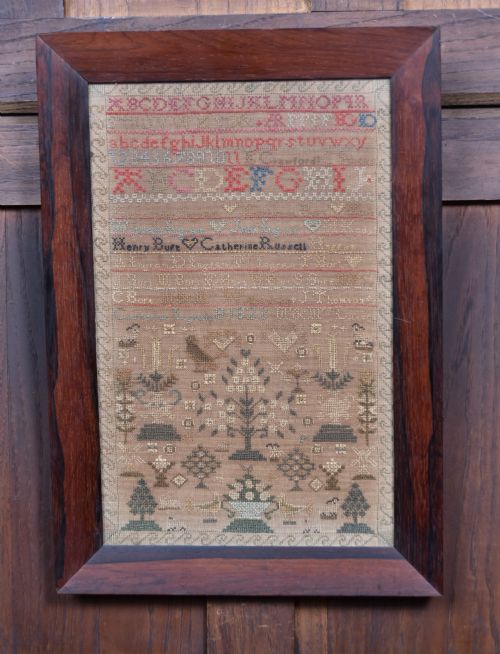
When you search for an antique embroidery sampler, you encounter textile art and needlework pictures created primarily during the 18th and 19th centuries. These pieces span Georgian and Victorian periods, showcasing alphabets, maps of England and Wales, religious scenes, and floral motifs.
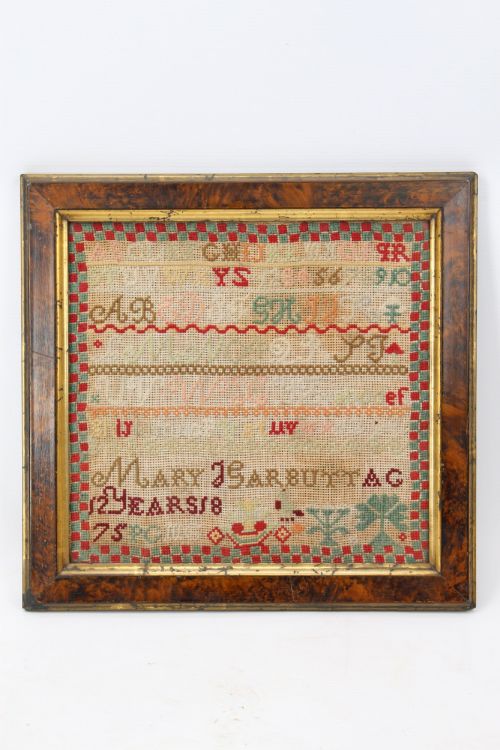
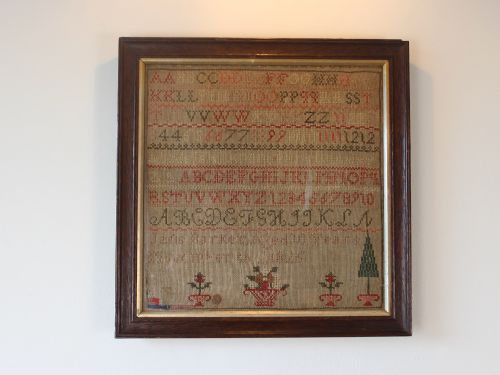
You are most likely to meet framed needlework panels and alphabet samplers worked by young girls and makers such as Mary J Garbutt, Mary Banion, and Jane Brand. The selection includes Scottish, English, and French examples, often preserved in wood or glass frames.
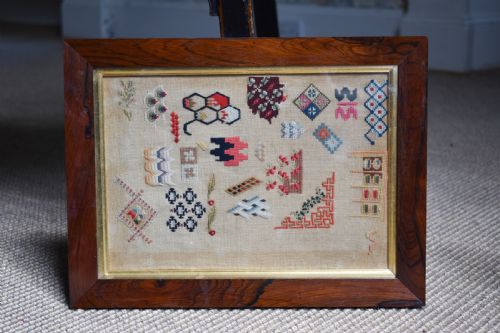
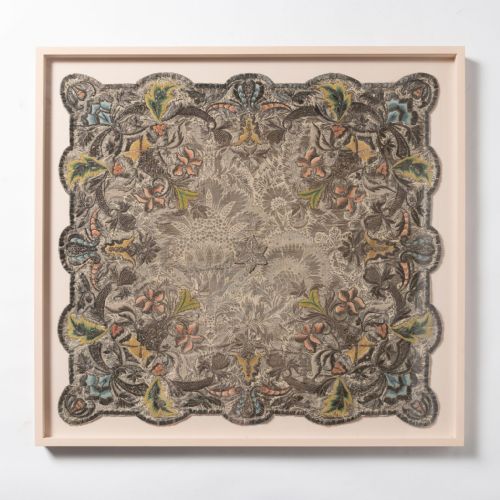
The form ranges from simple wool work and silk floss stitching to detailed cartography and pictorial needlepoint. Each piece records domestic education, skill, and narrative illustration from historical households.
How they were made
Makers stitched onto grounds of woven linen using wool, silk, and silk thread. The materials were worked by hand using various stitches to build up alphabets, borders, and pictorial scenes.
Many surviving pieces retain their period wooden frames, occasionally protected beneath glass to preserve the delicate silk floss and wool embroidery against dust and handling.
Antique Embroidery Sampler Retail Price Guide 2026
Typical asking prices for embroidery sampler among the pieces listed under this phrase on Sellingantiques today, from the lower quarter to the upper quarter. They describe what is for sale here now, not the wider market.
One Victorian Scottish sampler proudly preserves an authentic stitch error stitched by Maggie Muir at age eleven.
What varies in quality
The distinction between pieces rests on the complexity of the design and the neatness of the execution. Map samplers and pictorial narrative scenes demand greater skill in layout and proportion than basic alphabet rows.
Condition and legibility set examples apart, particularly the preservation of the linen ground and the vibrancy of the silk and wool threads. Age-related fading and stitch errors alter the character of individual works.
Mary J Garbutt·Mary Banion·Mary Greening·Rebecca Cleminson·Jane Brand
The Antique Embroidery Sampler Glossary
- Alphabet sampler
- A piece featuring rows of letters and numbers used by young makers to practice lettering stitches. These often include dates and the maker's age.
- Band sampler
- An early format featuring horizontal bands of diverse decorative stitch patterns arranged in parallel rows. They represent a tradition carried from the seventeenth century onward.
- Map sampler
- A specialised needlework piece depicting geographical areas such as England and Wales, combining needlecraft with education. They date prominently to the Georgian era.
- Silk floss
- A lustrous thread material utilised for fine detail and smooth pictorial shading in needlework pictures. It provides a reflective surface distinct from wool.
- Gros point
- A counted-thread needlepoint stitch producing a firm, durable texture suited to larger pictorial scenes. It appears in mid-nineteenth century figurative works.
Antique Embroidery Sampler: Frequently Asked Questions
What is an antique embroidery sampler?
An antique embroidery sampler is a piece of historical textile art stitched by hand on a linen ground. They record domestic needlework skills, alphabets, maps, and pictorial scenes from past centuries.
Most examples date from the 18th and 19th centuries during the Georgian and Victorian periods. They were traditionally worked by young makers as proof of their needlecraft proficiency.
How were samplers used in the past?
Makers utilised samplers as educational exercises to practice stitches, lettering, and decorative motifs. They served as reference pieces for domestic sewing and household ornamentation.
Once completed, many were framed and hung on walls as decorative art or records of family lineage and age.
How do I date an antique sampler?
Dating relies on stitching styles, framing materials, and the presence of direct evidence such as inscribed dates and names. Georgian and Victorian pieces display distinct lettering formats and pictorial conventions.
Textile analysis of the linen ground, silk floss, and wool threads also helps determine the period of origin.
How should I care for a sampler?
Display samplers away from direct sunlight to prevent the fading of silk and wool threads. Maintaining stable indoor humidity protects both the fragile linen ground and the wooden frame.
Glass fronts protect the delicate embroidery from dust and physical contact, requiring no direct cleaning of the textile itself.