






Antique Ecclesiastical Lighting
Antique ecclesiastical lighting brings the solemnity and architectural grandeur of historic chapels directly into domestic interiors through surviving brass, bronze and iron pieces.
Antique Ecclesiastical Lighting
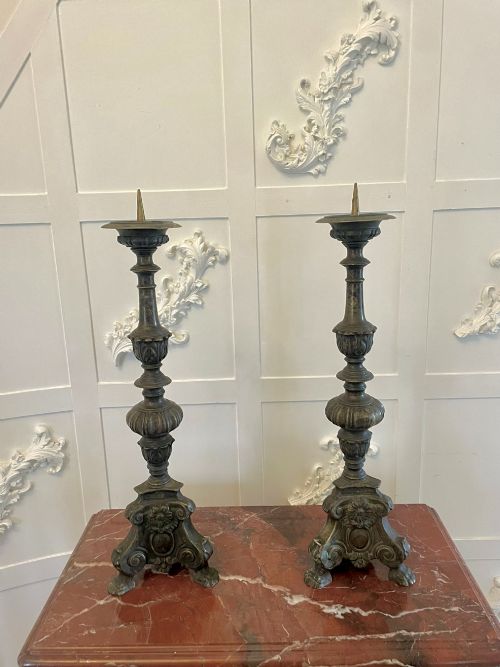
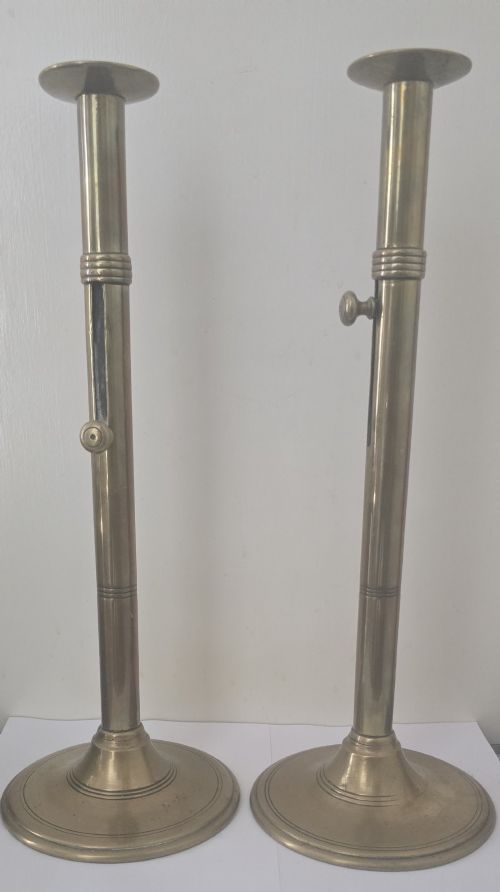
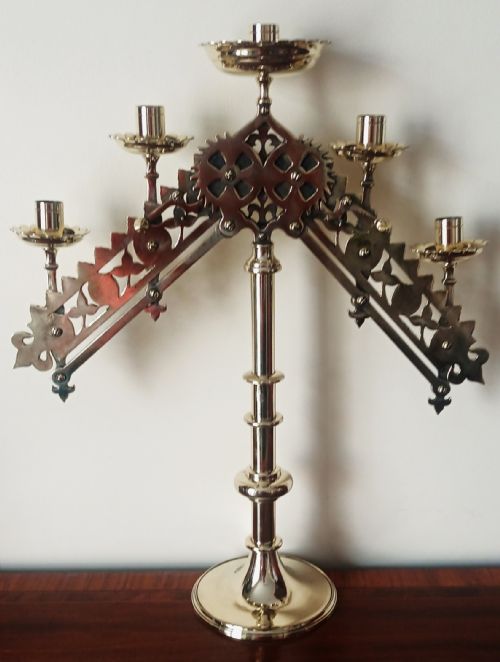
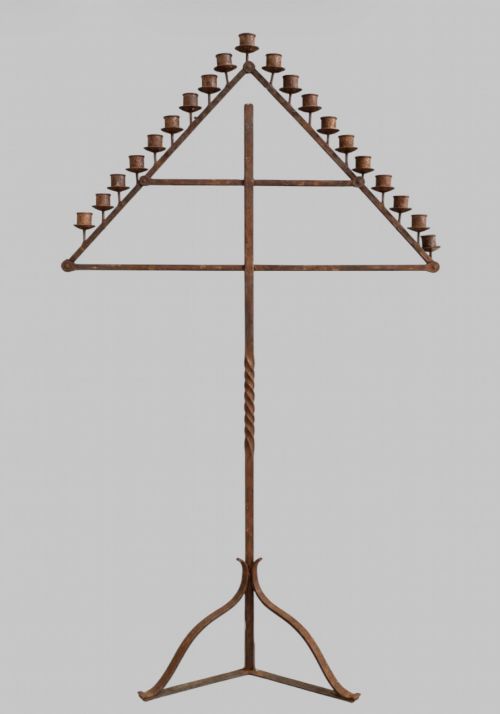
When you search for antique ecclesiastical lighting, you encounter items designed for use in churches, chapels and altars, spanning several centuries of devotional craftsmanship. The selection is dominated by tall candlesticks, prickets and multi-branched candelabra originally intended to illuminate sacred spaces during services.
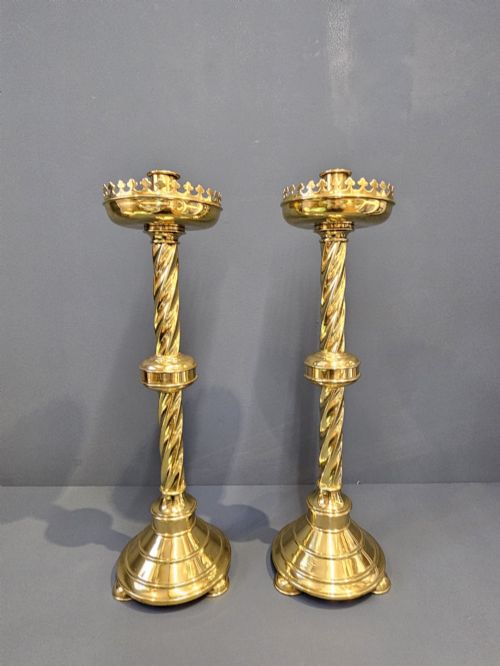
The pieces on this page are most commonly Victorian or nineteenth century brass objects reflecting the Gothic Revival movement. You will also find earlier eighteenth century items alongside twentieth century interpretations, encompassing floor-standing holders, wall sconces and chandeliers.
Beyond altar lighting, the inventory includes occasional conversions where historic candleholders or carved wooden stands have been adapted into table lamps. These domestic adaptations retain their architectural silhouettes while functioning within modern residential settings.
Materials and Construction
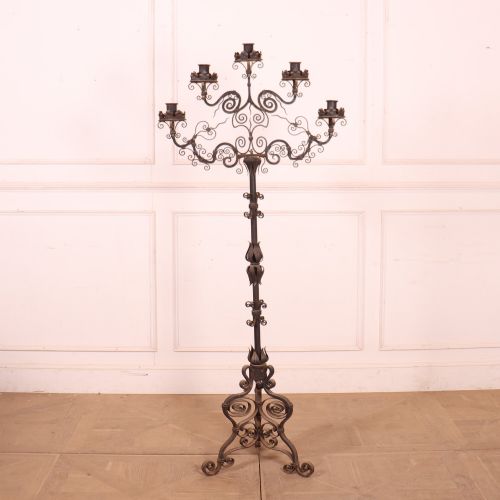
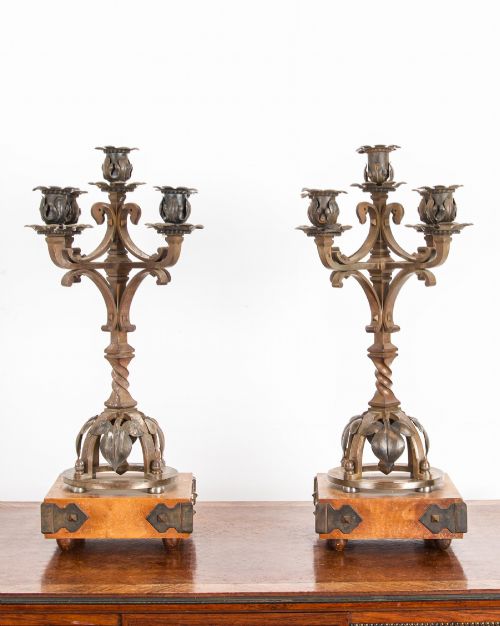
Brass is the prevailing medium, utilised for heavy altar candlesticks and elaborate chandeliers through casting and turning techniques. Bronze, wrought iron and various metals also appear, providing structural strength for larger architectural floor candelabra and multi-candle stands.
Construction methods rely on robust assembly to support heavy wax candles safely during long ceremonies, resulting in thick-gauge metals and secure joints that survive intact.
Listings demonstrate a strong predominance of nineteenth century Gothic Revival brass candlesticks alongside eighteenth century continental giltwood altar pieces.
Factors That Separate the Finest Pieces
The distinction between standard ecclesiastical items and superior examples lies in the crispness of the casting and the depth of the ornamentation. Ornate chasing, intricate trefoil details and heavy gauge metals indicate a higher grade of workshop production intended for grander liturgical settings.
Proportion and scale dictate desirability, particularly in pairs of tall altar candlesticks or floor standards where symmetry and balance are paramount. Pieces retaining their original prickets, side ejectors or unaltered candle platforms command greater regard than those subjected to heavy later adaptation.
Joseph Wilmotte
The Antique Ecclesiastical Lighting Glossary
- Pricket
- A sharp metal spike on a candlestick designed to secure the base of a large candle. This traditional form predates modern socket-style holders.
- Gothic Revival
- An architectural and decorative style popular during the nineteenth century that revived medieval pointed arches and geometric tracery. It heavily influences Victorian ecclesiastical metalwork.
- Candelabra
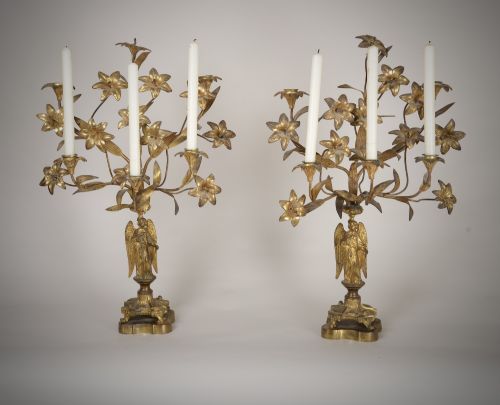
- A branched lighting fixture holding multiple candles simultaneously. These range from heavy altar pieces to articulated brass wall sconces.
- Giltwood
- Timber coated with a thin layer of gold leaf or gesso. It appears frequently on continental altar candlesticks.
- Ormolu
- Finely chased and gilt bronze used for decorative mounts and altar accessories. The technique creates a bright gold appearance on metal surfaces.
Antique Ecclesiastical Lighting: Frequently Asked Questions
How were church candlesticks used?
Church candlesticks stood upon altars, ledgers or the floor to provide illumination and symbolic presence during religious services and masses. Pricket versions held large beeswax candles directly upon spikes.
Pairs of candlesticks were placed symmetrically flanking the altar, while larger multi-branch candelabra and floor standards illuminated broader chancel areas.
Are these pieces converted to electricity?
Many historic pieces retain their original candle-holding format, while others have been carefully converted into table lamps over the years. Conversions allow these sculptural forms to function safely with modern wiring.
Listings specify whether a piece remains in its original candle-holding configuration or has undergone conversion to a lamp.
How do I date antique brass candlesticks?
Dating relies on examining manufacturing techniques, base construction, weight and stylistic clues such as Georgian ejector mechanisms or Victorian Gothic Revival motifs. Heavy sand-cast brass typically points to the nineteenth century or earlier.
Proportions, decorative casting quality and the presence of makers' marks or retailer stamps assist in establishing a reliable chronology.
How do I place these in a home?
These pieces act as strong focal points on sideboards, mantels or tables due to their height and architectural presence. Floor-standing candelabra suit empty corners or hallways needing vertical emphasis.
Pairing heavy brass or giltwood items with contemporary furnishings creates a striking contrast that highlights their historic patina and sculptural form.