
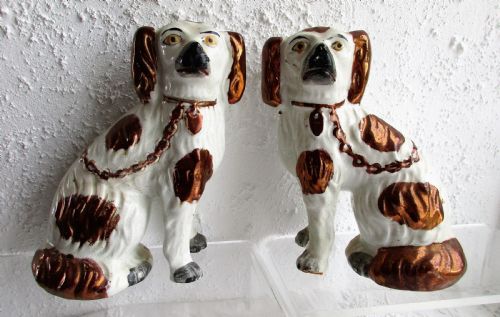
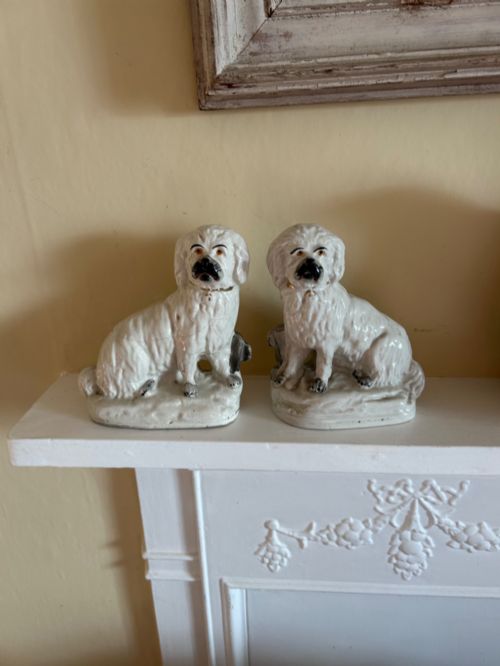


Antique Earthenware Spaniels
Antique earthenware spaniels bring hearth-side character into a room, featuring prominently in pairs that once stood on Victorian mantelpieces.
Antique Earthenware Spaniels
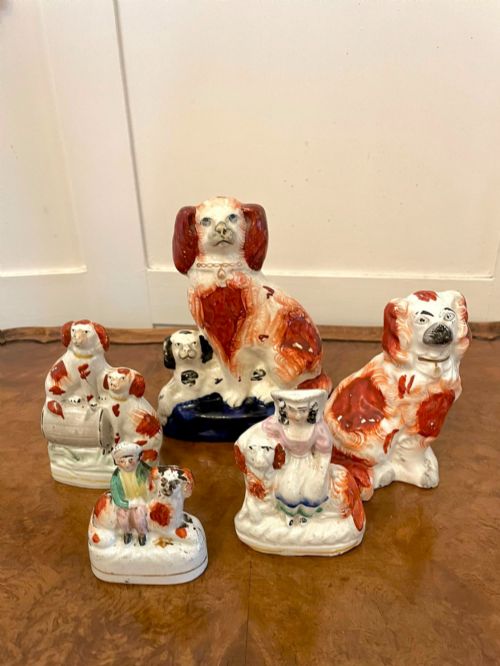
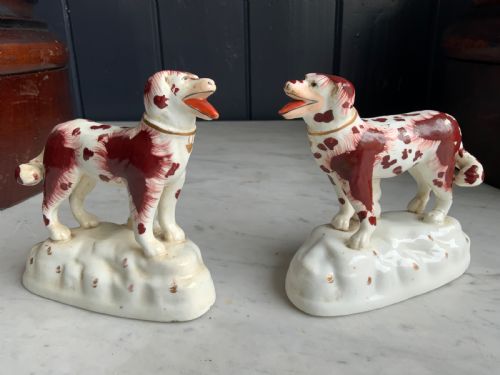
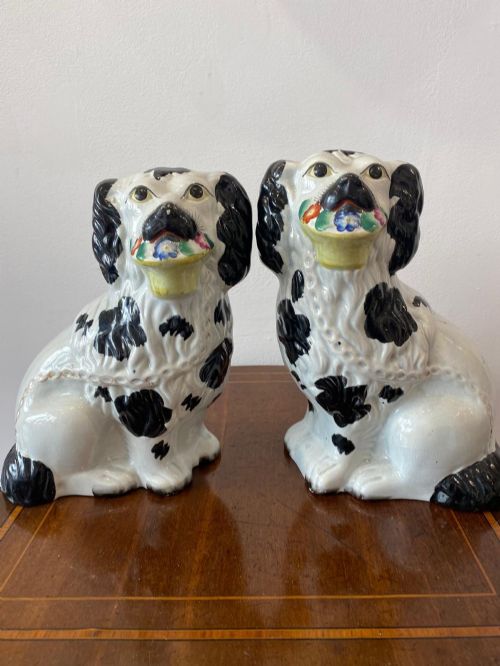
These pieces are ceramic figures modelled as dogs, primarily appearing as seated spaniels that collectors often know as comforter spaniels. Most examples on this page date from the nineteenth century, including the Victorian period and specific decades such as eighteen-sixty and eighteen-eighty.
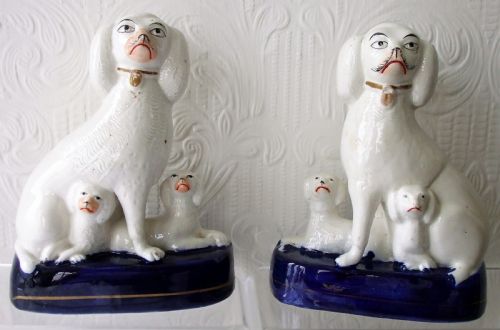
The selection extends beyond simple pairs to encompass money boxes, Toby jugs, quill holders, and spill vases. Variations feature poodles with pups, Maltese terriers, and dogs resting on blue cushions with encrusting, alongside musician figures accompanied by dogs.
Makers shaped these ornaments in English traditions, predominantly utilising Staffordshire pottery forms. Buyers encounter collections ranging from single pairs to larger groupings of four, five, or six matching figures.
Materials and construction
Potters constructed these figures using earthenware and ceramic bodies, shaped into moulds before firing. Artisans then applied glaze to seal the porous clay surface.
Some spaniels multitask as money boxes or quill holders, proving that nineteenth-century mantelpiece ornaments were expected to earn their keep.
Judging quality and character
Quality rests in the crispness of the moulding and the precision of the hand painting, where well-defined facial expressions and neat brushwork elevate a pair above standard production. The application of gilt and enamel details shows varying levels of care by the decorator.
The Antique Earthenware Spaniels Glossary
- Earthenware
- A type of pottery made from clay that is fired at relatively low temperatures and remains porous until glazed. It forms the primary body material for these nineteenth-century figures.
- Comforter spaniels
- A traditional term for the seated ceramic spaniels placed on mantelpieces in pairs facing inwards towards each other. They became domestic staples in Victorian interiors.
- Spill vase
- A hollow cylindrical fixture attached to a figure, designed to hold taper spills for lighting fires and candles. These combine decorative modelling with practical household utility.
- Enamel
- Opaque glass-like paint applied over the glaze and fired at a lower temperature to add colour. It provides the distinct black, red, and white markings found on many coats.
Antique Earthenware Spaniels: Frequently Asked Questions
What are comforter spaniels?
Comforter spaniels are ceramic dog figures modelled after King Charles spaniels that traditionally sat on Victorian mantelpieces. People arranged them in pairs facing each other to guard the hearth.
These figures originated as affordable chimney ornaments for middle-class homes. Their name reflects the comforting presence they brought to nineteenth-century parlours.
How do I display antique spaniels?
These figures look best paired on a mantelpiece, sideboard, or bookshelf in the traditional manner. Keeping matching pairs together preserves their original decorative arrangement.
Positioning them where light catches the glaze and gilt highlights enhances their visual detail. Stability is important, so place them on secure, level surfaces away from heavy traffic.
How do I date these spaniels?
Dating relies on stylistic clues, potting characteristics, and known production periods such as the Victorian era or specific decades. Earthenware bodies and hand-painted enamel styles help narrow down the timeframe.
Markings, functional types like spill vases, and specific colour palettes such as black and white or red and white also indicate age. Comparing them to documented nineteenth-century examples provides further confirmation.
What is a spill vase figure?
A spill vase figure incorporates an open vertical cylinder alongside or behind the animal. This allowed households to store thin wooden spills used for transferring flames from the hearth to lamps.
This combination of sculpture and utility was popular in nineteenth-century homes before safety matches became common. The vase is usually decorated to match the main ceramic dog.