


Antique Earthenware Set
An antique earthenware set brings domestic history to the table, offering matched services, wash sets and decorative groupings shaped by centuries of ceramic tradition.
Antique Earthenware Set
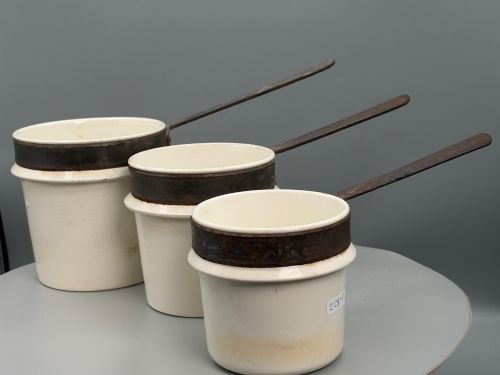
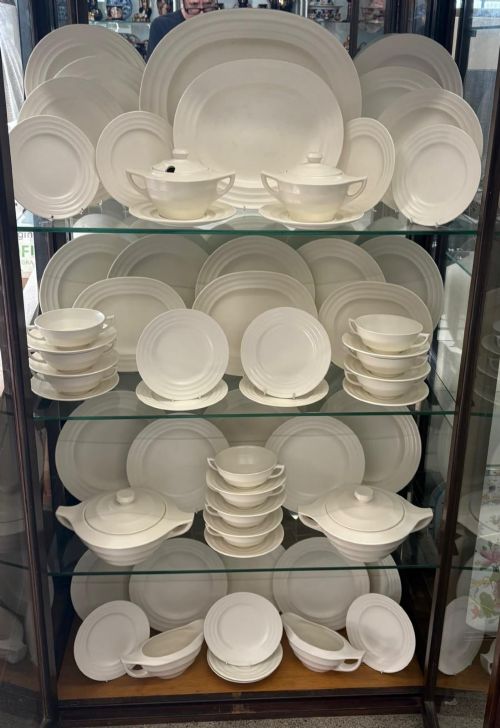
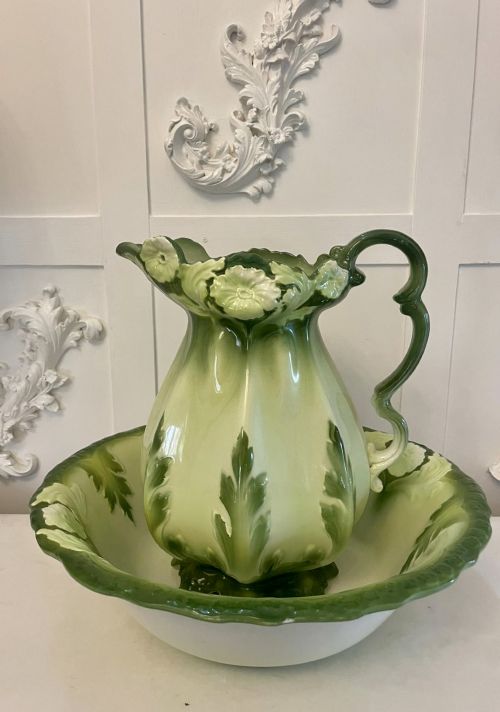
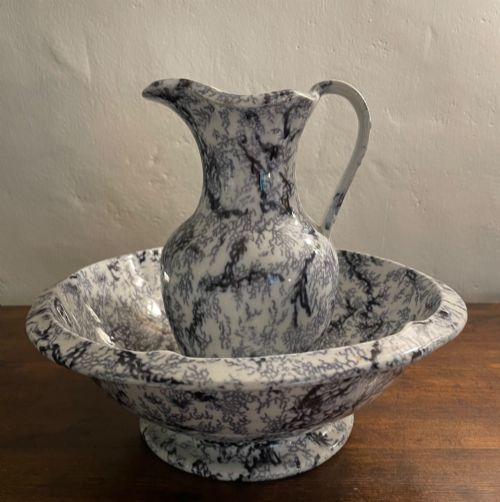
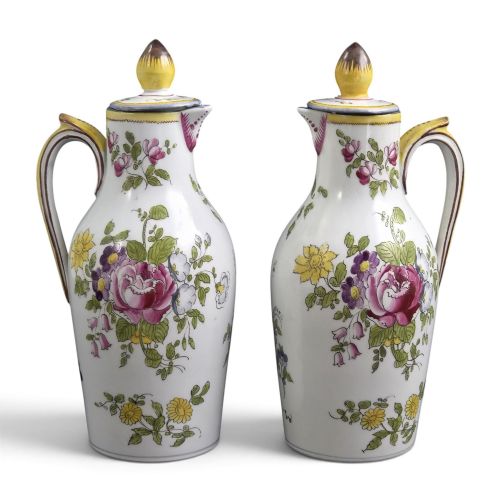
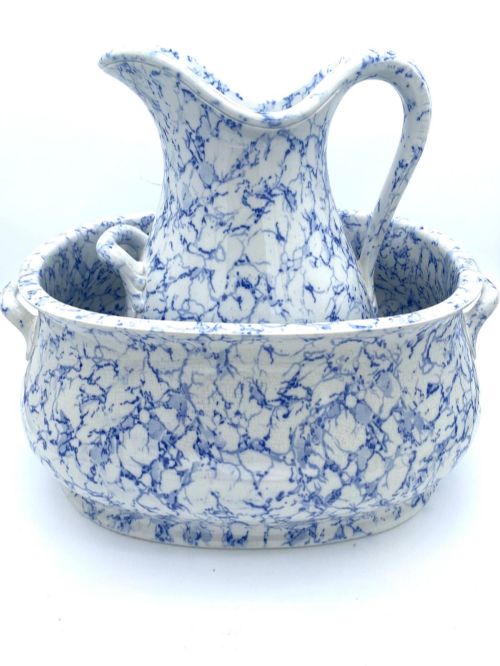
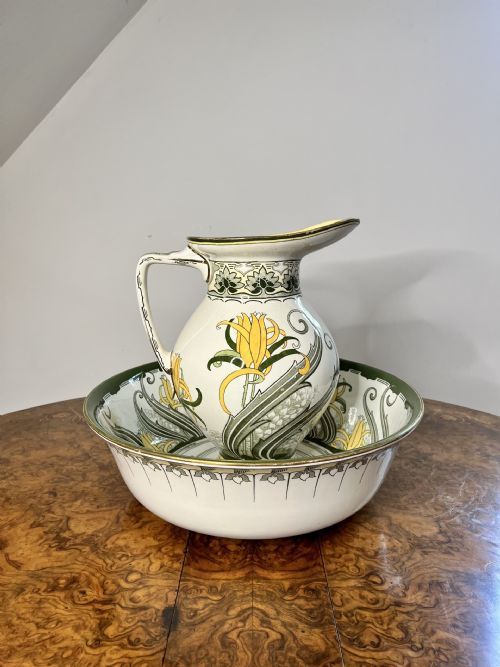
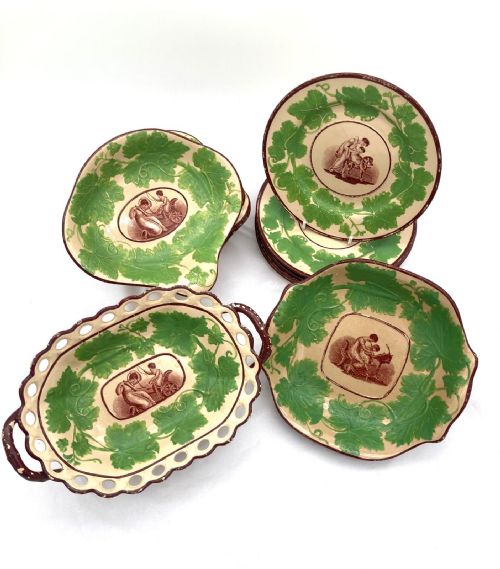
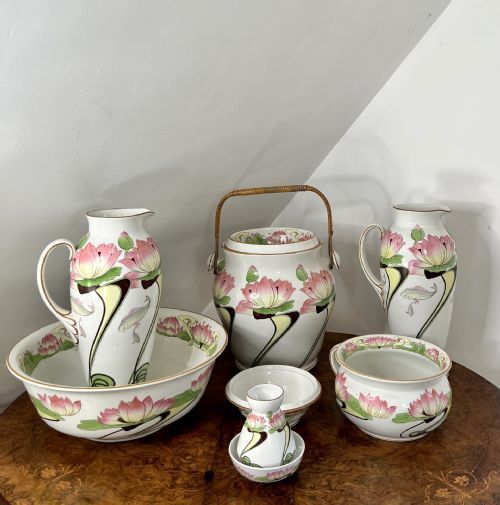
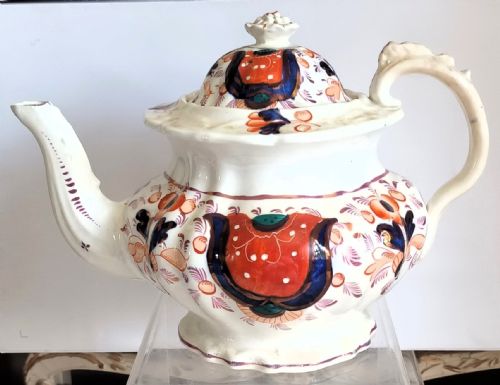
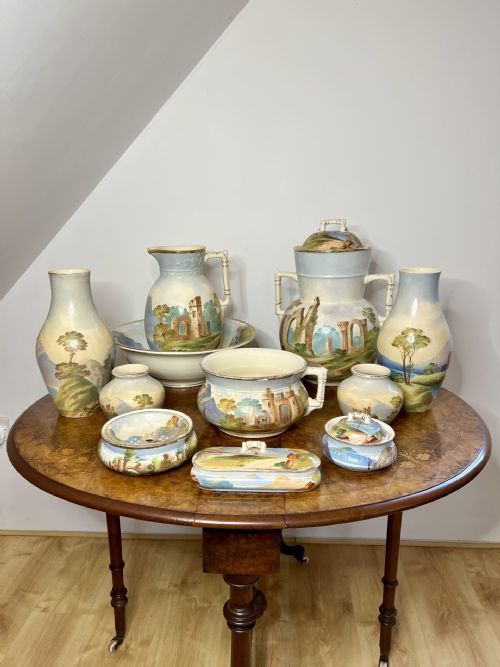
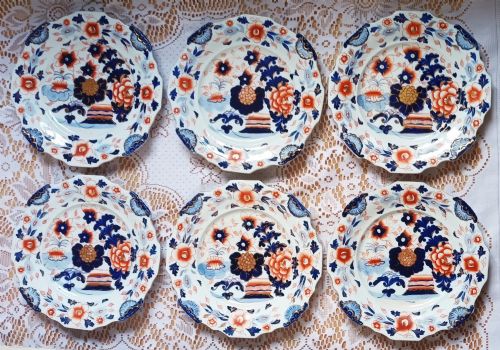
When searching for an antique earthenware set, buyers encounter a broad spectrum of domestic and decorative groupings spanning the eighteenth, nineteenth and early twentieth centuries. These collections take many forms, ranging from large Victorian dinner services and extensive dessert sets to wash sets, jug and bowl sets, and smaller groupings of plates or tea wares.
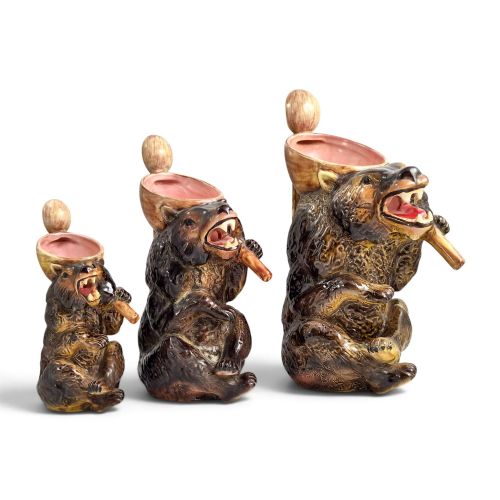
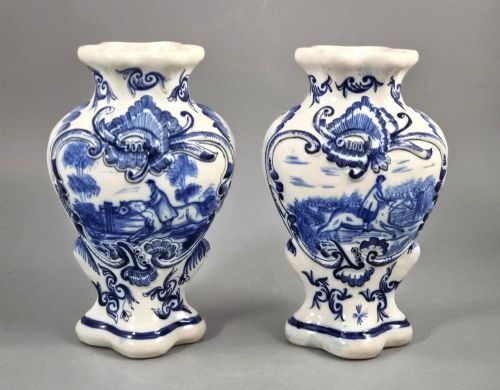
The material encompasses porous earthenware alongside refined ironstone, tin-glazed pieces like Dutch Delftware and French faience, and majolica. Such sets emerge from various origins including English potteries, French workshops and German kilns, reflecting domestic dining, washing and display customs of their respective eras.
On this page, buyers meet everything from grand service pieces to chamber items and tea sets, each demonstrating the utilitarian and aesthetic roles ceramic wares played in period homes. The surviving pieces show how households dined, washed and decorated during the Georgian, Victorian, Edwardian and later decorative periods.
Materials and methods
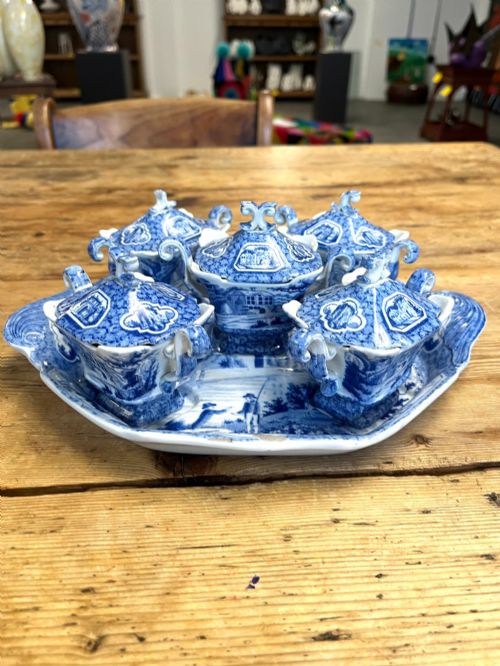
Potters formed these sets using clay bodies that were fired and subsequently coated with glazes, tin-enamels or clear lead surfaces to ensure durability and liquid resistance. Decoration involved hand-painting, transfer printing in blue and other colours, or applying enamel and gold leaf over the glaze.
Ironstone provided a denser, more robust ceramic body suitable for heavy dinner and soup services, while traditional earthenware and tin-glazed compositions allowed for porous, absorbent bases finished with opaque white or coloured surfaces. Specialist techniques like flow blue caused cobalt pigments to blur softly into the damp glaze during firing, creating characteristic hazy outlines.
Antique Earthenware Set Retail Price Guide 2026
Typical asking prices for earthenware set among the pieces listed under this phrase on Sellingantiques today, from the lower quarter to the upper quarter. They describe what is for sale here now, not the wider market.
Materials represented include standard earthenware, ironstone, tin-glazed ceramic, majolica, enamel and gold leaf applied to dinnerware, wash sets and decorative services.
Evaluating quality and execution
Quality in these sets rests upon the crispness of the transfer printing or the precision of the hand-painted brushwork, alongside the evenness of the glaze coverage across multiple matching components. Superior sets maintain consistent pattern alignment and colour saturation from piece to piece within the service.
The refinement of the ceramic body itself distinguishes high-grade productions, where thinner walls, well-balanced thrown or moulded forms, and careful finishing indicate superior kiln work and skilled potting. Intricate details such as moulded handles, applied floral elements or integrated gilt highlights separate standard utilitarian wares from ambitious cabinet pieces.
Wedgwood·Minton·Clarice Cliff·Davenport·Sewell·Fourmaintraux Courquin
The Antique Earthenware Set Glossary
- Earthenware
- A porous ceramic body fired at lower temperatures than stoneware or porcelain, requiring a glaze to hold liquids. It forms the foundation of traditional pottery, majolica and tin-glazed wares.
- Ironstone
- A dense, durable type of heavy earthenware patented in the nineteenth century to imitate porcelain. It resists chipping and staining, making it ideal for large dinner and soup services.
- Flow blue
- A nineteenth-century transfer printing technique where lime or ammonia chloride was introduced into the kiln to cause cobalt blue pigment to bleed into the surrounding white glaze. This produced a soft, hazy decorative effect.
- Majolica
- A type of earthenware covered with an opaque tin-glaze and painted with brightly coloured metal oxide glazes. It was widely popular during the Victorian era for decorative services and figural vessels.
- Transfer printing
- A mechanical method of applying complex decorative patterns to ceramics by engraving a copper plate, inking it, and transferring the design onto tissue paper before pressing it onto the biscuit ware.
Antique Earthenware Set: Frequently Asked Questions
What is included in a typical antique earthenware set?
Depending on the specific listing, a set might comprise dinner plates, serving platters, soup bowls, tea cups, or matched jugs and basins. Larger services incorporate dozens of coordinated pieces designed for formal dining or domestic washing.
Buyers should examine the specific item description to understand whether a set is complete or represents a surviving part-service from a larger original production.
How do I care for antique earthenware?
These ceramic pieces require gentle hand washing in warm water with mild detergent, avoiding harsh scrubbers or modern dishwashers that can damage aged glazes and delicate overglaze enamels. Sudden temperature changes should be avoided to prevent thermal shock.
Storing pieces with adequate padding between stacked plates protects rims and handles from chipping over time.
What is the difference between earthenware and ironstone?
Earthenware is a traditional, more porous ceramic body fired at lower temperatures, whereas ironstone is a heavily vitrified, highly durable refinement containing slag or stone elements. Ironstone offers greater strength and resistance to heavy daily use.
Both materials take glazes and transfers effectively, but ironstone generally presents a heavier weight and a whiter, less porous base.
How can I date an antique earthenware set?
Dating relies on maker's marks stamped or printed on the undersides, stylistic markers such as Victorian or Art Deco shapes, and manufacturing techniques like transfer printing styles. Comparing pattern names and registry marks helps narrow down the decade of production.
Changes in ceramic bodies and decorative palettes across the eighteenth and nineteenth centuries provide reliable chronological clues.