


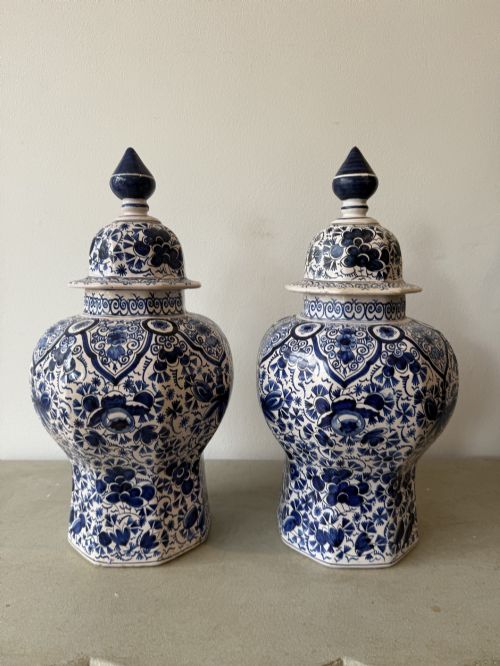
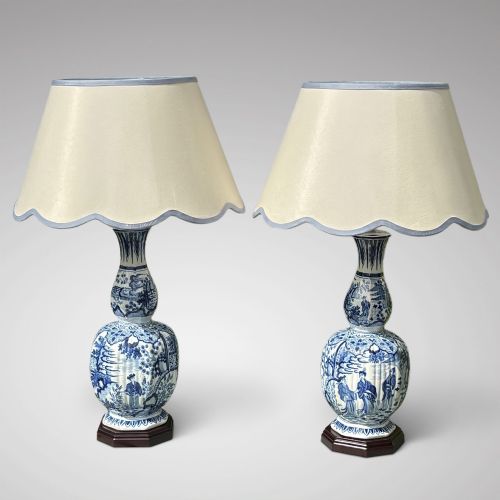


Antique Dutch Ceramic Pair
An antique dutch ceramic pair brings centuries of European kiln craft straight to your mantelpiece.
Antique Dutch Ceramic Pair
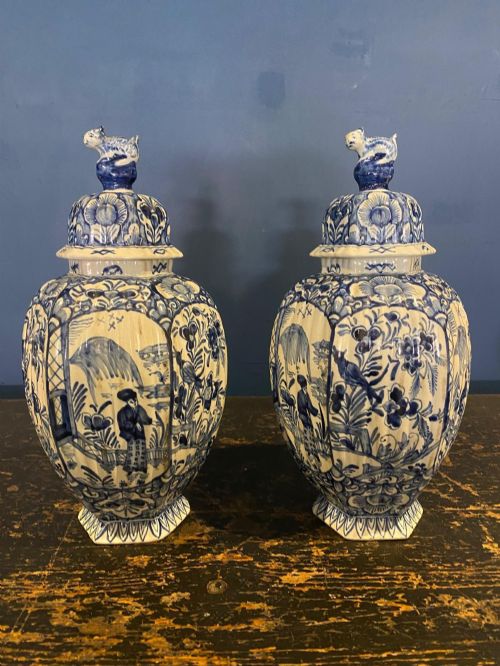
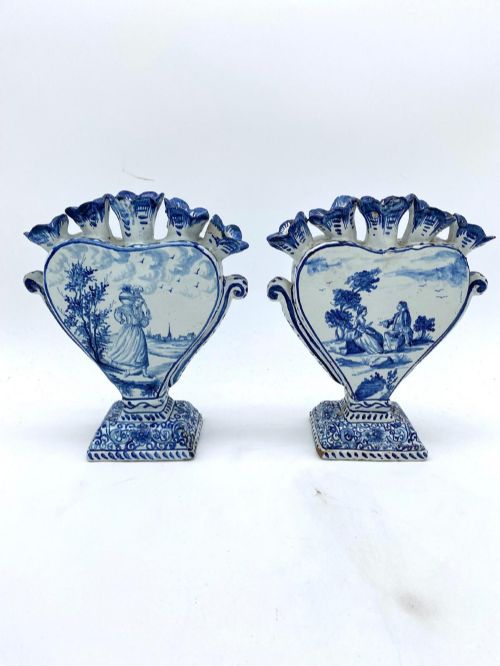
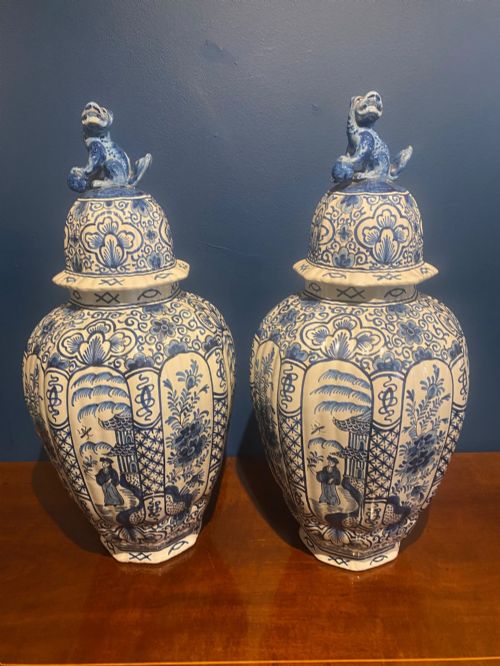
An antique dutch ceramic pair consists of matched twin vessels, figures, or plates created in the Netherlands across the eighteenth, nineteenth, and early twentieth centuries. These matching items were traditionally produced for domestic display on mantelpieces, sideboards, and cabinets.
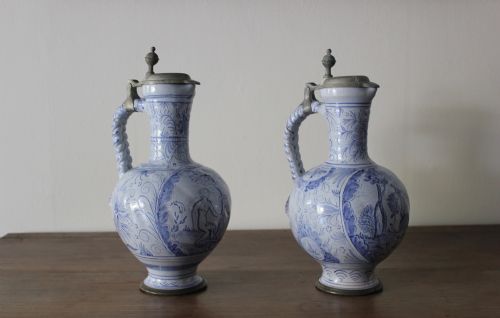
The most common examples encountered on this page are blue and white delftware items, alongside colourful polychrome pieces and later art nouveau porcelain. Forms range from lidded jars and beaker vases to decorative plates, jugs, lamps, and ceramic figures.
Pieces span multiple design movements, including Dutch baroque, chinoiserie influences, and the distinct curvilinear lines of the Rozenburg factory. Buyers frequently select these matched sets to create symmetrical focal points in traditional and contemporary interiors alike.
How they were made
Makers utilised earthenware and porcelain bodies shaped by hand or moulded before receiving opaque tin glaze coatings. This white or pale surface served as an absorbent canvas for cobalt pigment and hand-painted polychrome decoration.
Potters applied mineral oxides directly onto the unfired or biscuit-fired glaze, which absorbed the pigment during high-temperature kiln firings. Certain later twentieth-century and art nouveau items incorporated delicate hand-painted motifs executed by specialised factory artisans.
Antique Dutch Ceramic Pair Retail Price Guide 2026
Typical asking prices for dutch ceramic pair among the pieces listed under this phrase on Sellingantiques today, from the lower quarter to the upper quarter. They describe what is for sale here now, not the wider market.
One pair of nineteenth-century pottery cows proudly sports distinct blue and white floral patterns, bringing a cheerful farmyard charm to the kiln.
What varies in quality
The sophistication of the hand-painted brushwork dictates visual success, ranging from loose floral gestures to intricate pictorial scenes with fine shading. Crispness in moulded ceramic details and rich depth of cobalt blue pigment further separate standard domestic wares from superior workshop output.
Matching symmetry within the pair remains vital, as kiln warping during firing can subtly alter dimensions or glaze pooling between the two items. Well-preserved surfaces with minimal glaze flaking and distinct factory markings indicate higher original status.
The Antique Dutch Ceramic Pair Glossary
- Tin glaze
- An opaque white glaze containing tin oxide applied to earthenware to create a smooth surface for painted decoration. This technique forms the foundation of traditional delftware production.
- Delftware
- Tin-glazed earthenware originating from the Netherlands, traditionally characterised by blue and white painting inspired by imported oriental porcelain. The style evolved across centuries while retaining distinct regional traits.
- Polychrome
- Multi-coloured painted decoration utilising pigments such as red, green, yellow, and manganese alongside blue. This palette provides a vibrant alternative to standard blue and white schemes.
- Chinoiserie
- European artistic interpretations of Chinese and East Asian decorative motifs, frequently adapted by Dutch potters on vases and plates. These designs often feature fantastical landscapes and stylised figures.
- Earthenware
- Porous ceramic pottery fired at lower temperatures than stoneware or porcelain, requiring a glaze layer for water retention. It forms the primary body material for historic Dutch wares.
Antique Dutch Ceramic Pair: Frequently Asked Questions
How do I display a ceramic pair?
Display matched pairs symmetrically on mantels, console tables, or flanking a central mirror to create balanced visual weight in a room.
Ensure they sit away from heavy foot traffic areas to protect delicate edges and historic glaze surfaces from accidental impact.
Are these items waterproof?
Historic tin-glazed earthenware bodies remain porous and can suffer moisture damage if filled with water for fresh floral arrangements.
Utilise internal glass liners or keep them strictly for dry decorative display to preserve the underlying ceramic fabric.
How do I clean old ceramics?
Dust surfaces gently using a soft, dry brush or a clean microfiber cloth without applying chemical cleaning agents.
Avoid submerging historic pieces in water, particularly if they feature hairline cracks or exposed earthenware bodies.
What is the difference between delft and porcelain?
Delftware uses a tin-glazed earthenware body that is opaque and fired at moderate temperatures, whereas porcelain is vitrified, dense, and naturally white.
Porcelain items from factories like Rozenburg possess a different resonance and weight compared to traditional eighteenth-century tin-glazed pieces.