


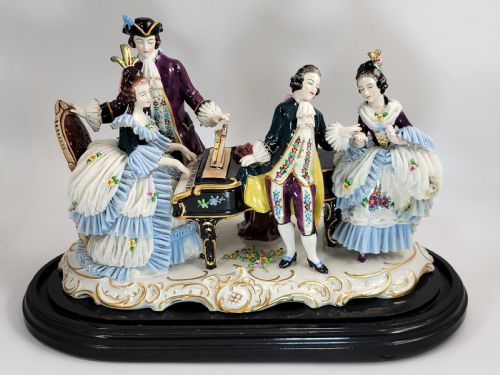


Antique Dresden China
Antique dresden china brings flamboyant rococo revival forms and hand-painted scenes to your table, offering the decorative charm of nineteenth-century German porcelain.
Antique Dresden China
When you search for antique dresden china, you encounter nineteenth-century German porcelain ranging from decorative dishes and cabinet plates to elaborate candelabra and figural groups. The pieces on this page are most frequently nineteenth century in origin, embracing pastoral figures, garden scenes, and allegorical subjects.
Makers such as Helena Wolfsohn, Paul Müller Selb, and Ernst Bohne Söhne define the selection, alongside items executed in the Meissen or Chelsea-Derby style. You will find porcelain figures, lace figural groups with pianos, and hand-painted dishes bearing Saxon bouquets.
The assortment spans cabinet plates and multi-piece sets like the Four Seasons, reflecting the diverse output of German factories and decorating studios. These works capture the ornamental tastes of the Victorian era through elaborate sculptural forms and painted details.
How they were made
Gold leaf and gilding were meticulously brushed onto rims, scrollwork, and highlights, often complementing the vibrant enamel colours. Specific techniques included the application of delicate porcelain lace on figural groups, requiring immense skill from the modeller.
Some nineteenth-century figures feature real lace dipped in porcelain slip before firing, burning away in the kiln to leave delicate ceramic threads.
What varies in quality
The standard of painting separates ordinary production from superior examples, with finer pieces exhibiting crisper brushwork on Saxon bouquets and facial expressions. The intricacy of the modelling also dictates worth, particularly in multi-figure groups and pieces incorporating delicate porcelain lace.
Application of gold leaf and gilding varies from simple edge lining to rich, chased ornamentation across rococo revival surfaces. The prominence of the maker, such as Helena Wolfsohn or Ernst Bohne Söhne, further distinguishes the top tier of the range.
Paul Müller Selb·Ernst Bohne Söhne·Helena Wolfsohn
The Antique Dresden China Glossary
- Hard-paste porcelain
- A durable ceramic composition fired at high temperatures, made from kaolin and petuntse. It forms the robust white body characteristic of these German pieces.
- Rococo revival
- A nineteenth-century design style mimicking the asymmetrical scrolls, C-curves, and ornate motifs of the eighteenth century. This aesthetic dominates the figurines and decorative dishes.
- Cabinet plate
- A decorative ceramic plate intended for display in a cabinet rather than for dining use. These often feature hand-painted scenes and elaborate gilded borders.
- Saxon bouquets
- Hand-painted arrangements of floral sprays frequently depicted on porcelain dishes. They draw upon botanical traditions established in the Saxony region.
- Gilding
- The application of gold leaf or powdered gold onto the porcelain surface. It accentuates moulded details and rococo borders.
Antique Dresden China: Frequently Asked Questions
What is dresden china?
Dresden china refers to nineteenth-century German porcelain produced in Dresden or decorated in the style associated with the city's porcelain studios.
The term encompasses diverse objects including cabinet plates, candelabra, and hand-painted figures often bearing rococo revival styling.
How do I identify Helena Wolfsohn pieces?
Helena Wolfsohn pieces typically feature intricate hand-painted pastoral scenes or floral motifs known as Saxon bouquets, frequently accompanied by specific monogram marks.
Her workshop produced notable cabinet plates and decorative figures during the nineteenth century, often emulating earlier Meissen designs.
Were these figures used for dining?
Most figural groups, candelabra, and decorative dishes served purely ornamental functions in nineteenth-century interiors. Cabinet plates were similarly intended for display in dedicated furniture rather than everyday meals.
While dishes held food, their elaborate gilding and delicate enamel painting meant they functioned primarily as decorative centerpieces.
How should I clean antique porcelain?
Antique porcelain requires gentle cleaning with lukewarm water and mild soap, avoiding harsh scrubbing that can damage delicate enamel and gold leaf. Dry the pieces thoroughly with a soft cloth immediately afterwards.
Take particular care with figural groups featuring porcelain lace, as these fragile elements catch easily and break under pressure.