


Rococo Revival Candelabrum
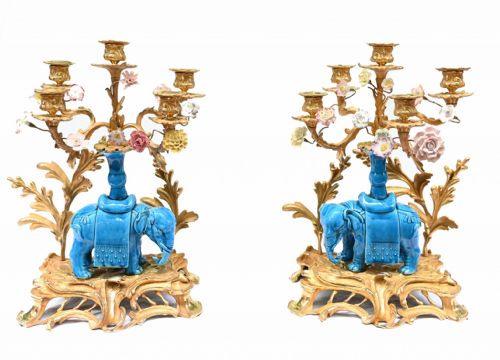
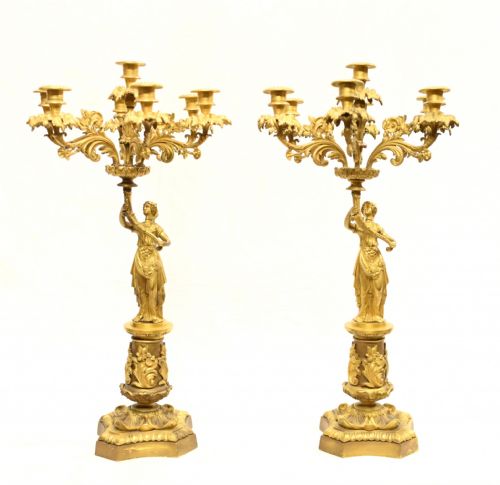
A rococo revival candelabrum brings exuberant nineteenth-century French and German theatricality to a dining table through swirling bronze, marble bases, and porcelain figures.
Rococo Revival Candelabrum
A rococo revival candelabrum is a multi-branch lighting fixture rooted in the nineteenth century, drawing heavily on earlier French design traditions. These decorative objects take the form of paired or single pieces designed to hold multiple candles, often featuring figural elements such as cherubs.
Most examples encountered on this page date from the nineteenth century, spanning periods like the 1860s, 1870s, and 1880s, alongside later twentieth-century Edwardian interpretations. Buyers will frequently find matched pairs incorporating porcelain figures or ornate metalwork designed for tabletop display.
The form frequently extends beyond simple branching arms into clock garnitures and converted table lamps, merging practical illumination with sculptural presence. Originating largely from French and German workshops, these pieces showcase the era's taste for theatrical interior decoration.
Assessing quality in metal and ceramic work
Quality reveals itself in the crispness of the metal chasing and the depth of the gilding, where hand-finished ormolu displays sharp organic curves rather than soft, blurred casting lines. Superior pieces maintain tight joints between the bronze components, marble bases, and porcelain figures.
The refinement of the painted porcelain figures and floral elements dictates the upper tier of the range, separating mass production from master modeller output. The architectural balance of the branching arms and the weight of the supporting base govern the overall harmony of the object.
Cherubs frequently bear the weight of heavy bronze branches, gamely holding up lights while maintaining cheerful expressions through every dinner party.
Meissen·Sitzendorf·Dresden·Helena Wolfsohn
The Rococo Revival Candelabrum Glossary
- Ormolu
- Gilded bronze produced by applying a finely ground mercury and gold amalgam to cast bronze before heating. This historical technique yields a distinctive matte golden lustre.
- Garniture
- A set of three or more matching decorative objects, typically comprising a central clock flanked by matching candelabra or vases for a mantelpiece.
- Hard-paste porcelain
- A durable ceramic composition of kaolin and petuntse fired at high temperatures. It forms the basis of many fine nineteenth-century German figures.
- Torchère
- A tall stand or candlestick designed to carry a torch or candle. In later pieces, the term describes figural lamps holding light sources aloft.
- Chasing
- The manual refinement of cast metal using small punches and hammers. This process sharpens surface details after the casting stage.
Rococo Revival Candelabrum: Frequently Asked Questions
What is a rococo revival candelabrum?
A rococo revival candelabrum is an ornate nineteenth-century lighting piece featuring asymmetric scrolls, naturalistic motifs, and branching candle holders.
These decorative objects often incorporate bronze, ormolu, and porcelain figures to create a dramatic centrepiece for a room.
How were candelabra used historically?
They provided functional illumination on dining tables, sideboards, and mantelpieces before the widespread adoption of electric lighting.
Arranged in pairs or as part of a clock garniture, they served as status symbols that reflected candlelight across formal reception rooms.
How do I style a candelabrum today?
These pieces function effectively as sculptural centrepieces on dining tables, console tables, or grand mantelpieces.
Pairing them with neutral backgrounds allows the gilt bronze and painted porcelain details to command visual attention without competing with surrounding furnishings.
How do I tell French and German pieces apart?
French examples lean heavily toward architectural ormolu, patinated bronze, and classical cherubs mounted on heavy marble plinths.
German items frequently feature intricate painted porcelain figures, flower-encrusted stems, and distinctive factory marks from manufacturing centres like Dresden or Meissen.