


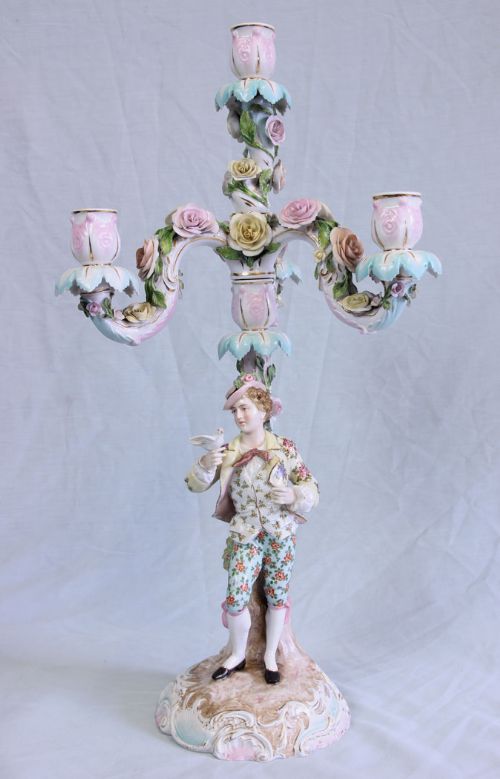


Floral Ceramic Candelabra
These floral ceramic candelabra pieces bring sculptural candle lighting and intricate porcelain blooms to a room.
Floral Ceramic Candelabra
The dominant aesthetic leans towards the Rococo Revival style, incorporating elaborate curves and ornate sculptural modelling. Many examples integrate figural elements, such as allegorical representations or gardeners with baskets, standing upon decorated floral bases. These sculptural forms define the standard presentation of the pieces encountered within this category.
Materials and Construction
The primary material is hard-paste porcelain, moulded and fired to achieve a durable and glossy white body. Artisans then applied detailed enamel paint by hand to colour the extensive floral motifs and figural elements.
Gilt and gold leaf highlights were frequently added to accent the moulded scrollwork and structural edges of the Rococo Revival forms. Enamel finishes add depth to the applied porcelain flowers that cluster around the bases and stems.
Gardener figures clutching tiny porcelain baskets populate these floral bases, forever tending to everlasting ceramic bouquets.
Assessing Quality
Quality in these pieces is dictated by the complexity and delicacy of the modelled porcelain flowers and figural components. Superior examples display fine hand-painted detail across the enamel decoration and precise application of gold leaf.
The crispness of the Rococo Revival moulding separates masterworks from simpler production pieces. Well-executed figural modeling and balanced multi-arm symmetry indicate higher standard workshop output.
Meissen·Sitzendorf·Helena Wolfsohn·Dresden
The Floral Ceramic Candelabra Glossary
- Candelabra
- A branched lighting fixture designed to hold multiple candles at once. These multi-arm stands often form the decorative centrepiece of a table or mantelpiece.
- Hard-paste porcelain
- A ceramic material composed of kaolin and petuntse, fired at very high temperatures. This creates a dense, waterproof body that accepts enamel painting securely.
- Rococo Revival
- A nineteenth-century design movement mimicking the asymmetrical scrolls and organic motifs of the eighteenth-century French style. It relies heavily on C-scrolls, shell work and naturalistic asymmetry.
- Enamel paint
- A glassy, opaque paint applied to ceramics and fired to fuse permanently with the glaze. It provides vibrant, lasting colour to floral and figural details.
- Gilt
- A thin layer of gold applied to the surface of porcelain or metal mountings. It adds reflective highlights to the structural curves of the object.
Floral Ceramic Candelabra: Frequently Asked Questions
What periods do these candelabra come from?
The pieces listed belong to the late nineteenth century, primarily spanning the eighteen-eighties and eighteen-nineties. European porcelain factories dominated this era of production.
Craftsmen during this period frequently drew inspiration from earlier eighteenth-century designs, resulting in strong Rococo Revival influences.
How were these candelabra used?
These items served as functional lighting devices for dining tables, sideboards and mantelpieces in affluent homes. Their multi-arm structures allowed them to hold several wax candles to illuminate a room.
Beyond illumination, they functioned largely as decorative art objects that displayed the owner's taste and wealth through intricate ceramic sculpture.
How do I care for antique porcelain?
Dust the pieces regularly using a soft, dry brush to prevent dirt buildup around the delicate floral petals. Avoid harsh chemical cleaners that can damage the hand-painted enamel and gold leaf.
Keep them away from direct sunlight and areas prone to heavy vibration to protect the intricate, protruding porcelain elements from accidental breakage.