



Antique Dough Bowl
An antique dough bowl brings tactile domestic history into a modern interior, offering deep vessels shaped by daily rural life.
Antique Dough Bowl
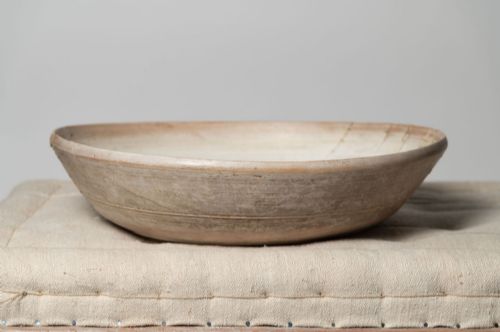
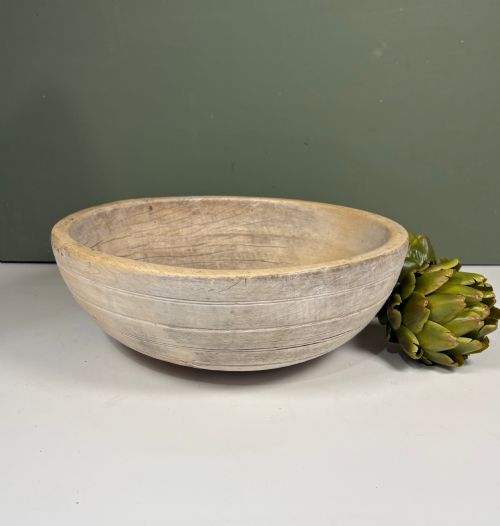
When searching for an antique dough bowl, buyers encounter utilitarian domestic vessels primarily shaped from solid wood and earthenware for preparing bread and food. These items emerge from various periods including the eighteenth and nineteenth centuries, spanning French, English, and Scandinavian country traditions.
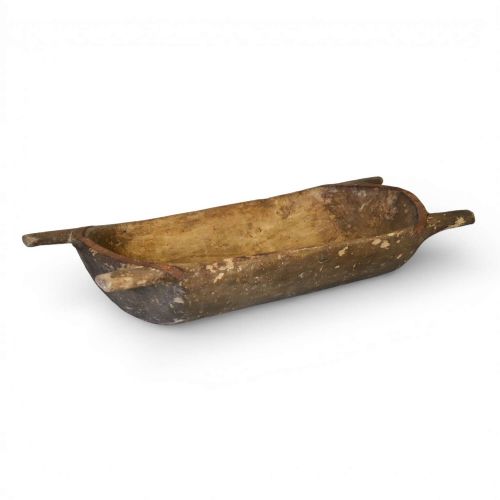
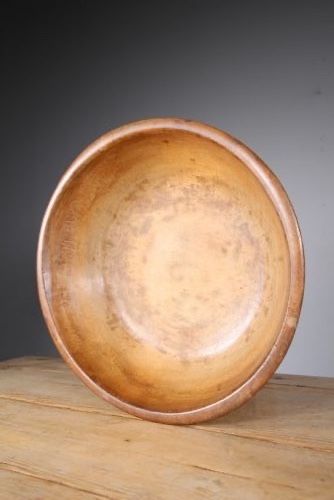
The versions most frequently met on this page include large dairy bowls and kneading bowls fashioned from sycamore and pine. Many examples display rustic farmhouse and folk art characteristics, reflecting their origins in functional rural kitchens.
Forms extend to treen bowls, mixing bowls, and carved platters produced in continental and domestic workshops. Buyers also encounter painted surfaces alongside natural timber finishes shaped by decades of agricultural use.
Materials and construction methods
Wood selection focuses on durable timbers like sycamore, pine, and birch, chosen for stability and resistance to splitting during heavy kitchen tasks. Makers utilised traditional carving and adzing techniques to hollow out solid logs into deep vessel forms.
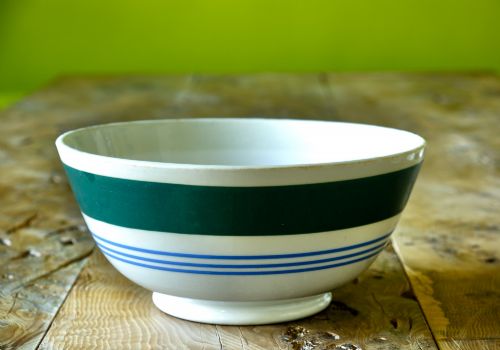
Pottery examples incorporate earthenware clays finished with glaze, particularly seen in banded kitchenwares from the mid-twentieth century. Surface preparation involves hand polishing and oiling, developing rich patinas over generations of practical handling.
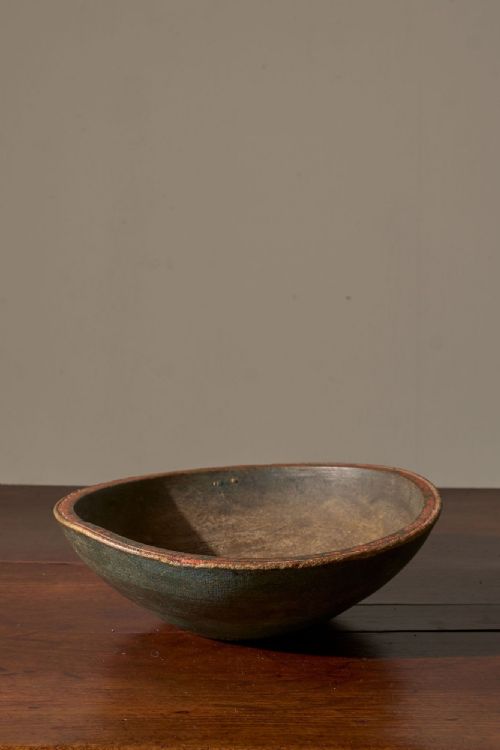
Early Swedish kitchen bowls occasionally hid beneath layers of bright blue paint applied by successive generations of rural bakers.
Assessing quality in rustic vessels
Quality rests upon the integrity of the original carved form and the depth of the surface patina achieved through honest domestic service. Superior pieces retain their structural balance and original tool marks without intrusive modern repairs.
The distinction between ordinary kitchen utility and finer examples lies in the thinness and lightness of the turned or carved timber walls. Retained early paint finishes on Scandinavian bowls significantly elevate interest among collectors.
T G Green Pottery
The Antique Dough Bowl Glossary
- Treen
- Small handmade wooden objects for domestic use. This term covers trenchers, spoons, and dairy bowls carved before mass production.
- Patina
- The surface sheen and colour acquired by wood through age and handling. This quality signals genuine historical use and careful maintenance.
- Adzed
- Shaped with an adz, a cutting tool similar to an axe. Tool marks left by this process indicate primary hand shaping.
- Dairy bowl
- A wide, shallow wooden or earthenware vessel used for setting milk to rise and skimming cream. These items frequently double as kneading troughs.
- Folk art
- Utilitarian objects decorated or shaped by self-trained makers within a regional tradition. This aesthetic values direct expression over formal academic design.
Antique Dough Bowl: Frequently Asked Questions
What were antique dough bowls used for?
These large wooden vessels served primarily for mixing, kneading, and resting bread dough before baking in domestic farmhouses. Their deep sides kept flour contained while allowing space for yeast to work.
Beyond baking, many functioned as dairy bowls for setting milk and separating cream, or as general utility basins for household washing and food preparation.
Are these bowls safe for food use?
Many nineteenth and eighteenth-century wooden vessels retain residues of historic oils, flour, and natural wear from decades of culinary use. While some buyers use them for dry foodstuffs, others prefer to display them as decorative objects.
Assess each piece individually based on the condition of the timber surface and any historical treatments it may have absorbed over time.
How can I tell Swedish bowls apart from English ones?
Swedish bowls frequently exhibit bright historical painted finishes in blues, greys, or whites, reflecting Scandinavian folk art traditions. Their forms often lean toward distinct, steep-sided dairy profiles.
English and French examples more commonly showcase exposed timber grains with warm patinas, highlighting the natural figure of sycamore or pine without added pigment.