



Antique Double Salt Cellar
An antique double salt cellar brings dual compartments and period charm to the dining table.
Antique Double Salt Cellar
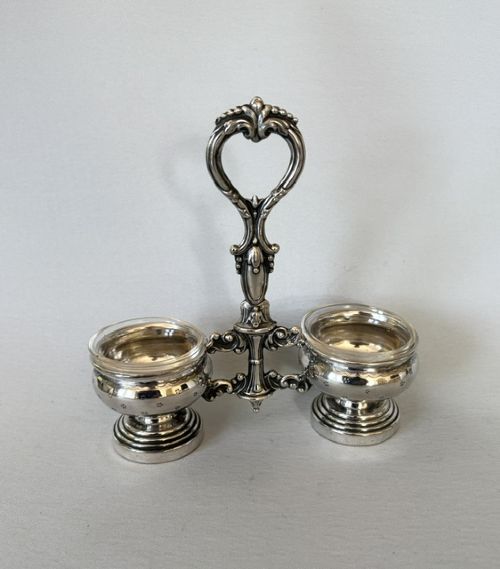
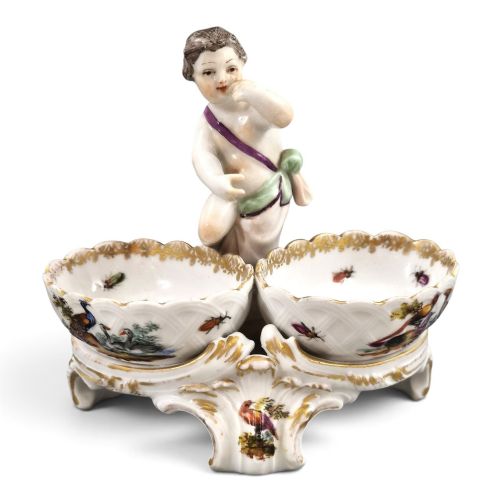
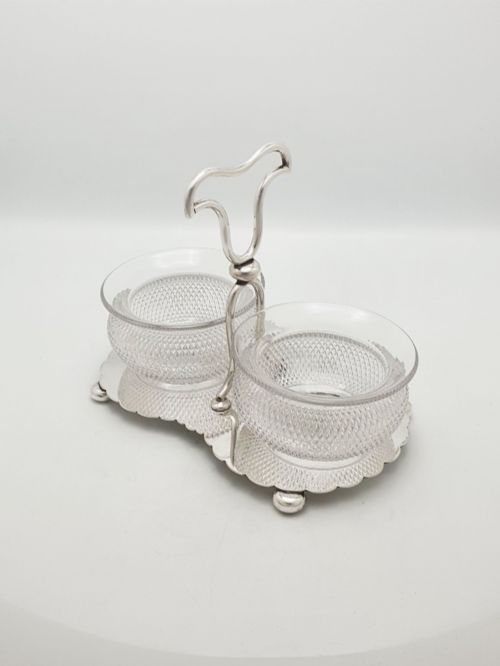
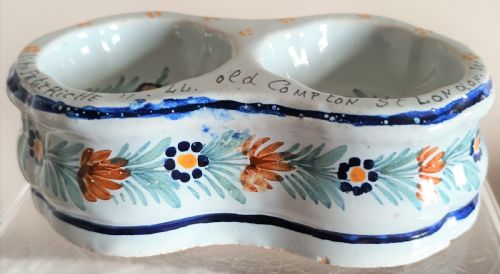
An antique double salt cellar provides two distinct bowls designed for holding table salt alongside other condiments during meals. These twin vessels appear in forms ranging from silver stands and figural porcelain birds to French faience and carved Black Forest bears.
The pieces on this page span the Georgian era through the Edwardian period and the early twentieth century. Buyers encounter silver, silver plate, glass, earthenware, porcelain, and enamel constructions reflecting styles such as Victorian, French Rococo, Art Deco, and 19th Century Russian.
Makers and origins include KPM Berlin, HB Quimper, and Michael Alexandrovich Romanov, alongside English silver and French metalwork. Collectors use these dual receptacles as decorative tableware or functional condiment stands.
How they were made
Silversmiths formed metal double salt cellars through casting, hammering, and plating, often pairing silver or silver plate with twin glass bowls. Porcelain and earthenware examples received hand-painted details, tin glaze, and gold leaf applications during manufacture.
Carved wooden novelties utilised traditional woodworking methods to shape figural bears holding condiment containers. Ceramic pieces combined moulded clay bodies with meticulous hand painting to depict birds and regional motifs.
Antique Double Salt Cellar Retail Price Guide 2026
Typical asking prices for double salt cellar among the pieces listed under this phrase on Sellingantiques today, from the lower quarter to the upper quarter. They describe what is for sale here now, not the wider market.
Black Forest bears and twin swans do double duty as salt cellars.
What varies in quality
The refinement of the modelling and the crispness of the casting distinguish finer figural pieces from standard production. Hand-painted ceramic details and the clarity of coloured glass liners demonstrate the artisan's skill.
Maker marks, hallmarks, and documented provenance elevate certain silver and porcelain examples. The integration of dual compartments and the preservation of original spoons or glass inserts affect the integrity of the piece.
KPM Berlin·HB Quimper·Michael Alexandrovich Romanov·Meissen
The Antique Double Salt Cellar Glossary
- Open salt
- A small open vessel designed to hold table salt before the invention of free-flowing table shakers. They require a small spoon for dispensing the salt onto the plate.
- Silver plate
- A base metal coated with a thin layer of silver. This technique offered a decorative finish similar to solid silver at a lower cost.
- Ogee
- A double-curved architectural line resembling an elongated S-shape. It appears in the profile of bowls and glass rims.
- Monteith
- A bowl featuring a scalloped or notched rim historically used for chilling glassware. Georgian versions sometimes functioned as large serving vessels.
Antique Double Salt Cellar: Frequently Asked Questions
What were antique double salt cellars used for?
These cellars held two different types of salt or paired salt with another condiment like pepper or mustard at the dining table. Guests used small spoons to take a portion from the open bowl onto their own plates.
Before free-flowing table shakers became common, open salts were essential dining accessories. Wealthy households displayed elaborate silver, porcelain, or glass versions as centrepieces of table etiquette.
How do I care for antique silver salt cellars?
Silver components require gentle cleaning with a soft cloth and appropriate silver polish to maintain the metal surface. Avoid harsh abrasives that can wear down hallmarks or delicate chasing.
Glass liners and ceramic bowls should be washed by hand in warm soapy water rather than placed in a dishwasher. Thorough drying prevents moisture from damaging attached metal mounts or painted decoration.
How can I tell Victorian salt cellars apart from Georgian ones?
Georgian salt cellars from the late eighteenth and early nineteenth centuries often feature restrained classical lines, plain double ogee bowls, and distinct sterling silver hallmarks. Their design prioritises simple elegance and solid construction.
Victorian pieces from the later nineteenth century frequently embrace ornate revivals like French Rococo, figural shapes such as swans or bears, and silver plate manufacturing. Makers of this era experimented widely with novel materials and eclectic decorative styles.
Can I still use these salt cellars for dining?
Many collectors use antique open salts for dinner parties to serve salt, small appetisers, or condiments. Glass and ceramic versions function well for food service when cleaned properly.
Silver and silver plate cellars require caution with acidic foods like salt or mustard left in contact with the metal for long periods. Regular cleaning after use protects the antique surface from tarnishing and corrosion.