
Antique Double Linen Press
An antique double linen press combines generous storage with architectural presence, offering structured shelving and hanging space for heavy garments.
Antique Double Linen Press
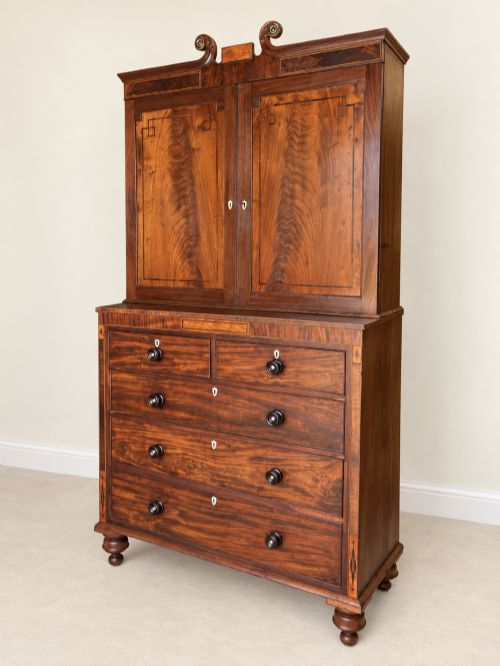
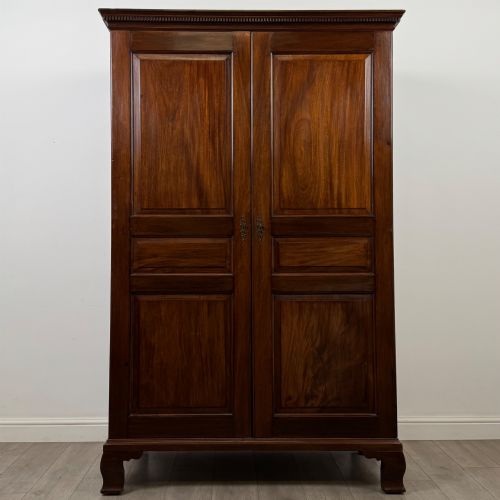
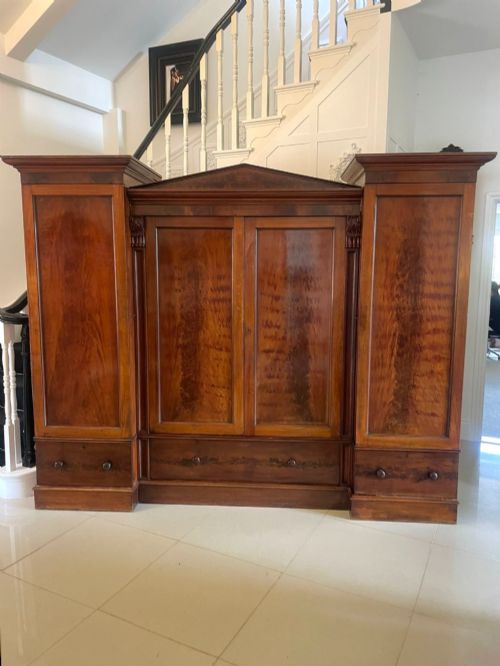
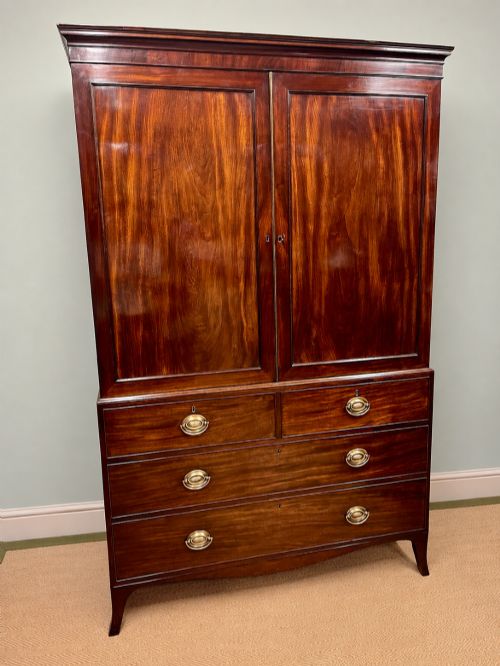
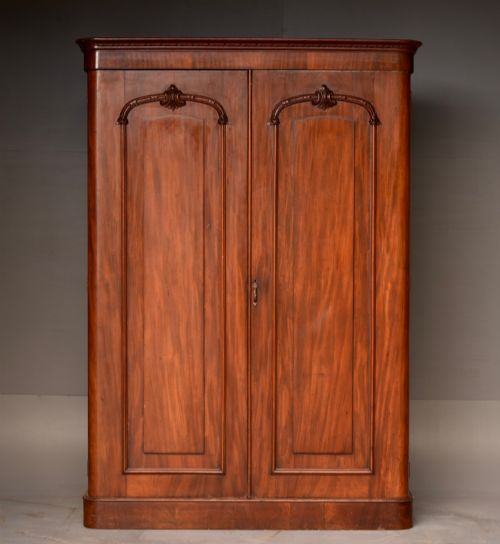
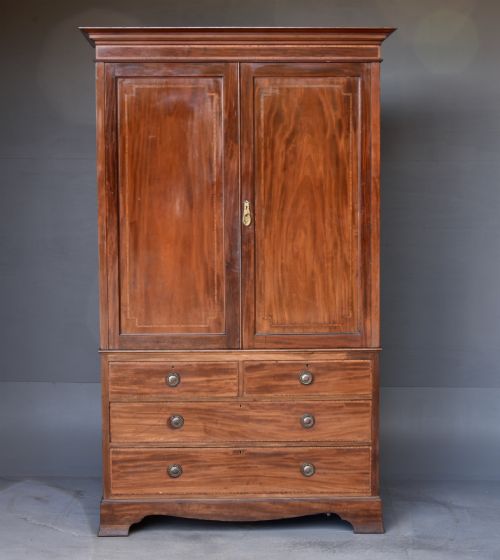
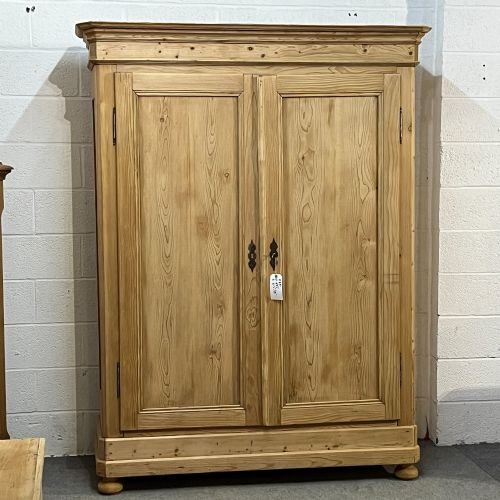
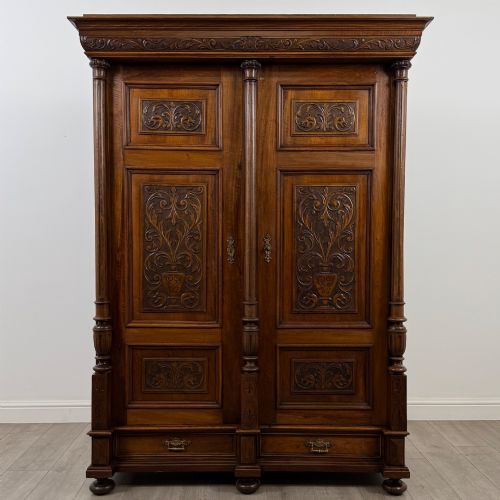
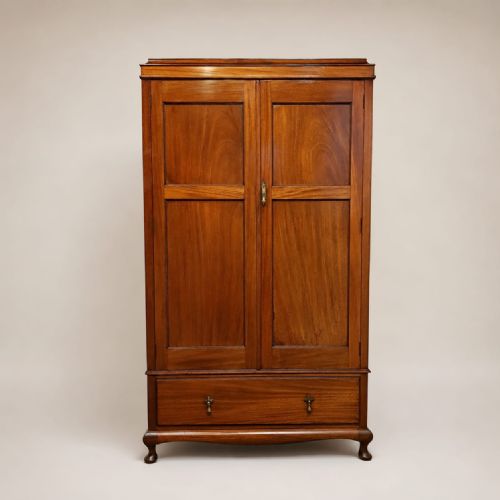
An antique double linen press is a substantial storage piece designed to house household linens and clothing, appearing frequently across Georgian, Victorian and Edwardian periods. These large pieces typically feature panelled double doors enclosing sliding trays or hanging compartments above a chest of drawers.
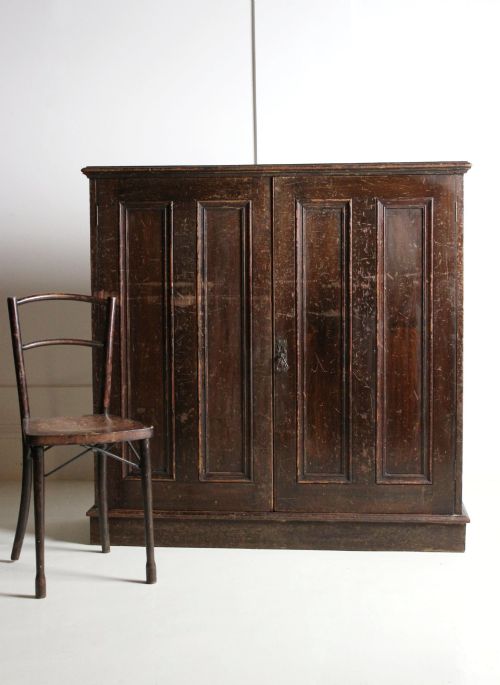
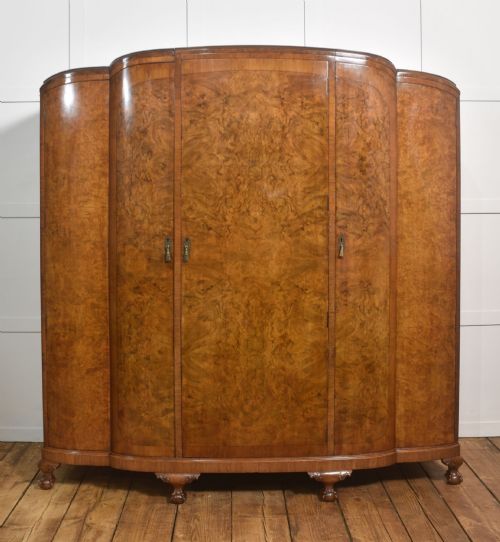
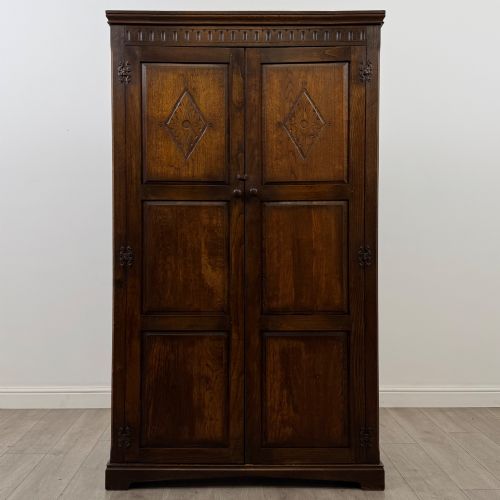
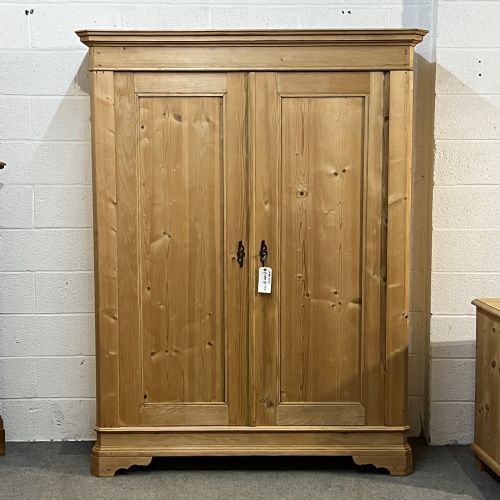
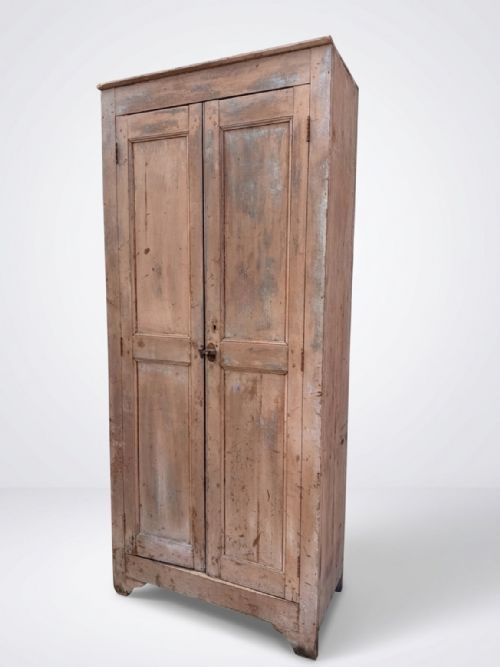
The versions most commonly found span mahogany, pine and walnut, reflecting both formal Georgian dining rooms and utilitarian Victorian or Edwardian bedchambers. Many examples demonstrate regional variations from English cabinetmakers alongside French provincial armoires and painted country cupboards.
Buyers choose an antique double linen press for its architectural scale and deep interior capacity, which accommodates modern folding and hanging needs while retaining period character.
Materials and construction methods
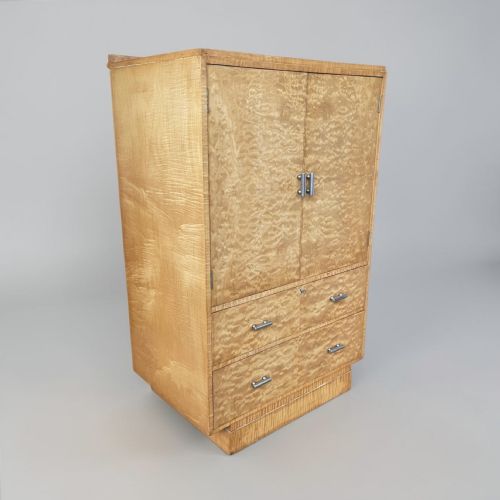
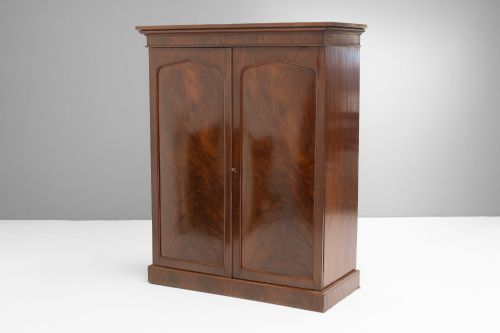
Cabinetmakers built these presses using dense hardwoods like mahogany, walnut and oak for formal rooms, alongside native pine and painted softwood for domestic utility. Timbers were selected for grain pattern, utilising flame mahogany veneers and inlaid satinwood details on finer examples.
Construction relied on traditional joinery, including dovetailed drawer boxes and panelled doors designed to accommodate seasonal wood movement. Many larger Victorian pieces were engineered as knockdown structures held together by internal bolts, allowing easy transport between rooms.
Several heavy Victorian pine presses bear historical instructions written in pencil on internal panels for future removalists.
Quality variations in antique presses
Quality rests upon the selection of timber veneers, the precision of internal drawer dovetailing and the integrity of the original brass hardware. Superior pieces display matched flame mahogany or burr walnut grains across the entire frontage rather than simple surface boards.
The proportion of the cornice and the crispness of carved mouldings distinguish standard utility pieces from high-status cabinet work. Structural soundness, particularly the smooth operation of sliding linen trays and heavy panelled doors, marks the difference between tiers of manufacture.
maples & co·HARRIS LEBUS·S & H Jewell
The Antique Double Linen Press Glossary
- Linen press
- A tall storage cabinet historically used for flat linens and folded garments, featuring sliding interior trays behind doors.
- Compactum
- A multi-functional wardrobe combining hanging space, drawers, and shelving within a single unified carcass.
- Scumble
- A decorative paint technique applied over a base coat to simulate the grain of more expensive woods like oak.
- Cornice
- The ornamental mouldings running around the top edge of a cabinet, providing architectural finish and proportion.
- Knockdown
- A piece of furniture constructed with a modular frame that dismantles into separate panels for transport.
Antique Double Linen Press: Frequently Asked Questions
How do I clean an old pine press?
Dust regularly with a dry cloth and apply a traditional beeswax polish sparingly to nourish the timber surface.
Avoid modern liquid cleaners or silicone sprays, which penetrate open wood grains and damage antique wax finishes.
Can these large wardrobes be dismantled?
Many Victorian and Edwardian presses were constructed as knockdown units held together by internal bolts and screw fittings.
Solid wood Georgian pieces generally remain fixed in one piece, requiring careful measurement of stairwells and doorways before transport.
What is the difference between a press and a wardrobe?
A traditional press contains internal sliding trays or shelves specifically sized for flat textiles rather than full-length hanging space.
Wardrobes focus primarily on hanging garments, though many later compactum designs successfully combine both internal configurations.
How do I date a mahogany linen press?
Examine the drawer construction for hand-cut dovetails, timber shrinkage patterns, and the style of the cornice moulding.
Georgian examples display simpler architectural lines and bracket feet, while Victorian versions often feature heavy plinths and arched panel doors.