

Antique Divider Panel
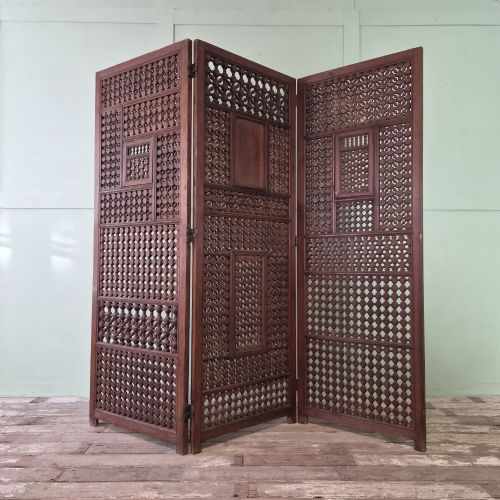
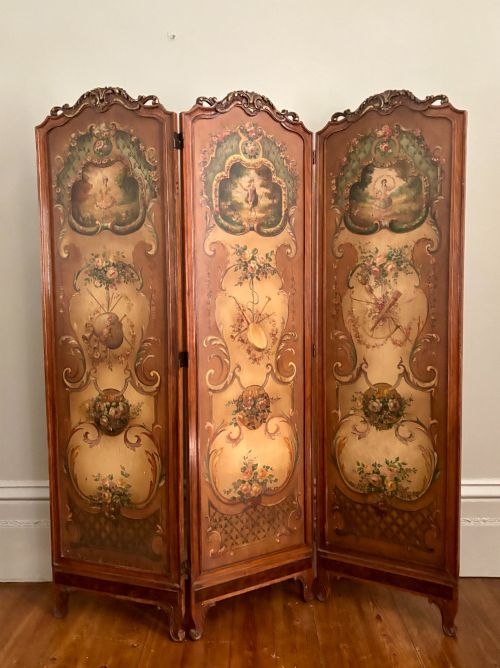
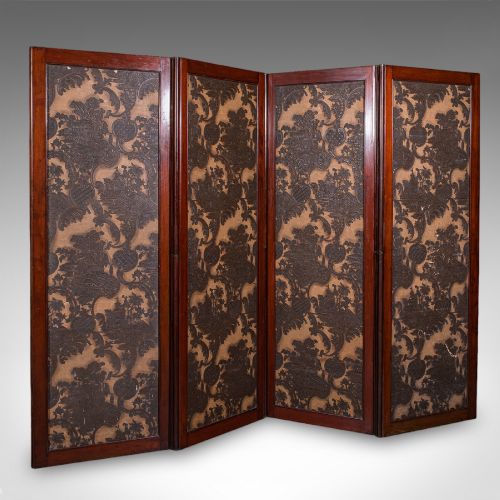
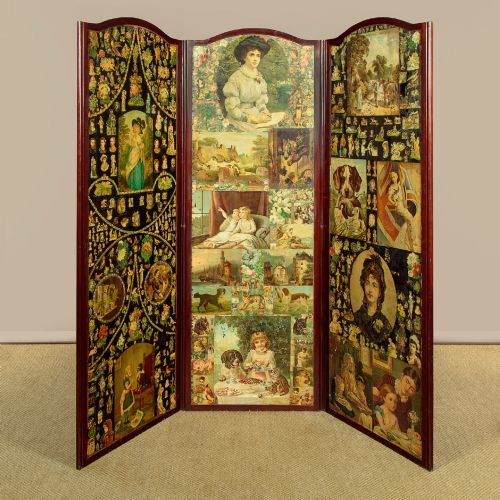
An antique divider panel partitions a room or frames a hearth with folding leaves of wood, leather, canvas, or lacquer.
Antique Divider Panel
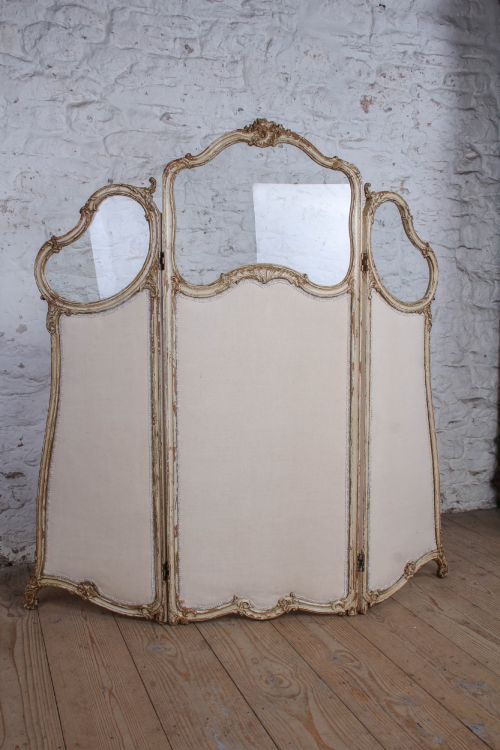
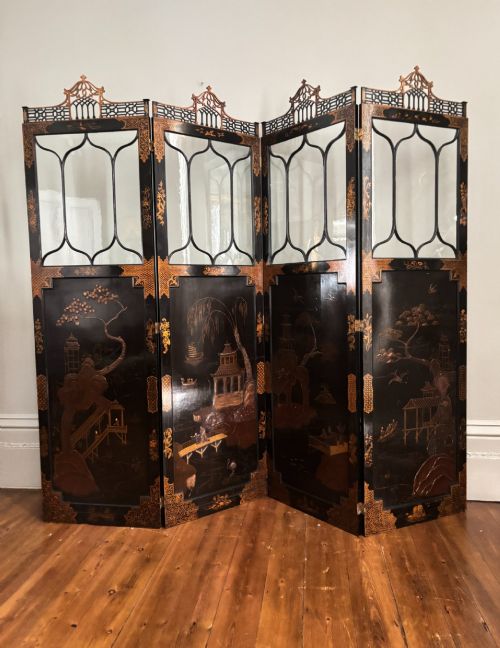
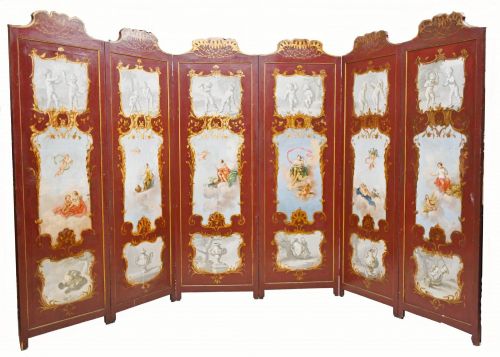
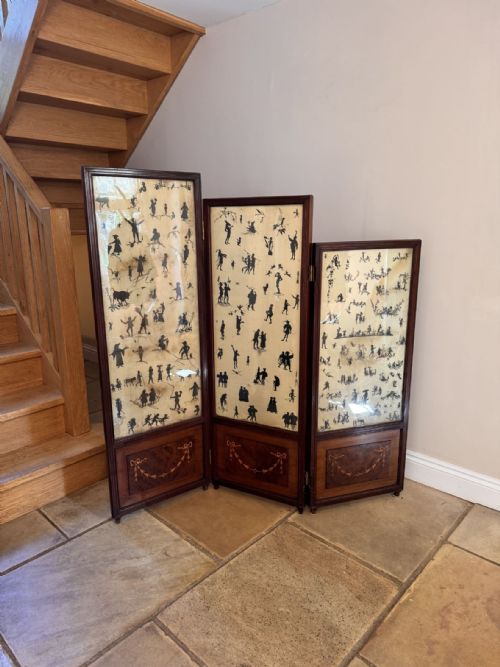
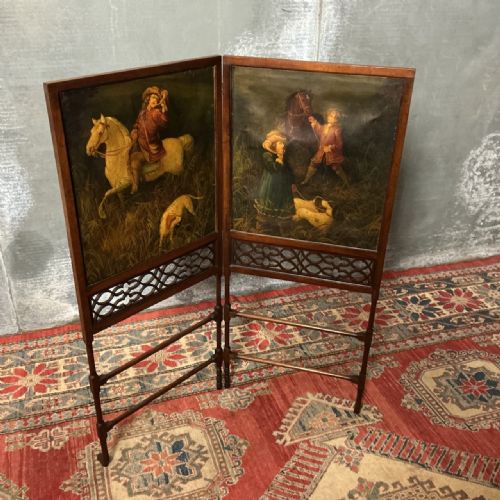
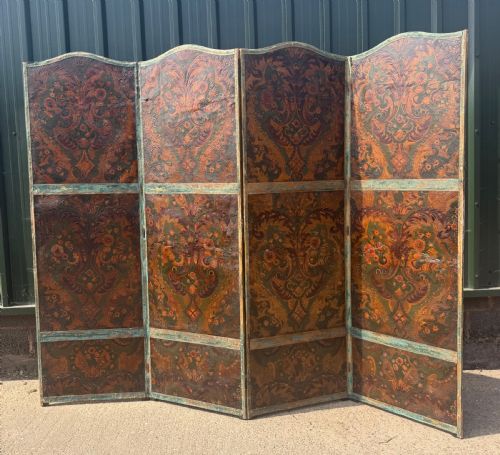
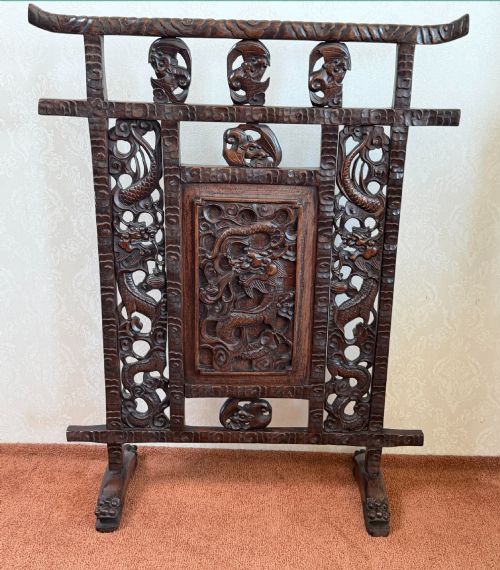
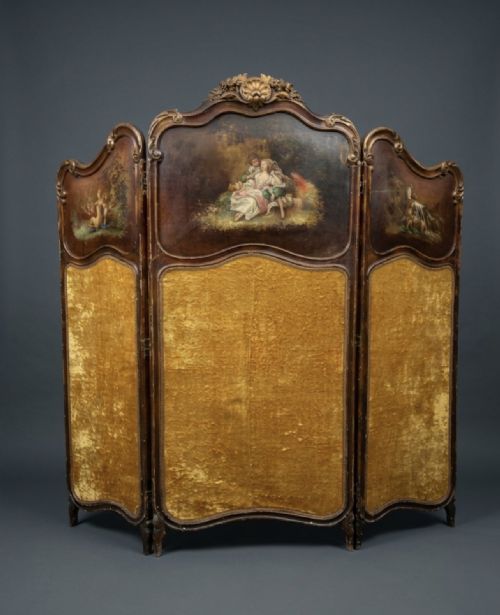
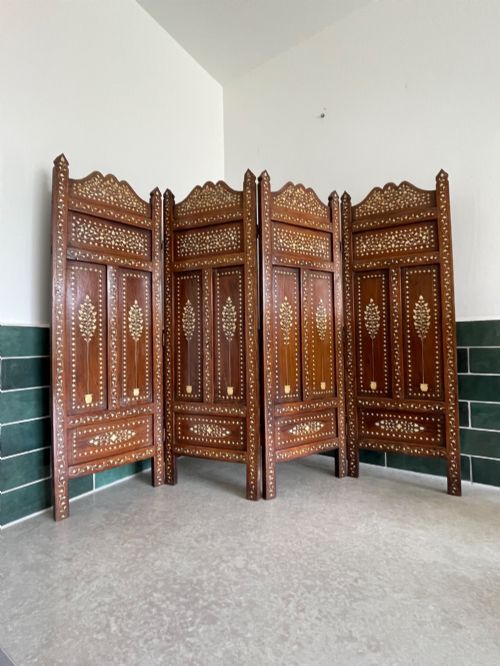
An antique divider panel encompasses multi-fold screens, privacy panels, fire screens, and table screens created to divide interior spaces or shield occupants from draughts. The pieces appearing here span the eighteenth, nineteenth, and early twentieth centuries, reflecting diverse global traditions from British and French parlours to Chinese and Japanese workshops.
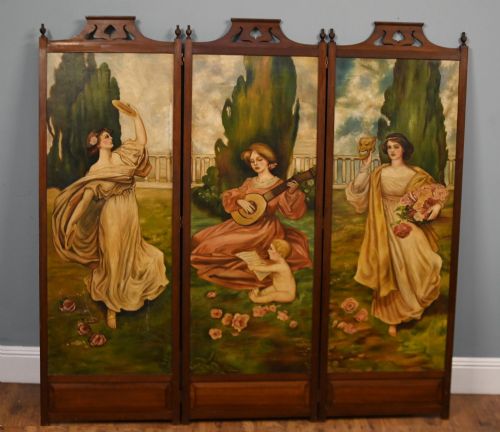
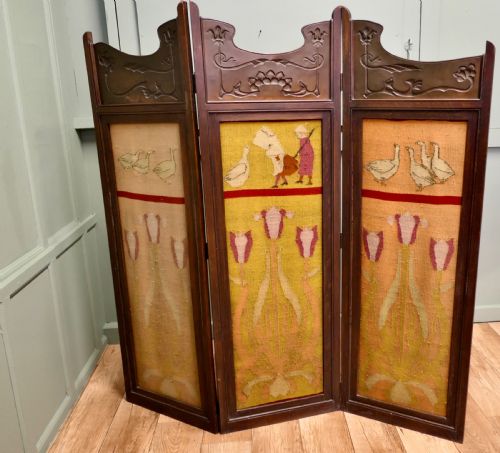
Buyers encounter substantial multi-fold folding screens alongside more compact dressing screens, vanity panels, and modesty screens. Frameworks range from mahogany and walnut to oak and giltwood, housing panels decorated with oil paintings, leather, hand-painted canvas, needlepoint, and carved bone.
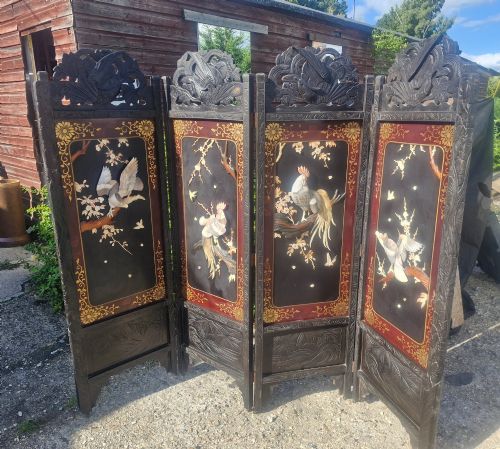
Origin points diverge across European cabinet-making traditions, Chinese Coromandel and lacquer work, Japanese textile and bone-inlaid creations, and Indian hardwood carving. This selection reflects how different cultures approached portable spatial division using rich materials and intricate surface decoration.
Materials and construction
Makers built sturdy structural frameworks using hardwoods such as mahogany, walnut, oak, padauk, and exotic hardwoods, frequently joining multiple folding leaves with brass hinges. These frames supported flexible infills including canvas, leather, silk, paper, and glass.
Surface ornamentation relied on specialised artisan techniques, from deep carving in bone and wood to polychrome painting, gilding, and embossing. Lacquer panels utilised multi-layered resin finishes, whilst textile elements incorporated needlepoint, wool, and woven fabrics stretched across internal wooden frames.
Antique Divider Panel Retail Price Guide 2026
Typical asking prices for divider panel among the pieces listed under this phrase on Sellingantiques today, from the lower quarter to the upper quarter. They describe what is for sale here now, not the wider market.
Object forms span room dividers, folding screens, fire screens, and table screens originating from British, French, Chinese, and Japanese makers.
Evaluating craftsmanship
Quality rests in the precision of the joinery linking the folding leaves and the stability of the primary timber frame under repeated movement. Superior examples maintain structural integrity across multiple panels without hinge sag or warping in the wood.
Artistic execution dictates the upper tier of the range, visible in the depth of hand-carved details, the crispness of polychrome painting on leather or canvas, and the complexity of inlaid hardstone or bone elements.
The Antique Divider Panel Glossary
- Coromandel
- A type of Chinese lacquer work where incisions are filled with colours on a dark ground. This technique creates a rich textured surface across folding panels.
- Modesty screen
- A small portable privacy partition historically used in dressing rooms. These pieces shielded individuals while changing attire.
- Giltwood
- Timber treated with gold leaf or gold paint to create a lustrous metallic finish. This material appears frequently on French revival frames.
- Fire screen
- A domestic barrier placed in front of an unlit fireplace to block draughts or protect the room from stray embers. They often feature needlepoint or painted panels.
- Papier mâché
- A composite material made from paper pulp mixed with adhesive, moulded and dried into rigid forms. It provided a smooth base for black lacquer and painted decoration.
Antique Divider Panel: Frequently Asked Questions
How do I use a folding screen at home?
Folding screens partition large rooms into intimate zones, conceal storage areas, or serve as decorative backdrops against plain walls.
Position the panels at gentle angles to ensure stability and prevent them from tipping over during everyday movement.
Were these panels always used for privacy?
While many served to divide rooms or create private dressing spaces, smaller variations fulfilled distinct domestic roles.
Table screens sat on surfaces for decoration, and fire screens protected people from excessive hearth heat.
How do I identify a Chinese Coromandel screen?
Coromandel pieces feature dark lacquer surfaces carved with deep incisions that reveal contrasting pigments beneath.
They frequently depict traditional landscapes, court scenes, or flora across multiple folding panels.
What is a modesty screen?
Modesty screens are smaller multi-fold partitions designed for nineteenth-century dressing rooms.
They offered privacy during toilette routines and often incorporated painted fabric or leather panels.