
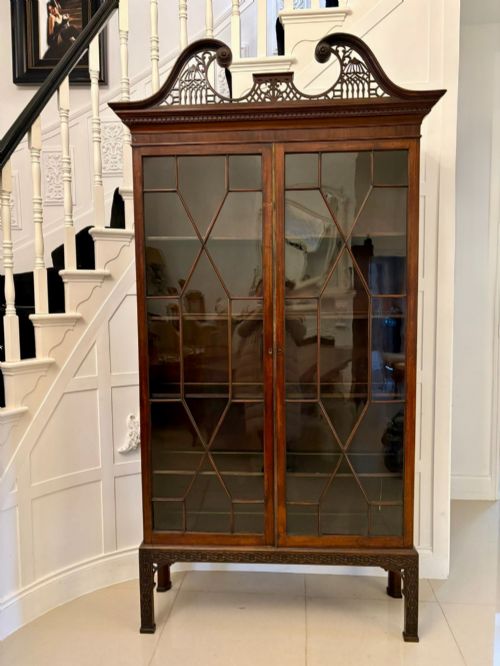
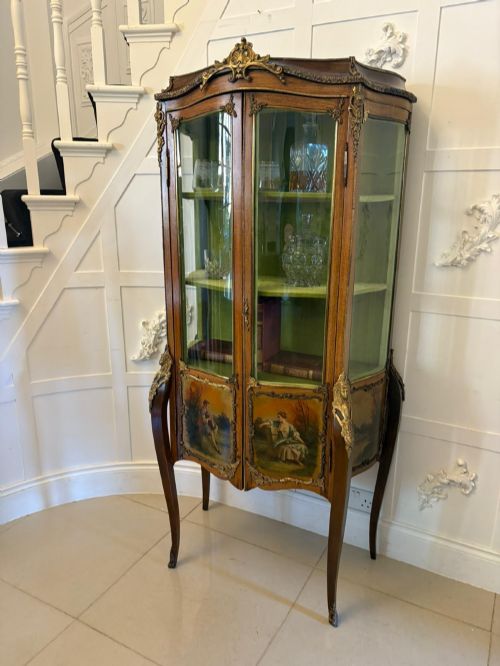
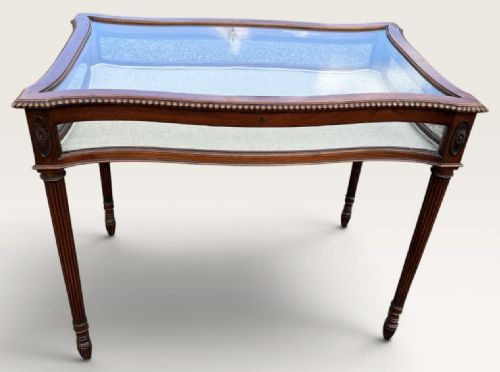
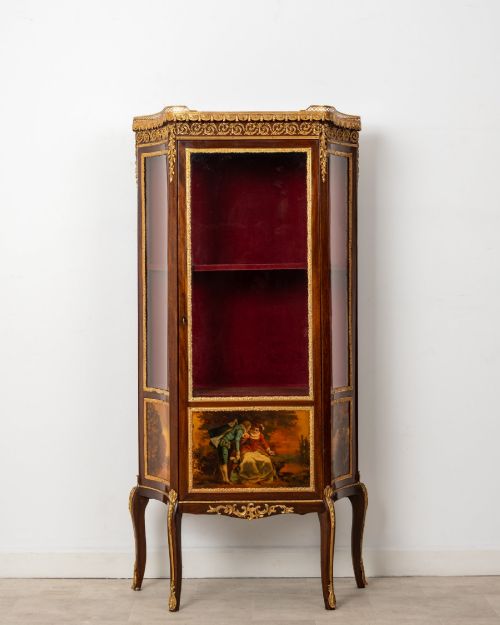
Antique Display Cabinet on Legs
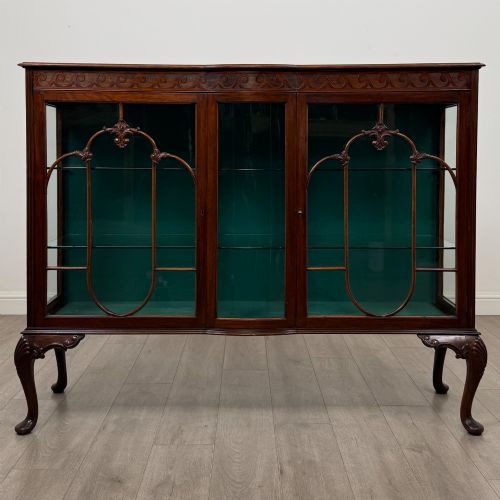
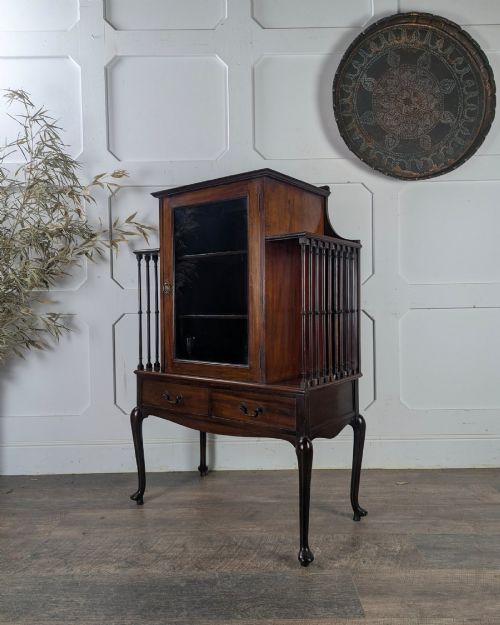
An antique display cabinet on legs lifts fine porcelain and small treasures above the floor on slender supports, balancing visibility with structural lightness.
Antique Display Cabinet on Legs
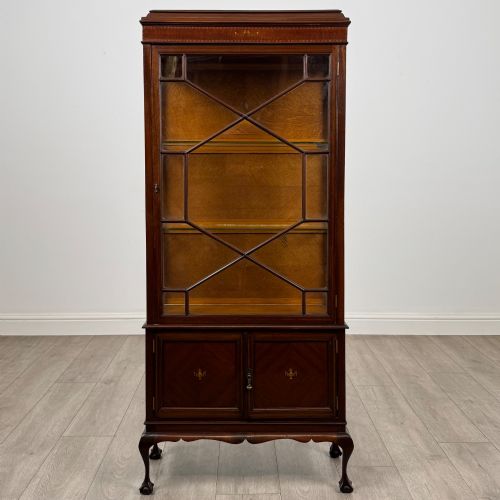
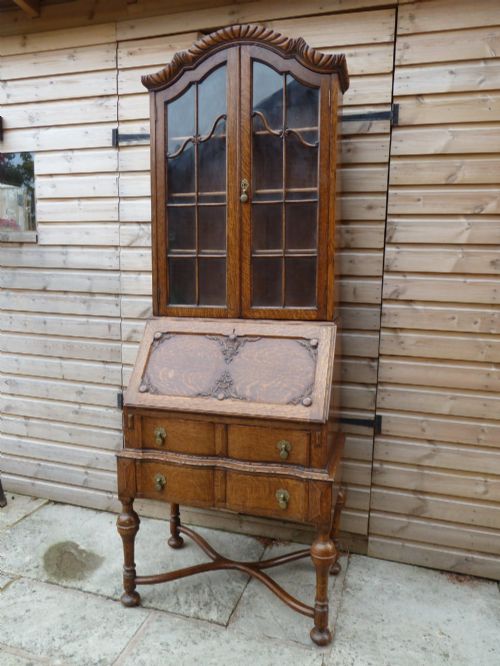
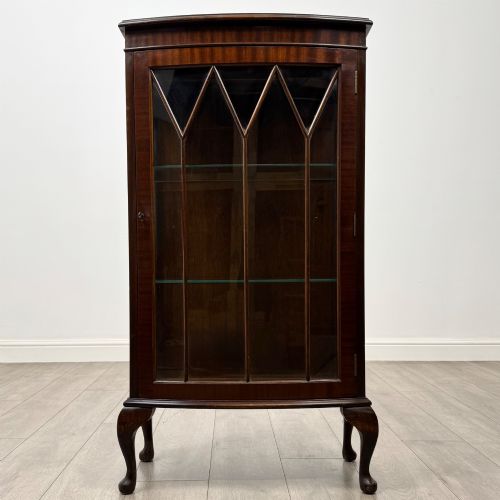
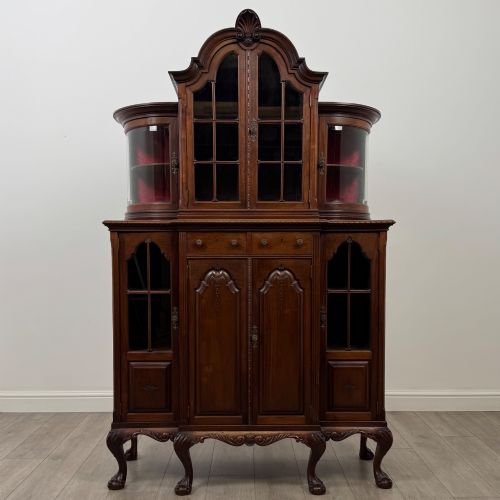
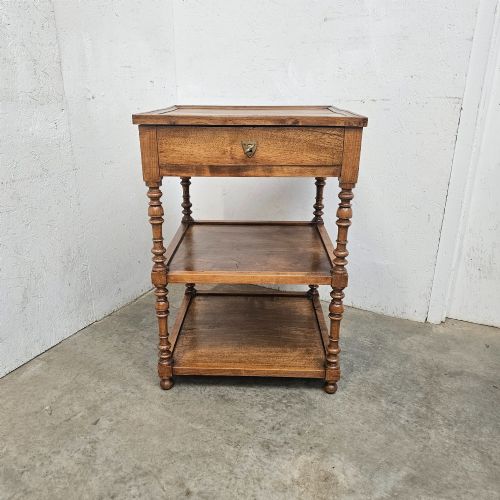
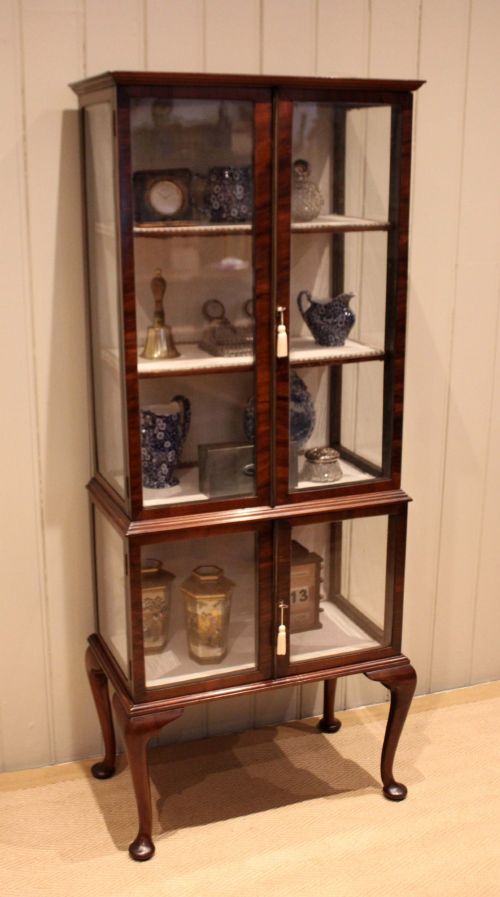
An antique display cabinet on legs brings together several related forms, from tall glazed vitrines and bookcase hybrids down to low waist-height bijouterie tables and etageres designed for smaller objects.
The pieces on this page span the Victorian era, the Edwardian period, and the early twentieth century, alongside revivals drawing on Queen Anne, Chippendale, and French Rococo styles.
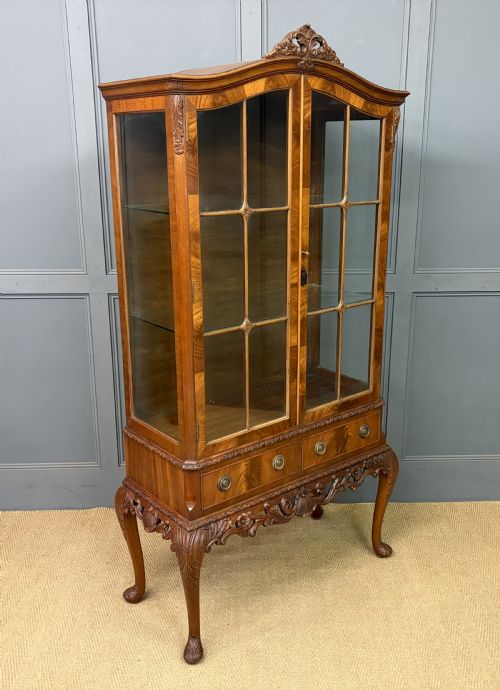
Buyers meet mahogany and walnut frequently, supplemented by oak, satinwood, and lacquer, often elevated on cabriole legs or turned supports.
Materials and construction methods
Cabinet makers utilised solid timbers and veneers of mahogany, walnut, and oak over robust carcases, frequently applying glass panels to doors and sides to maximise light penetration.
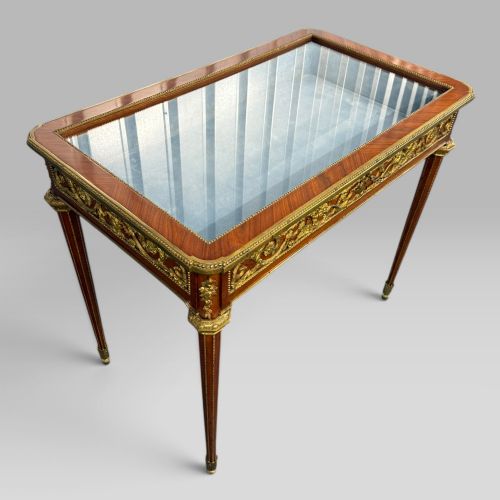
Decorative embellishments rely upon cast or gilt bronze mounts, brass fittings, and ormolu details, alongside intricate marquetry inlay and painted Vernis Martin panels.
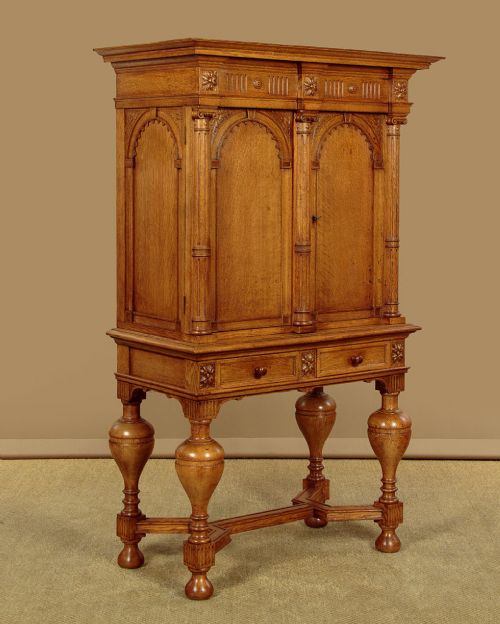
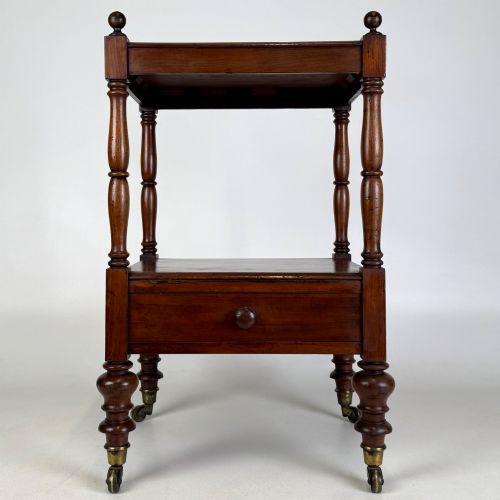
Supports range from delicate cabriole legs with pad or claw feet to sturdy turned wooden legs and stands that elevate the display chamber firmly off the ground.
The listings on this page span the Victorian era, the Edwardian period, and the 1930s, featuring mahogany, walnut, and oak.
Judging the range of quality
The distinction between standard cabinet work and exceptional pieces rests upon the crispness of hand-carved details, the selection of figured wood veneers, and the integration of mounts.
Superior examples demonstrate refined proportions, precise joinery in the framing of glass doors, and high-grade bronze or ormolu hardware rather than mass-produced metalwork.
Maple & Co.·Paul Sormani·Waring & Gillow
The Antique Display Cabinet on Legs Glossary
- Bijouterie table
- A glass-topped display table specifically designed for holding jewellery, medals, and small decorative items at a comfortable viewing height.
- Vitrine
- A glass-fronted cabinet created for exhibiting porcelain, curiosities, and fine objects while protecting them from dust.
- Ormolu
- Gilded bronze applied as decorative mounts, feet, and key escutcheons on high-status cabinets.
- Vernis Martin
- A European imitation of East Asian lacquerwork, producing lustrous painted panels used on fine French-style cabinets.
- Cabriole leg
- A curved furniture support with an outward sweep at the knee and an inward sweep at the ankle, typical of revival styles.
Antique Display Cabinet on Legs: Frequently Asked Questions
What is the difference between a vitrine and a bijouterie table?
A vitrine is an upright cabinet with vertical glass doors designed to display porcelain, silver, and larger collections at eye level.
In contrast, a bijouterie table sits lower on legs with a horizontal glass top, specifically intended for viewing jewellery and miniature objects from above.
How do I identify a Queen Anne style display cabinet?
Queen Anne revival pieces typically feature warm walnut veneers, subdued ornamentation, and characteristic cabriole legs that curve gracefully down to pad feet.
These cabinets often present a clean architectural outline without the heavy carving seen in earlier Victorian furniture.
Where were these cabinets placed in a period home?
Display cabinets and vitrines stood in reception rooms, drawing rooms, and formal parlours where guests gathered and hosts showcased their acquired treasures.
Lower tables and cabinets were positioned near seating areas to allow close inspection of small decorative items.
Are Edwardian cabinets made of solid wood?
Edwardian cabinet makers frequently combined solid primary timbers with choice veneers applied to stable secondary woods to prevent warping across large door panels.
Inlays of satinwood and contrasting stringing were then worked into the surfaces to create decorative geometric patterns.