





Antique Dining Serveware
Antique dining serveware brings together period silver, plate and cut glass to elevate the table.
Antique Dining Serveware
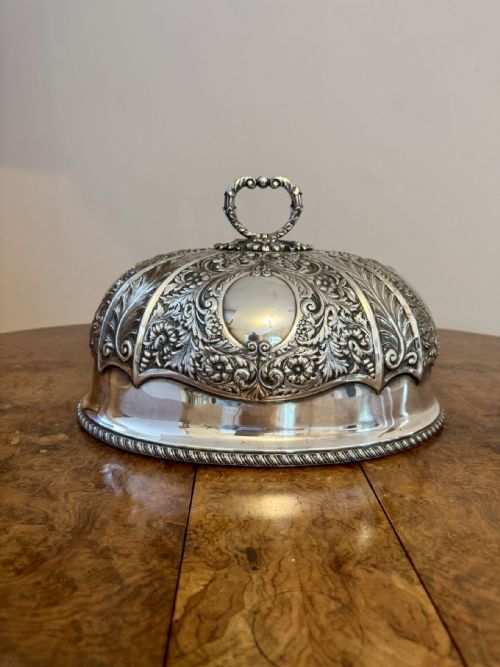
When you search for antique dining serveware, you are looking at functional tableware designed to present food at the dining table during the Georgian, Victorian, Edwardian and Art Deco periods. These pieces range from large revolving breakfast dishes and meat covers to specialised implements like asparagus dishes, fish servers, cheese scoops and spoon warmers.
The version you are most likely to meet on this page is silver plated serveware dating from the nineteenth and early twentieth centuries, created by prominent makers and workshops of the era. Alongside plated items, solid sterling silver and Old Sheffield plate pieces appear, reflecting formal dining traditions from the eighteenth century onwards.
Form follows function across these objects, which include entree dishes, toast racks, sauce tureens and lazy susans. Materials such as cut glass liners, bone handles and gilt metal interiors frequently accompany the silver and plate, demonstrating the varied craftsmanship applied to dining accessories.
Materials and methods of construction
Makers utilised solid sterling silver, Old Sheffield plate and electroplated nickel silver (EPNS) as the primary metallic bases for these serving pieces. Silver plating techniques developed significantly through the nineteenth century, allowing workshops to apply durable coats of silver over base metals.
Many serveware items incorporate contrasting materials to handle heat or food safely, such as bone for handles, crystal and cut glass for liners and dishes, and gilt metal for interior washes. Hand-finishing, chasing and engraving distinguish the decorative borders and handles applied to meat covers, entree dishes and fish slices.
Antique Dining Serveware Retail Price Guide 2026
Typical asking prices for dining serveware among the pieces listed under this phrase on Sellingantiques today, from the lower quarter to the upper quarter. They describe what is for sale here now, not the wider market.
Determining quality in serving pieces
The distinction between standard commercial production and top-tier manufacture lies in the weight of the metal, the crispness of chased decoration and the presence of fully struck maker marks. Substantial gauge silver and heavy silver plating retain their integrity through decades of use, whereas thinner plating wears down to the base metal over time.
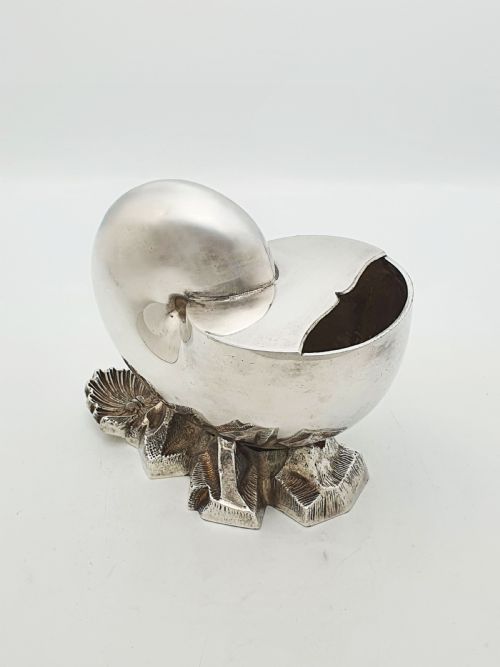
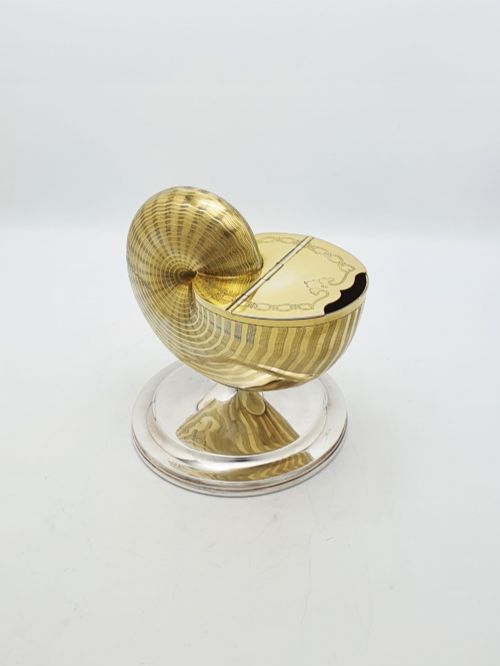
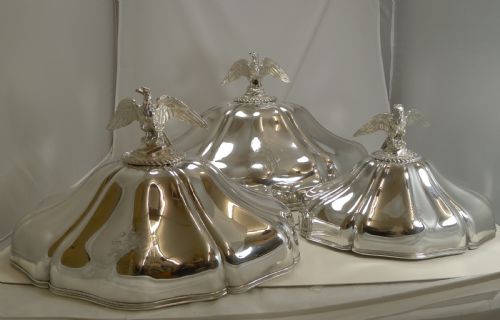
Design ambition and mechanical execution separate ordinary serveware from exceptional examples. Revolving mechanisms on breakfast dishes, complex figural forms such as nautilus shell spoon warmers, and matched sets of graduated meat covers demonstrate the skill and investment of the original maker.
Mappin and Webb·Elkington·Christofle·William Grundy·Durand
The Antique Dining Serveware Glossary
- EPNS
- Electroplated Nickel Silver. This denotes a base metal of nickel silver coated with a layer of silver through an electrolytic process.
- Old Sheffield Plate
- A method of fusing a thin sheet of sterling silver to a thicker copper core before shaping. This technique preceded modern electroplating and is valued by collectors.
- Spoon Warmer
- A Victorian vessel filled with hot water to warm serving spoons before they touched cold dishes. These often took whimsical forms such as shells or animals.
- Entree Dish
- A covered serving dish used for presenting courses at the dining table. They frequently feature removable handles for versatile serving options.
- Stilton Scoop
- A specialised utensil with a semi-cylindrical blade designed for carving and serving crumbly cheeses like Stilton. They often feature bone or ivory handles.
Antique Dining Serveware: Frequently Asked Questions
How were spoon warmers used at the table?
Victorian hosts filled these ceramic or silver plated vessels with hot water to warm serving spoons prior to dishing up cold foods or sauces. This prevented the cutlery from chilling rich dishes.
They sat upon the sideboard or dining table as both decorative and practical accessories, taking shapes that ranged from nautilus shells to naturalistic urns.
What is the difference between Old Sheffield plate and EPNS?
Old Sheffield plate involves physically fusing a sheet of sterling silver to a copper core prior to rolling and shaping the metal. This older technique leaves a characteristic copper seam along cut edges.
EPNS relies on an electrical current to bond silver onto a nickel silver base metal. This later process was adopted widely across the Victorian period for its efficiency.
Can I use these serving dishes for modern dining?
These pieces function well for contemporary dining, whether serving vegetables in antique entree dishes or passing toast in a silver plated rack. Many designs remain entirely practical for modern food presentation.
Care should be taken with acidic foods left in contact with silver or plate for extended periods. Hand washing ensures the longevity of delicate glass liners and historic plating.