


Antique Ding Censer
These antique ding censer pieces are ritual vessels and incense burners valued for their archaic forms, bronze casting, and porcelain craftsmanship.
Antique Ding Censer
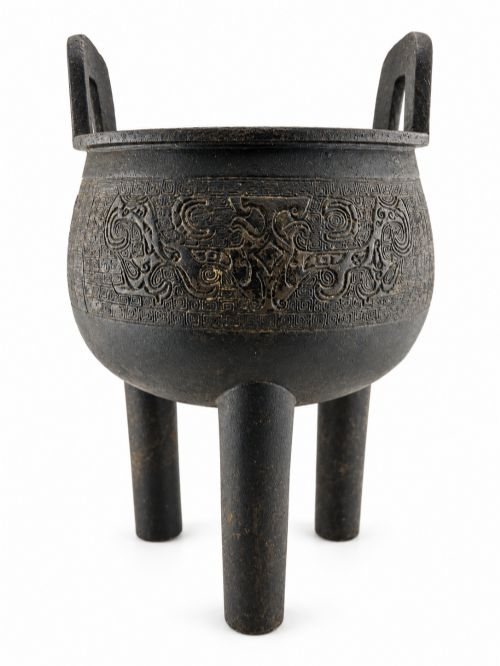
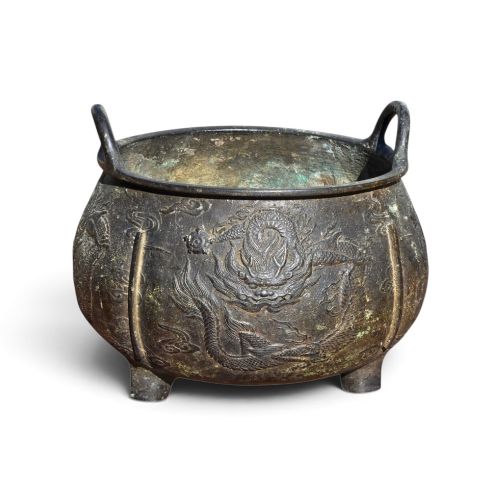
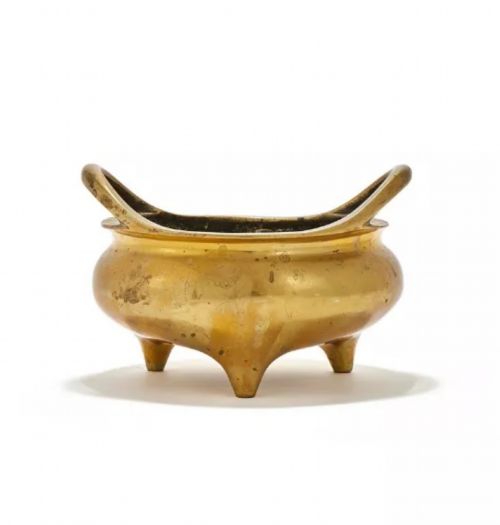
An antique ding censer is a tripod ritual vessel or incense burner shaped by Chinese dynasties across centuries of production. When you search for an antique ding censer, you encounter forms ranging from heavy bronze tripod vessels to elegant Dehua blanc de Chine porcelain creations.
The pieces on this page span the 16th century to the 19th century, incorporating Ming Dynasty, Qing Dynasty, and archaic Chinese styles. Collectors find both sacrificial vessels and domestic incense burners, frequently accompanied by contemporary zitan wood stands.
How they were made
Makers utilised bronze, brass, copper alloy, and porcelain with glaze to shape these vessels. Metal pieces rely on heavy cast techniques, achieving substantial weight and bell-ring resonance.
Surface treatment involves patinated bronze finishes and intricate decoration such as taotie motifs, dragon and mask handles, and bamboo moulding. Porcelain examples like Dehua blanc de Chine demonstrate precise potting techniques.
Listings feature periods from the 16th century Ming Dynasty up to the 19th century Qing Dynasty.
What varies in quality
Quality rests in the precision of the casting and the crispness of the archaic decoration. Heavy cast metal with a clean bell-ring resonance sits above simpler production.
The presence of significant marks, such as a Wu Bangzuo 16-character mark, and original contemporary zitan stands elevate certain pieces over unmarked or standalone vessels.
Wu Bangzuo
The Antique Ding Censer Glossary
- Ding
- A traditional Chinese tripod vessel with two looped handles, used historically for ritual sacrifices and burning incense. It forms the primary structural shape for these censers.
- Taotie
- A mythical zoomorphic mask motif frequently found cast in relief upon archaic bronzes. This design connects the vessels to ancient ritual traditions.
- Zitan
- A dense, dark hardwood prized in Chinese furniture and accessory making. Contemporary zitan stands accompany fine censers to elevate their display.
- Dehua
- A renowned kiln centre in Fujian province producing white porcelain known in the West as blanc de Chine. These pieces show delicate potting and monochrome glaze.
- Fangding
- A rectangular ritual vessel supported by four legs rather than three. This architectural variant shares the archaic sacrificial heritage of the round ding.
Antique Ding Censer: Frequently Asked Questions
What is a ding censer?
A ding censer is a tripod vessel designed for burning incense, drawing its form from ancient Chinese ritual bronzes.
These pieces feature three legs and two vertical loop handles, serving both ceremonial and domestic purposes across multiple dynasties.
How old are these censers?
The examples available span from the late 16th century during the Ming Dynasty through to the 19th century in the Qing Dynasty.
Dates are determined by stylistic markers, casting techniques, and period-specific materials such as patinated bronze or Dehua porcelain.
What materials were used?
Censers were primarily cast in bronze, brass, or copper alloy, with some notable examples formed from Dehua white porcelain.
Metal versions often feature heavy cast construction, whilst wooden stands utilise dense zitan wood.
How do I display a censer?
Many bronze and porcelain censers sit upon fitted wooden stands, particularly contemporary zitan wood bases designed specifically for them.
They function as sculptural decorative objects or traditional incense burners within an interior space.