
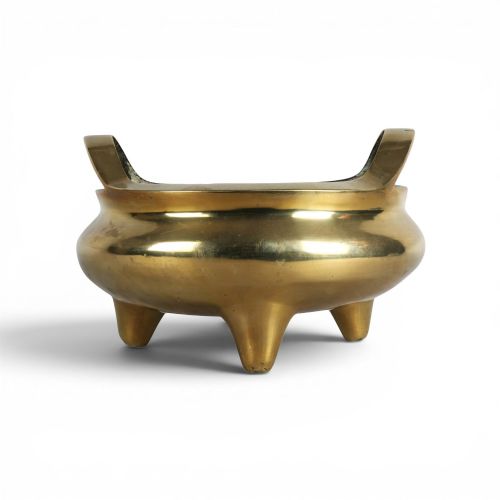


Chinese Brass Censer
A Chinese brass censer brings tactile weight and centuries of ritual history straight to a modern desk or mantelpiece.
Chinese Brass Censer
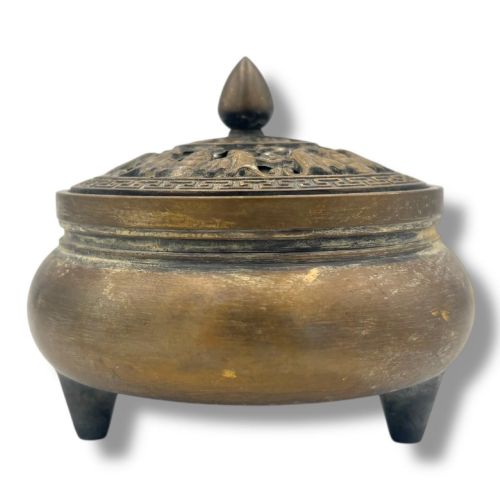
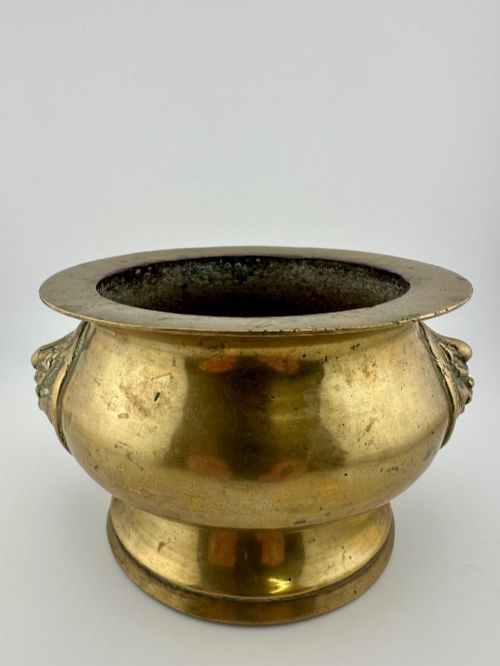
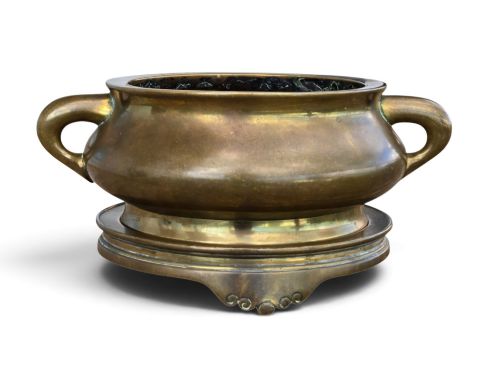
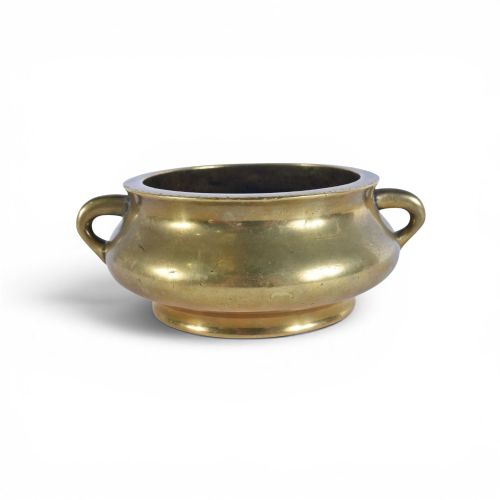
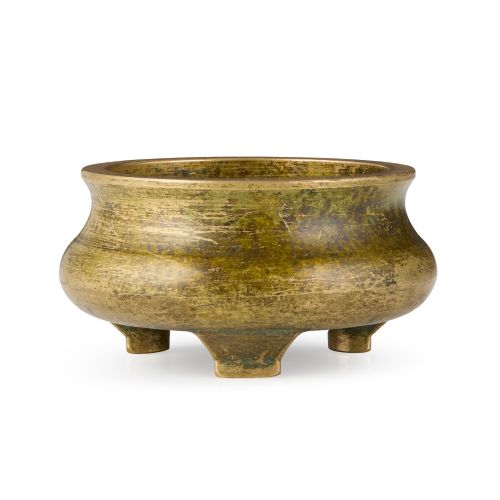
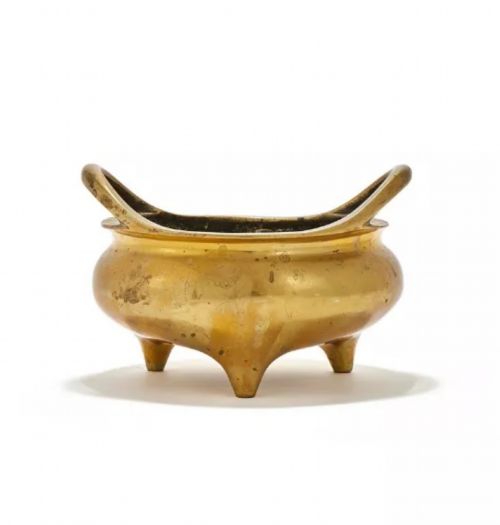
A Chinese brass censer is a traditional vessel designed for burning aromatic incense, frequently encountered on this page as heavy bronze or brass tripod pieces with distinctive handles and covers. These vessels connect directly to historic scholar's studios and ritual spaces, spanning periods from the eighteenth century through the late Qing Dynasty and Victorian eras.
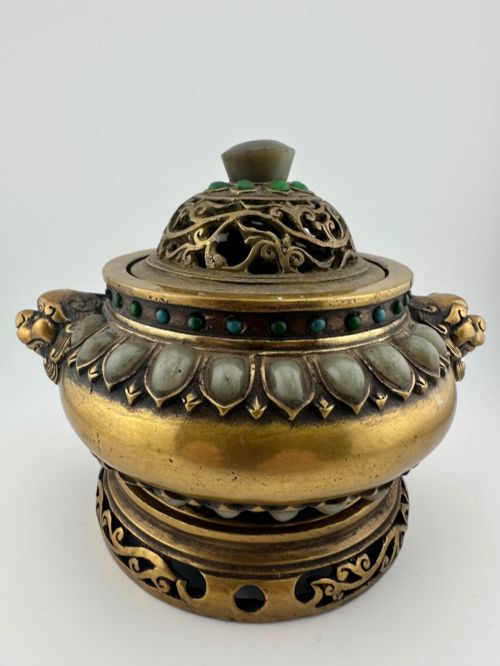
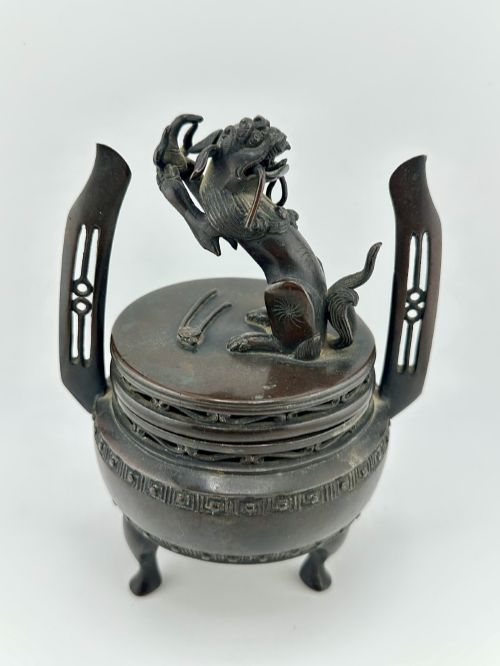
The forms range from compact tabletop tripod bowls and bombé censers to massive ritual vessels complete with matching stands, lion mask handles, and qilin finials. Alongside dedicated incense burners, the selections often encompass related decorative planters, jardinieres, and desk pots sharing identical metallurgical roots.
Materials and construction
The pieces recorded in the listings rely primarily upon cast bronze and brass, frequently worked to considerable weights and finished with patinated surfaces that accumulate character over decades of use. Craftsmen utilised traditional lost-wax casting methods to achieve thick, durable walls capable of withstanding heat while supporting intricate decorative motifs.
Surface ornamentation integrates cast relief work, pierced lotus floral lids, and inlaid hardstone or jade elements that elevate the metallic body. Certain examples incorporate cast reign or studio marks into the base, providing tangible evidence of the foundry work and period origin.
The listings combine heavy 18th-century scholar's studio bronze pieces with later Victorian brass decorative vessels and jardiniere forms.
Assessing quality and presence
Quality in a Chinese brass censer rests upon the crispness of the casting, the physical heft of the metal, and the harmony of the proportions. Superior examples display sharply rendered details on lion masks, handles, and finials without the blurring often found in utilitarian production.
The integrity of the surface patination and the presence of integral stands, covers, or distinct maker and studio marks further separate standard decorative vessels from exceptional scholarly pieces. Balance and structural solidity, particularly across three-legged tripod forms, dictate the overall presence of the object.
Wu Bangzuo
The Chinese Brass Censer Glossary
- Tripod censer
- An incense burner supported by three distinct feet, typically cast in bronze or brass. This configuration provides stable elevation on a table or altar surface.
- Bombé censer
- A vessel characterised by a bulging, rounded lower body that tapers toward the rim. The form derives from historic Chinese ritual bronzes.
- Qilin finial
- A decorative sculptural ornament shaped like a mythical hooved Chinese creature, positioned on top of a censer cover. It serves both as a handle and a symbol of good fortune.
- Xuande mark
- An identifying stamp or inscription referencing the Xuande emperor of the Ming Dynasty, frequently added as a mark of respect on later Qing period bronzes.
- Jardiniere
- An ornamental pot or bowl designed to hold plants, sharing similar manufacturing techniques and metal alloys with larger censer bowls.
Chinese Brass Censer: Frequently Asked Questions
How do I date a bronze censer?
Dating relies upon examining the style of the casting, the quality of the patination, and any reign or studio marks stamped into the base. Eighteenth-century pieces often display heavier proportions and refined surface detailing compared to later nineteenth-century equivalents.
Comparing handles, such as lion masks or simpler looped forms, alongside the presence of matching covers or stands helps narrow the production window to specific dynastic periods.
Were these vessels used for actual incense?
Many censers were cast specifically to burn granular or stick incense within scholar's studios, temples, and domestic ritual spaces. The thick bronze and brass walls safely contained glowing embers during daily use.
Over decades, this practical function left interior residues and natural patination that reflect the active history of each individual vessel.
How do I clean a brass censer?
Routine maintenance requires only a soft, dry cloth to remove dust from the intricate relief work and recessed areas. Harsh metal polishes should be avoided because they strip away the historic patination that defines the character of the metal.
Allowing the surface to age naturally preserves the visual depth accumulated across centuries of handling.
What is the difference between bronze and brass here?
Both copper alloy metals appear frequently across the listings, often sharing similar casting techniques, patinas, and decorative applications. Bronze typically contains a higher proportion of copper alloyed with tin, yielding deep, muted tones.
Brass incorporates zinc instead, resulting in a slightly brighter metallic response when polished, though centuries of oxidation often bring their surface appearances close together.