




Antique Devotional Artwork
Antique devotional artwork encompasses centuries of sacred imagery, from Italian old master canvases to reverse glass mezzotints designed for private prayer.
Antique Devotional Artwork
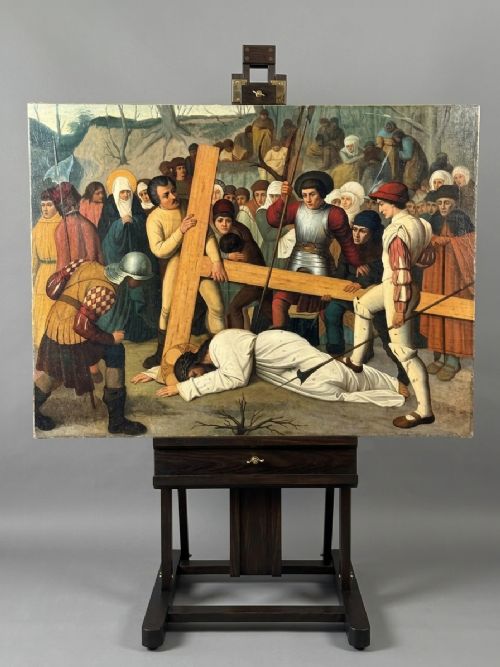
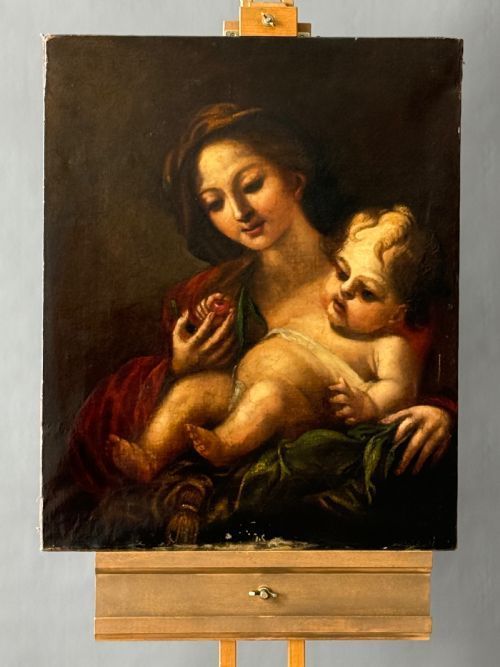
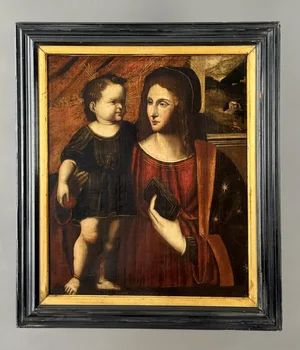
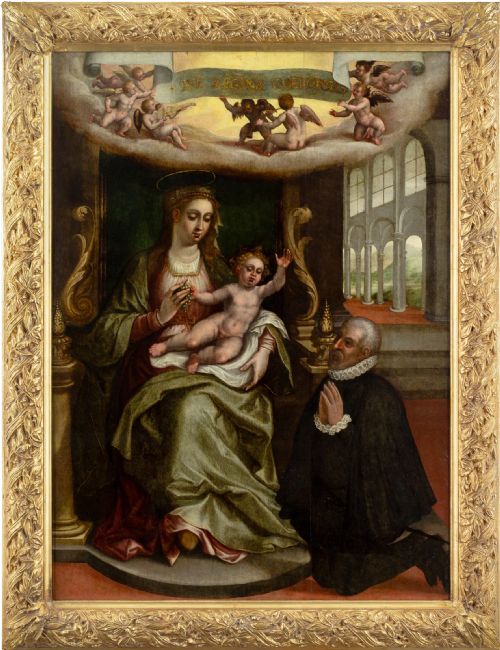
When buyers search for antique devotional artwork, they encounter centuries of religious paintings, icons, and plaques created to inspire spiritual contemplation. These pieces range from intimate domestic portraits of the Virgin and Child to monumental altarpiece studies originating from Italian, Spanish, and Central European schools.
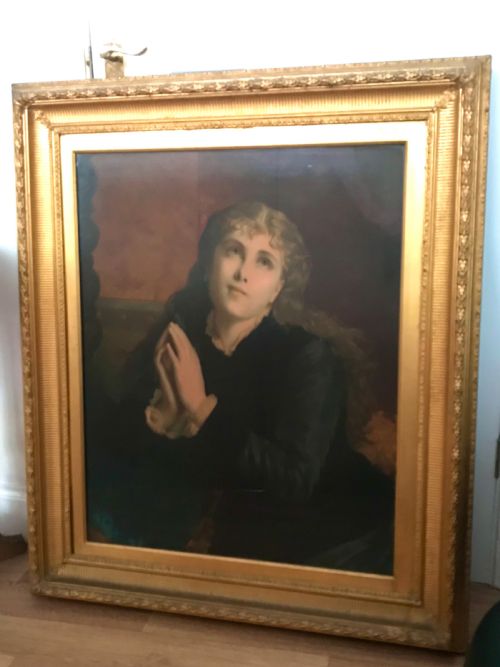
The most common examples on this page are oil paintings on canvas executed during the eighteenth and nineteenth centuries, often following earlier Renaissance or Baroque masters. Works span from small sixteenth-century fruitwood panels to Victorian oleographs and twentieth-century framed prints.
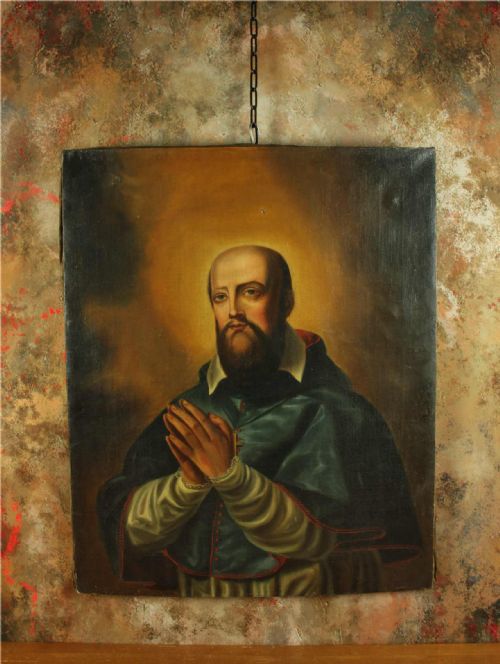
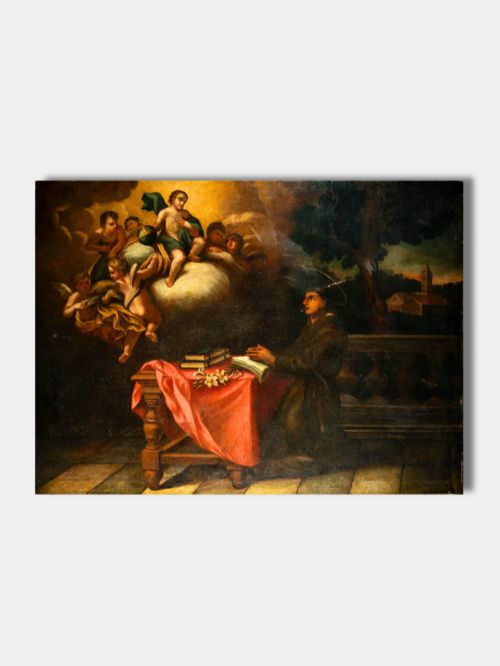
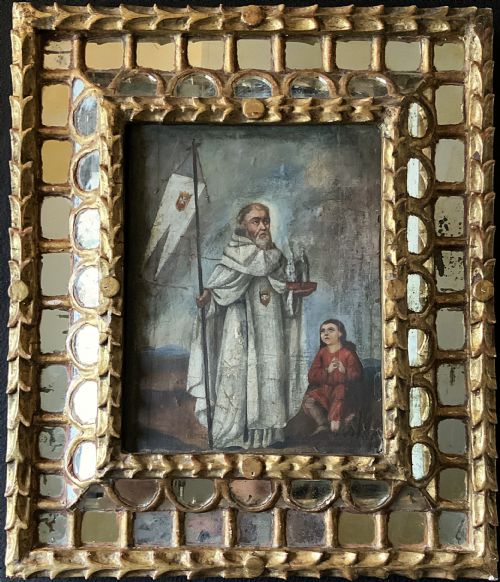
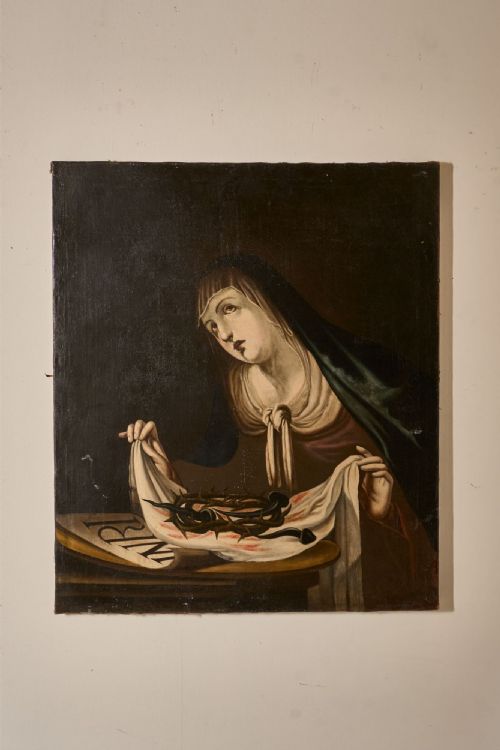
Subjects frequently depict holy figures, saints, and biblical narratives, including depictions of Saint Francis, the Passion of Christ, and the Holy Family. Such pieces functioned as focal points for personal devotion within homes and private chapels across Europe and colonial territories.
Materials and Techniques
Artists utilised oil paint applied to prepared canvas, wood panels, or copper plates, building up rich glazes and deep shadows characteristic of Baroque and Renaissance traditions. Gold leaf frequently illuminated backgrounds or haloes, catching candlelight within dim ecclesiastical spaces.
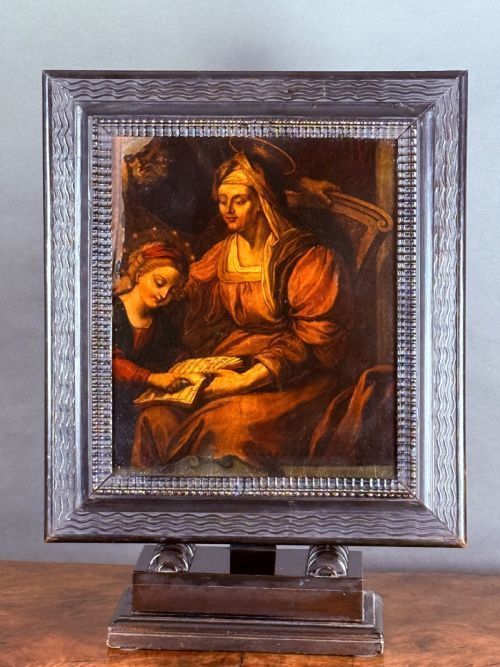
Specialised techniques include reverse glass painting and mezzotint printing, where imagery is applied directly to glass plates or metal sheets to create luminous, durable surfaces. Enamel plaques, such as those from Limoges, involved fusing powdered glass to metal bases through high-temperature firing.
Several depictions feature attentive domestic animals sharing the canvas with saints, including faithful lambs and watchful cherubs.
Assessing Quality and Execution
Quality rests upon the skill of the brushwork and the sureness of the drawing, distinguishing confident studio hands from mechanical copies. Masterful handling of facial expressions, drapery folds, and anatomical proportions separates superior old master paintings from routine provincial workshop output.
The integrity of the original support material and the subtlety of subsequent preservation efforts also influence the standing of a piece. Works retaining their original giltwood frames and untouched paint layers demonstrate greater artistic and historical cohesion.
Jozef Janssens·Bernardino Luini·Miguel Barroso·Benvenuto Tisi·Costantino Frixione·Raffaello Sanzio da Urbino·Juan Ruiz Soriano·Gaspar de Figueroa·Murillo·Ambrious Benson·Guido Reni
The Antique Devotional Artwork Glossary
- Oil on Canvas
- Pigment mixed with drying oil applied to a woven fabric support. This technique allowed artists to create smooth tonal gradations and rich surface textures.
- Reverse Glass Painting
- An image executed on the back side of a glass pane and viewed from the front. The technique produces a glossy, protected surface with vibrant colour depth.
- Limoges Enamel
- Vitreous enamel applied to copper plates in workshops centred in France. The method creates miniature portraits and devotional plaques with jewel-like permanence.
- Ex-Voto
- A votive offering presented to a saint or divinity in fulfilment of a vow. These works often record miraculous interventions and personal gratitude.
- Old Master
- A European painter of skill working before the nineteenth century. The designation includes both major named masters and their immediate workshop circles.
Antique Devotional Artwork: Frequently Asked Questions
What is devotional art?
Devotional art comprises paintings, icons, and plaques created specifically to aid personal prayer and religious meditation. These objects served as spiritual focal points in domestic settings, private chapels, and monastic spaces.
Subjects typically feature sacred figures, biblical narratives, and representations of saints designed to inspire reverence. Creators ranged from prominent European school painters to regional artisans working across centuries.
How do I date an old religious painting?
Dating relies upon examining the preparation of the canvas or wood panel, the composition style, and the pigments used. Stylistic markers often reflect Renaissance, Baroque, or later revival movements.
Frame construction, stretcher types, and secondary inscriptions on the reverse also provide chronological clues. Comparative study with documented works by school followers helps narrow the period of creation.
Where were these artworks displayed?
Devotional paintings and panels were primarily housed in private homes for daily family prayer and personal contemplation. Wealthy patrons commissioned smaller works for domestic or travelling altars.
Larger canvases originated from provincial churches, convents, or institutional chapels. Over time, many transitioned into secular collections while retaining their religious subject matter.