



Antique Desktop Slope
An antique desktop slope organises correspondence in timber, brass and leather, providing a solid workspace and a secure home for papers.
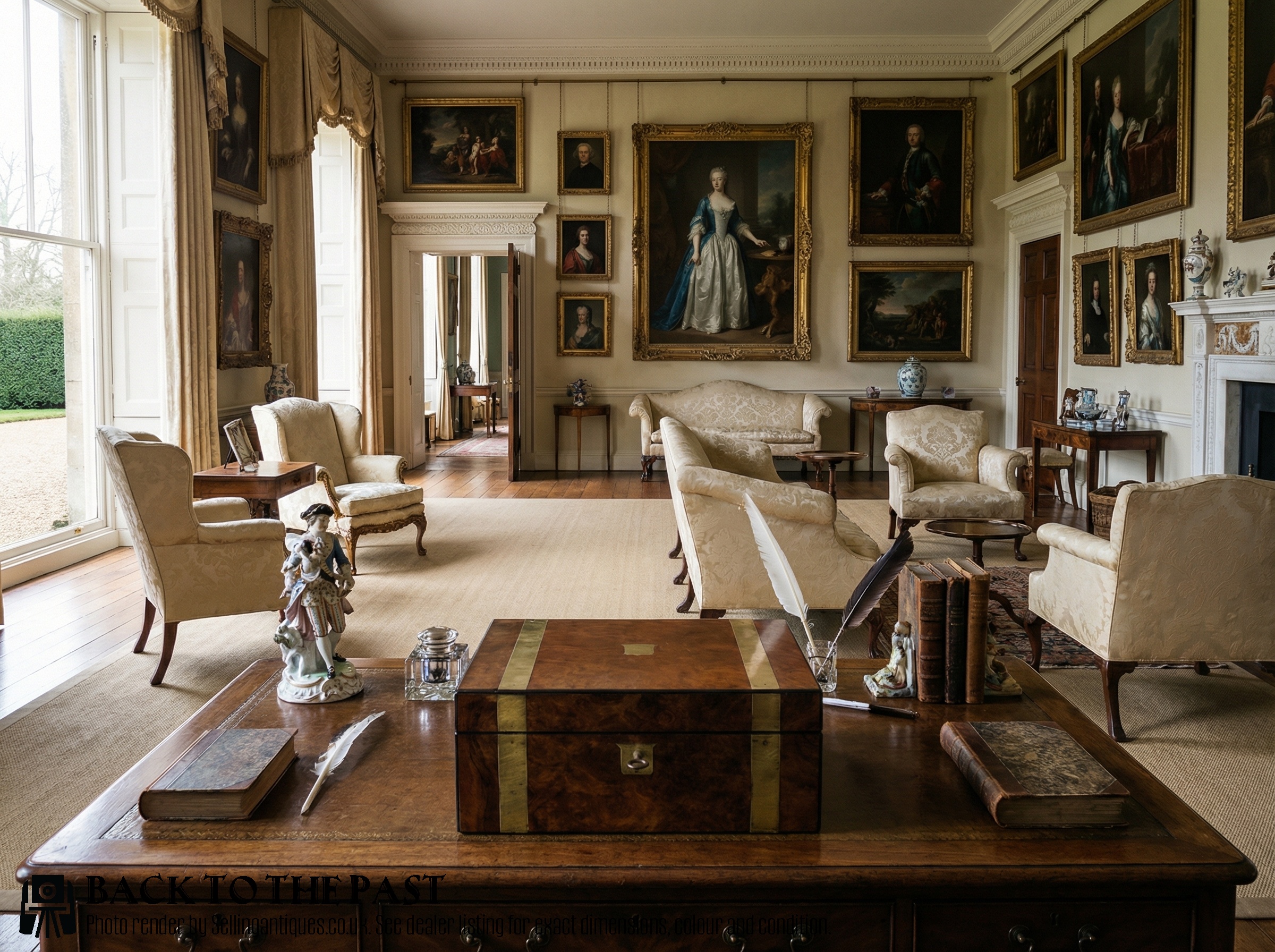
Antique Desktop Slope
An antique desktop slope encompasses practical pieces designed for correspondence and document storage, appearing most frequently on this page as Victorian writing slopes, stationery boxes, and tabletop bureaus. These items originate primarily across the eighteenth, nineteenth, and early twentieth centuries, reflecting changing domestic and commercial writing habits.
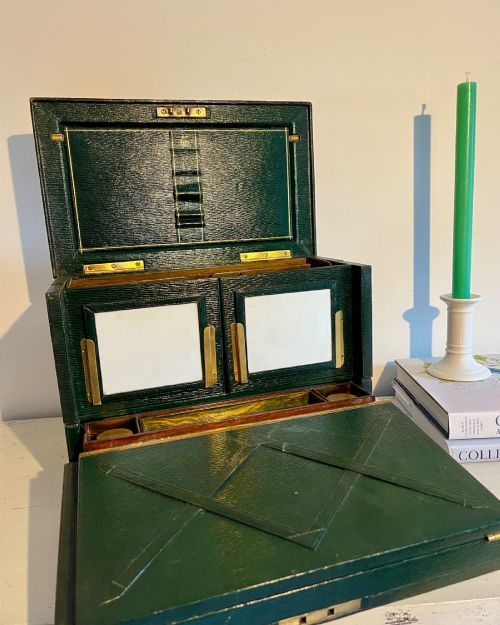
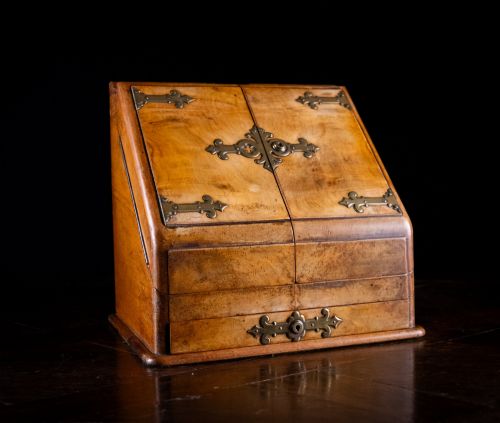
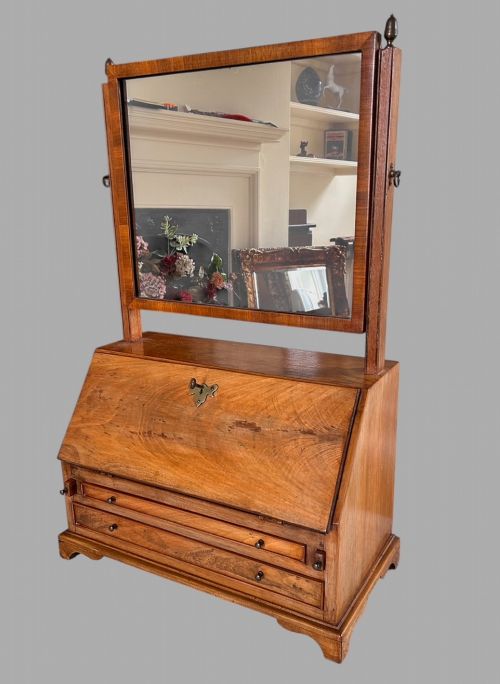
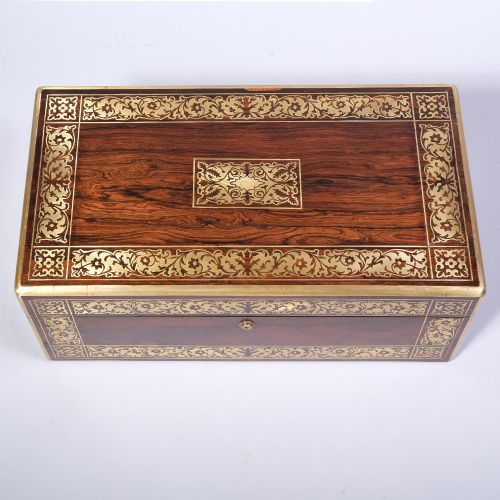
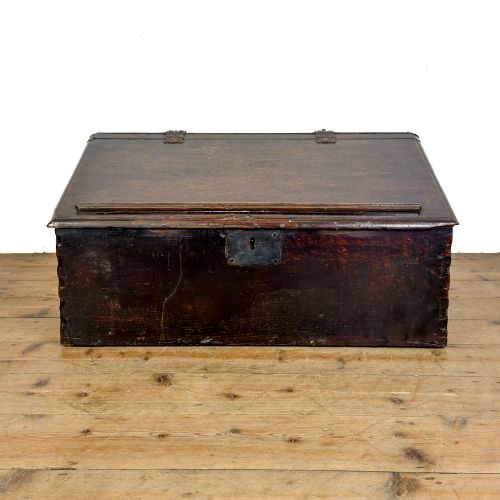
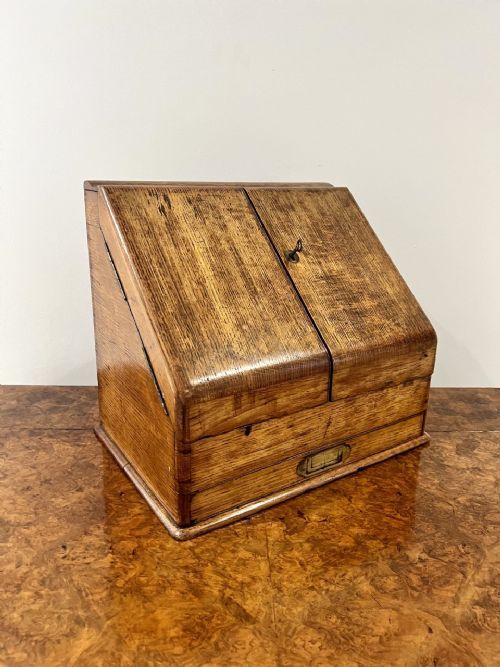
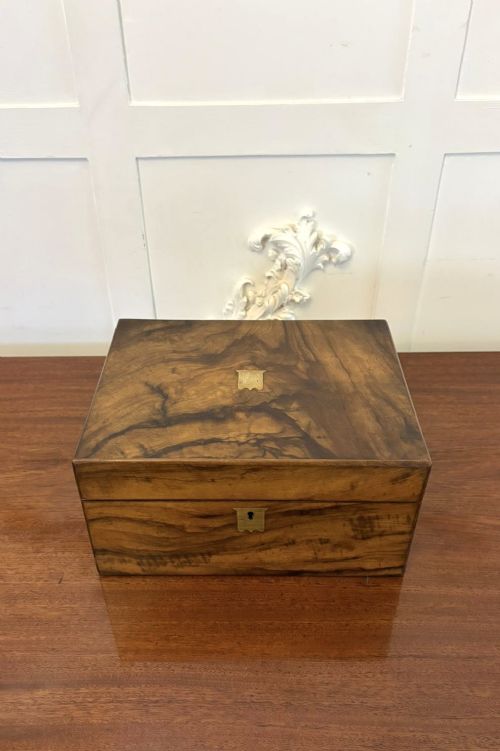
The selection ranges from early oak Bible boxes and Georgian mahogany letter holders to elaborate Victorian brass-bound writing slopes, burr walnut correspondence chests, and inlaid Edwardian stationery cabinets. Buyers encounter both slope-front writing boxes featuring fitted interiors with secret drawers and upright cabinets intended for letters and desk accessories.
How they were made
Cabinet makers utilised dense hardwoods including mahogany, walnut, oak, and rosewood, often applying veneers such as satinwood, burr walnut, and fruitwood over secondary timbers. Decorative techniques relied heavily on brass binding, brass inlay, marquetry, Tunbridge ware, and bone or mother-of-pearl embellishments.
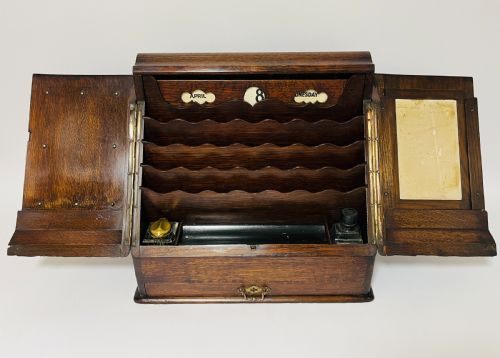
Interiors incorporated fitted compartments, leather-lined writing surfaces, glass ink bottles, and concealed secret drawers operated by clever locking mechanisms. Drop-front doors and hinged sloping lids required sturdy brass hinges, escutcheons, and working locks to withstand daily handling.
Some nineteenth-century correspondence boxes included specific compartments labelled to sort incoming mail into answered and unanswered piles.
What varies in quality
The standard of construction depends on the choice of timber figure, the precision of the joinery, and the integrity of internal fittings like secret drawers and matching ink bottles. Superior examples display carefully matched veneers, crisp carving or marquetry, and substantial brass mounts rather than plated substitutes.
Originality heavily influences standing, favouring pieces retaining their fitted velvet or leather writing surfaces, working keys, and unblemished polish. Retained paper labels from original makers or retailers also elevate the historical interest of a box.
F Waller·Houghton & Gunn·Lefebvre of Belgium
The Antique Desktop Slope Glossary
- Writing slope
- A box with a hinged sloping lid that opens to reveal a desk surface and stationery compartments. These were built for travel or static tabletop use.
- Stationery box
- An upright cabinet with a sloping or drop front designed to hold letters, envelopes, and writing paper upright. They often include internal divisions and letter racks.
- Tunbridge ware
- Woodworking craftsmanship featuring tiny coloured wood mosaic tiles arranged to form pictorial or geometric mosaics. This technique ornamented luxury nineteenth-century boxes.
- Bible box
- An early heavy oak box with a slant lid, originally built to house family Bibles and important documents. They represent the precursor to later writing boxes.
- Secret drawer
- A concealed compartment hidden behind removable dividers or unlocked via a sequence of hidden catches. They secured valuables and private correspondence.
Antique Desktop Slope: Frequently Asked Questions
What is the difference between a writing slope and a stationery box?
A writing slope opens to provide an angled surface for writing letters, complete with interior compartments for pens and ink. A stationery box remains upright on the desk to store paper, envelopes, and correspondence.
While both serve written correspondence, one functions primarily as a portable or tabletop desk while the other acts as an organiser for paper goods.
How do I date an antique desktop slope?
Dating relies on timber choices, construction methods, hardware styles, and decorative techniques visible across different eras. Eighteenth-century pieces commonly utilise solid oak or mahogany with simpler box forms, whereas Victorian examples frequently feature burr veneers, brass binding, and elaborate fitted interiors.
Maker labels, lock stamps, and specific stylistic revivals like Arts and Crafts or Sheraton influences also narrow down the manufacturing decade.
Were these boxes meant to travel?
Many writing slopes and lap desks were constructed with sturdy carrying handles, flush brass mounts, and secure locking lids for transport during journeys. Larger stationery cabinets and tabletop bureaus were built strictly for stationary office and library use.
Examining the presence of recessed brass side handles helps determine whether a specific box was designed for mobility.
How should I care for the timber and leather?
Maintain the wood by applying microcrystalline wax sparingly to nourish the grain and protect the original polish from drying out. Avoid placing antique boxes in direct sunlight or near heat sources that cause wood to warp and veneers to lift.
Treat leather writing surfaces gently with a dry or barely damp cloth, avoiding modern chemical cleaners that strip historical finishes.