




Antique Desktop Correspondence Box
An antique desktop correspondence box organises writing paper and incoming post, combining fitted compartments with fine cabinet-making.
Antique Desktop Correspondence Box
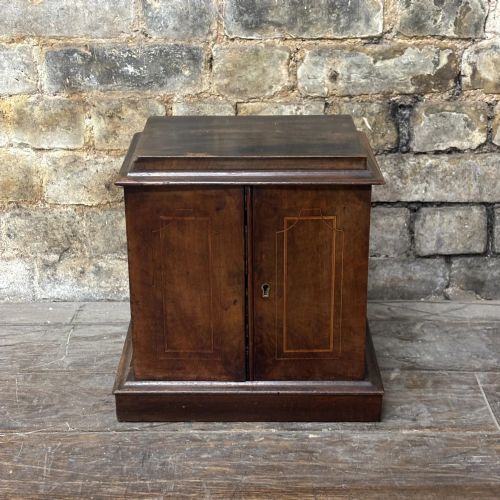
An antique desktop correspondence box is a fitted receptacle designed to hold writing paper, envelopes and incoming mail upon a table or desk. These pieces generally appear as hinged boxes or small cabinets opening to reveal tiered partitions, pen trays and sometimes compartments labelled for answered and unanswered letters.
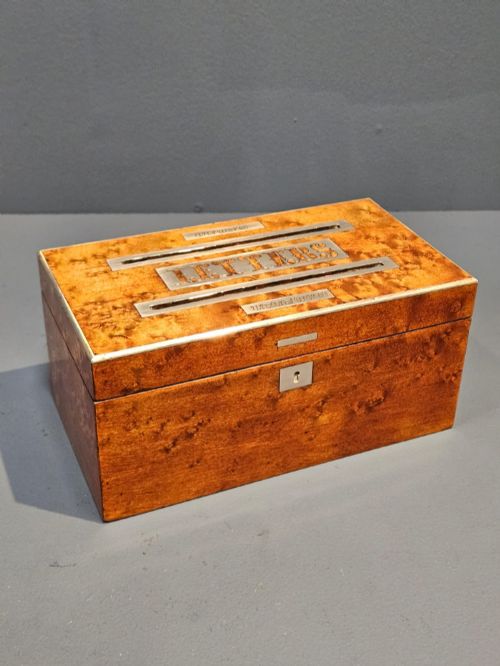
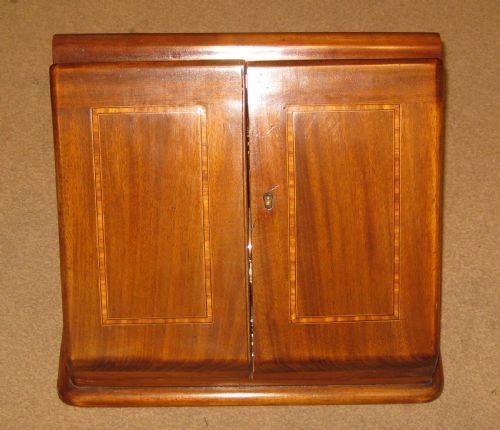
The specimens seen on this page span the nineteenth century and the Edwardian era, taking forms such as stationery cabinets, letter boxes and correspondence chests. Makers of the period utilised timber and metal mounts to create practical containers that also served as decorative items for the gentleman or lady's study.
How they were made
Makers constructed these boxes primarily in hardwoods including mahogany, oak, walnut and satinwood, frequently employing techniques such as crossbanding, inlay and brass mounting. Interiors often incorporated leather linings, velvet pads and fitted stationery dividers designed to keep paper flat and organised.
Specialised variations demonstrate the application of decorative elements like cut steel, porcelain plaques or carved woodwork. Construction methods relied upon traditional joinery to ensure the lids, fall-fronts and doors operated smoothly over decades of daily use.
Period styles represented on this page span the Regency, Victorian, Edwardian, French Restoration and Arts and Crafts eras.
What varies in quality
Quality in these items is determined by the selection of timber, the precision of the joinery and the sophistication of the interior fittings. Superior examples display carefully chosen wood grain, intact brass hardware and well-thought-out internal arrangements that accommodate inkwells, pens and letters.
The presence of maker signatures, unusual mechanisms or refined decorative details such as fine inlay or porcelain inserts separates standard utility items from exceptional workshop productions. Original condition, working locks with matching keys and well-preserved internal leather or silk components also influence the standing of a piece.
Houghton and Gunn
The Antique Desktop Correspondence Box Glossary
- Correspondence box
- A desk accessory designed to store writing materials and letters. These containers range from simple lidded boxes to elaborate cabinets with multiple internal dividers.
- Stationery cabinet
- An upright form of correspondence box featuring a sloping or fall-front door that opens to reveal tiered slots for paper and envelopes.
- Letter box
- A box specifically fashioned to receive incoming post, often fitted with a narrow top slot and a hinged access door for retrieval.
- Crossbanding
- A decorative technique where a border strip of veneer is applied to the edges of a surface with the grain running perpendicular to the main panel.
- Cut steel
- Small faceted steel studs riveted together to form sparkling decorative motifs, frequently found on nineteenth-century mounts and ornamentation.
Antique Desktop Correspondence Box: Frequently Asked Questions
What is the difference between a correspondence box and a writing slope?
A correspondence box is built strictly to store stationery, paper and incoming or outgoing mail on top of a desk. It contains vertical slots and compartments rather than a slanted writing surface.
A writing slope folds down to provide an angled platform for actually writing letters, housing inkwells and paper storage beneath or within the folding boards.
How were these boxes used in the nineteenth century?
Households and offices used these containers to keep writing paper, envelopes and stamps clean, dry and orderly. Incoming post was placed inside until answered, while stationery remained ready for daily correspondence.
They sat upon desks in libraries, drawing rooms and studies as both functional furniture and decorative ornaments appropriate to polite society.
How do I tell a Victorian box from an Edwardian one?
Victorian examples tend to employ rich timbers like burr satinwood, walnut and heavy mahogany, often featuring substantial brass mounts, inlaid banding or Gothic revival influences. They reflect the ornate tastes of the nineteenth century.
Edwardian pieces generally exhibit lighter framing, simpler oak construction or Arts and Crafts influence, focusing on straightforward grain and minimal decoration rather than heavy Victorian ornamentation.
Can I still use an antique correspondence box today?
These boxes function effectively for holding modern notepaper, envelopes, bills and desk accessories in a study or home office. Their internal partitions suit modern mail sorting just as well as nineteenth-century letters.
Care should be taken to protect antique wood finishes and interior leather linings from moisture and direct sunlight during daily use.