




Leather Writing Slope Cabinet
These leather writing slope cabinet designs bring compact Georgian and Victorian utility to a study through fitted sloping surfaces.
Leather Writing Slope Cabinet
When you search for a leather writing slope cabinet, you are looking at compact slope-fronted writing desks and stationery storage pieces designed to organise correspondence. The listings here show these forms originating predominantly across the Georgian, Regency, William IV, and Victorian periods.
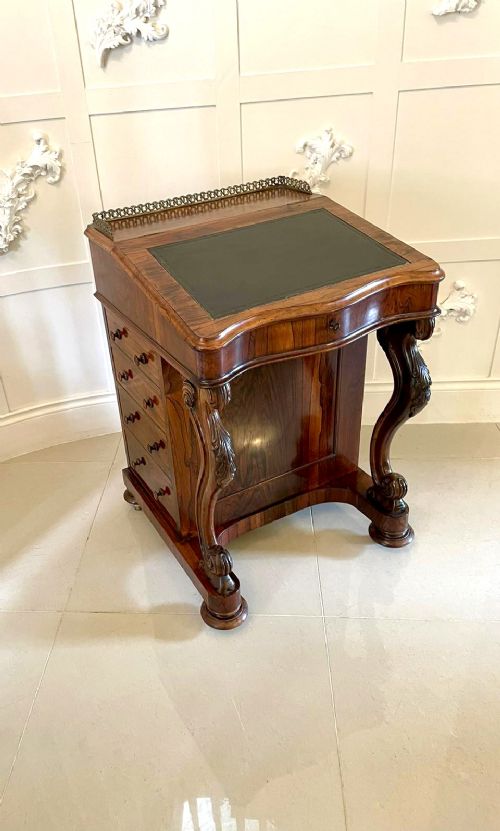
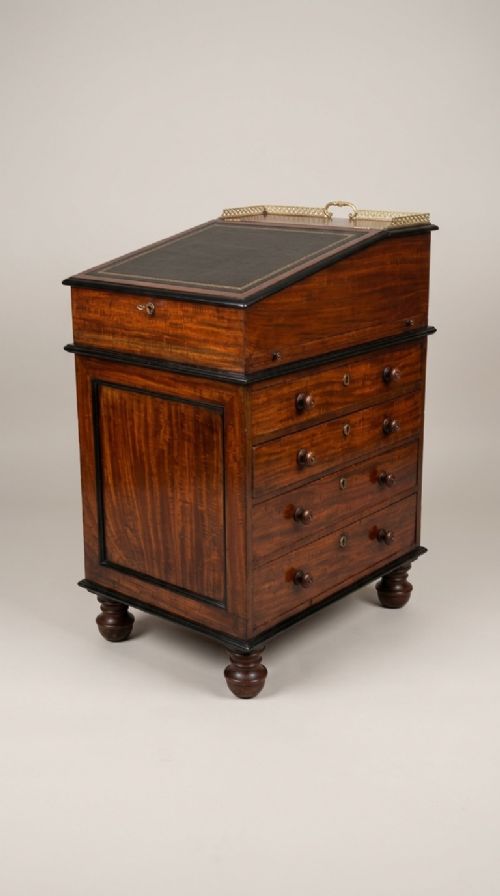
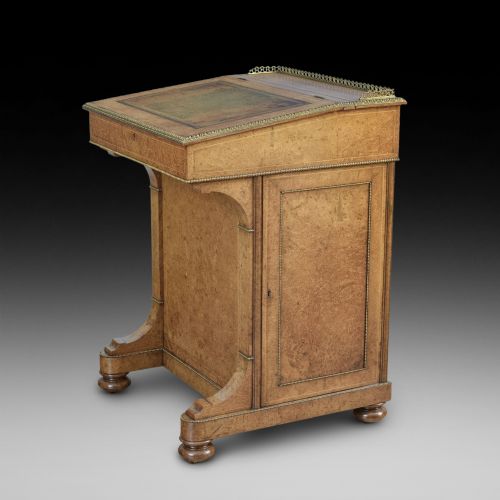
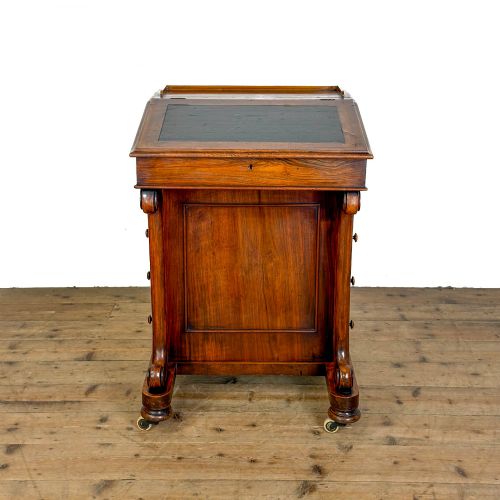
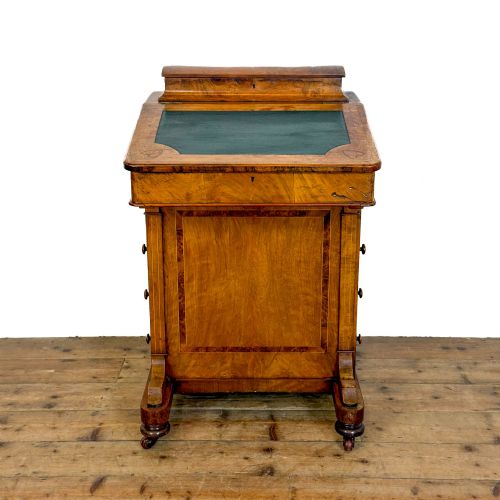
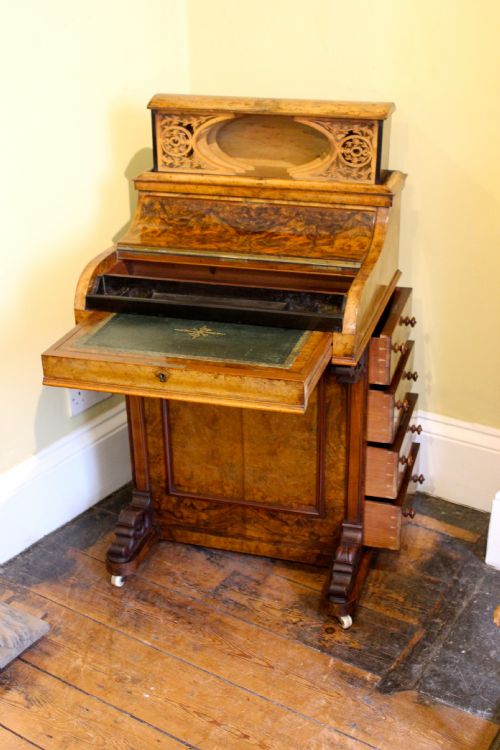
The most common form you will meet on this page is the Davenport desk, constructed with a sloping writing surface above a set of drawers. These pieces frequently incorporate fitted interiors, leather writing panels, and integrated storage for ink and paper.
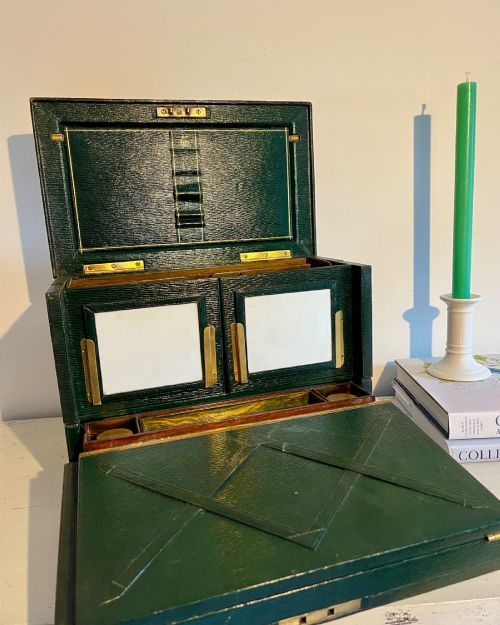
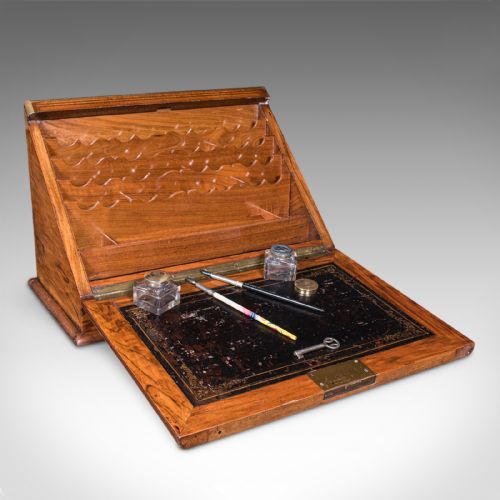
Cabinet and stationery box variants also appear, offering specialised compartments for letters rather than a full integrated desk. The materials span rich hardwoods housing leather inserts and brass fittings, reflecting the domestic and campaign requirements of the nineteenth century.
Materials and construction
Cabinetmakers built these pieces using solid and veneered timbers including mahogany, rosewood, walnut, burr walnut, amboyna, pollard oak, and burr elm. The primary wood carcasses provided sturdy housing for fitted internal stationery compartments and sliding writing surfaces.
Writing surfaces were routinely lined with panels of leather, often tooled with gilt borders to create a smooth, durable medium for quill or pen. Brass mounts, corner braces, and inlaid banding added structural reinforcement and decorative contrast to the timber frames.
Assessing quality in writing slopes and desks
Quality reveals itself in the choice of timber figure, such as highly figured burr walnut, amboyna, or richly grained rosewood veneers. Superior examples display meticulous timber matching across the sloping lid, fall-front, and drawer fronts.
The sophistication of the internal mechanism dictates the grade of the piece, from simple stationery boxes to sophisticated Davenport desks with sliding tops and pivoting pen trays. Finely cast brass hardware and crisp carving elevate the standing of an individual desk.
Gillows of Lancaster
The Leather Writing Slope Cabinet Glossary
- Davenport
- A compact pedestal desk featuring a sloping writing surface, usually with drawers down one side. It originated in the late Georgian period and remained popular throughout the Victorian era.
- Sliding top
- A mechanism allowing the upper writing section to slide forward independently of the pedestals below. This adjustment modified the seating position for the writer.
- Stationery box
- A tabletop cabinet designed to hold envelopes, paper, and writing implements upright. These boxes often feature tiered interior partitions.
- Campaign
- Portable furniture built for travel, typically fitted with brass corner mounts and flush carrying handles. These items were designed to dismantle or withstand transit.
- Crossbanded
- A decorative technique where a border of veneer is laid perpendicular to the grain of the central panel. This frames the primary wood of the desk lid or drawer fronts.
Leather Writing Slope Cabinet: Frequently Asked Questions
What is a Davenport desk?
A Davenport is a small desk with a sloping leather-lined writing lid sitting above a pedestal of drawers. They combine compact proportions with internal stationery compartments.
First appearing during the Regency period, these desks remained a staple form throughout the Victorian era for boudoirs and parlours.
How were slope cabinets used?
These pieces served as dedicated stations for reading, writing letters, and storing private correspondence. The sloping lid provided a comfortable angle for handwriting.
Fitted interiors held inkwells, sanders, and pens, keeping all writing materials contained within the cabinet when closed.
Which woods are most common?
Mahogany and rosewood dominate the earlier Regency and William IV examples. Burr walnut becomes particularly prevalent on Victorian pieces.
Exotic timbers like amboyna and pollard oak also appear on high-status examples from the mid nineteenth century.
How do I date these pieces?
Dating relies on timber choice, architectural styling, and hardware details such as brass locks and handles. Regency pieces favour mahogany and rosewood with classical lines.
Victorian iterations often display burr walnut veneers, heavier carvings, and more complex internal stationery mechanisms.