



Antique Desk Writing Set
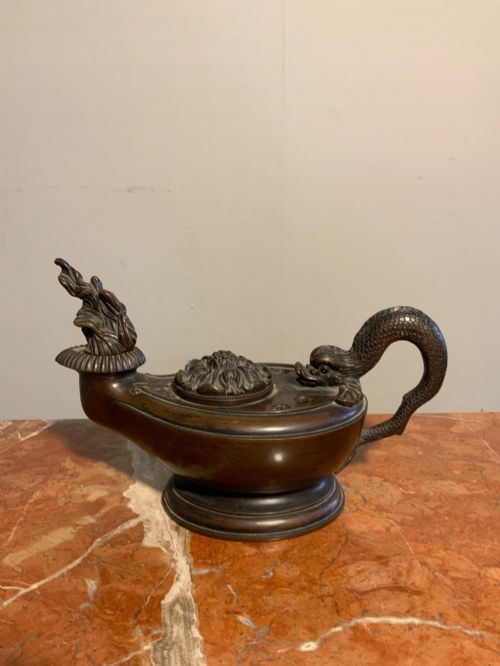
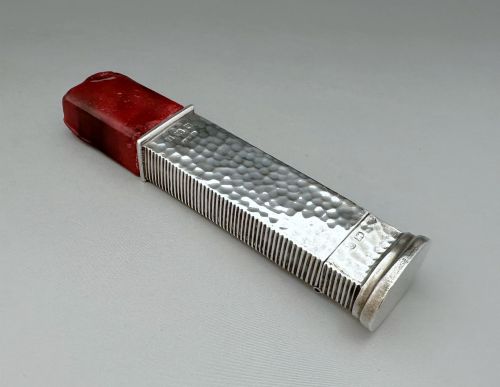
An antique desk writing set gathers inkstands, sanders and stationery boxes in brass, silver and walnut for correspondence.

Antique Desk Writing Set
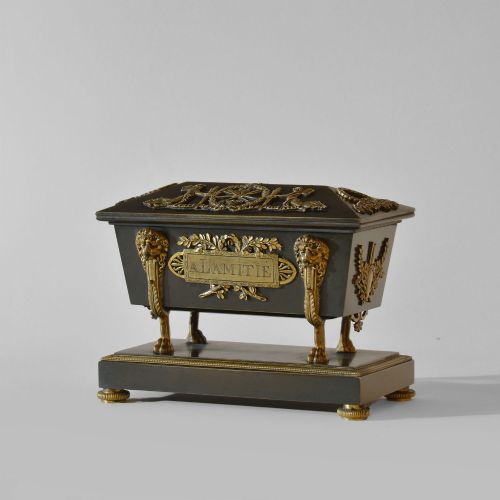
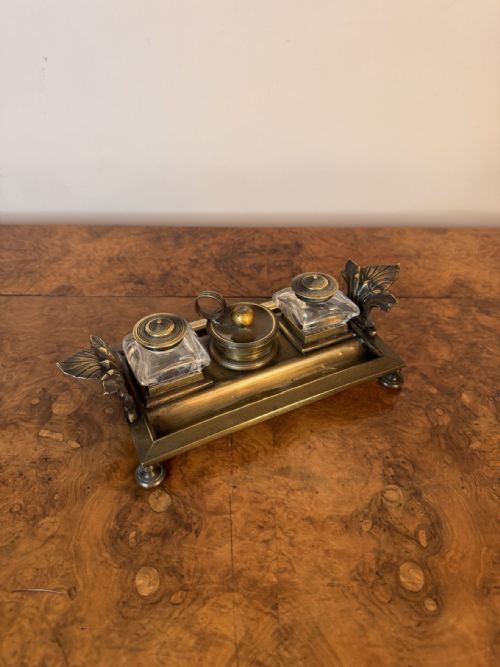
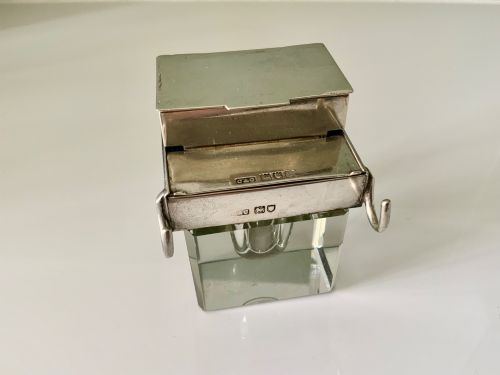
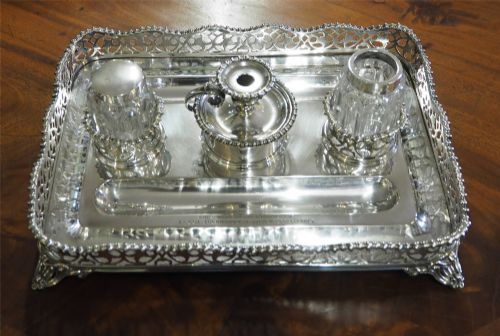
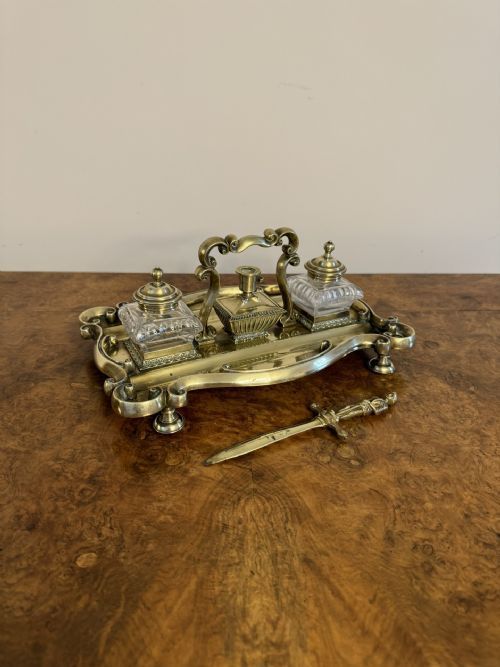
An antique desk writing set serves the traditional correspondence needs of a study or library, bringing together inkwells, pen trays and match holders on a single tray or standish. Buyers seeking these pieces will encounter portable writing slopes, stationary boxes and heavy desk stands designed to hold everything required for ink and paper writing.
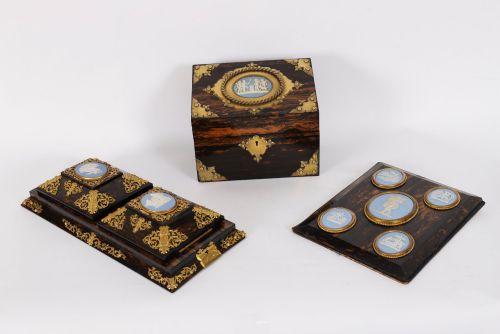
Most examples found on this page date from the Georgian, Victorian and Edwardian periods, constructed in wood, glass and metal. These sets range from simple brass inkstands to elaborate walnut and coromandel boxes fitted with cut glass bottles and silver mounts.
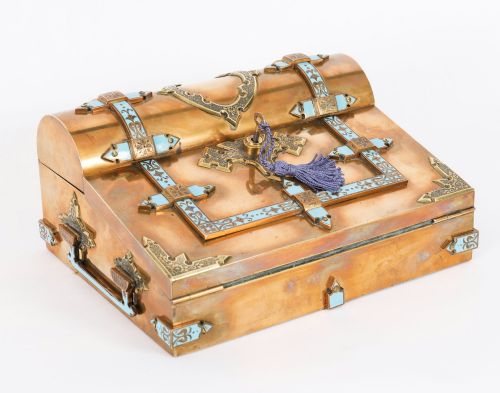
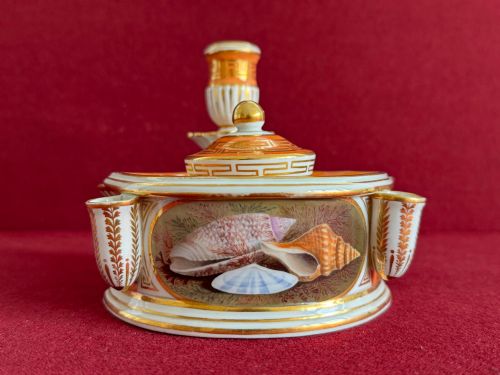
Regional variations appear across the collection, including French ormolu and champlevé pieces, Dutch Delft faience inkstands, and British oak or burr walnut stands. Many incorporate specific compartments for sealing wax, vesta cases and matching chambersticks.
How They Were Made
Cabinetmakers utilised dense timbers like walnut, coromandel, mahogany and maple, often incorporating brass banding, Boulle work, tortoiseshell or mother-of-pearl inlay to decorate the surfaces of slopes and stands. Writing box interiors frequently featured leather writing surfaces alongside precision-cut glass inkwells fitted with hinged sterling silver or plated brass lids.
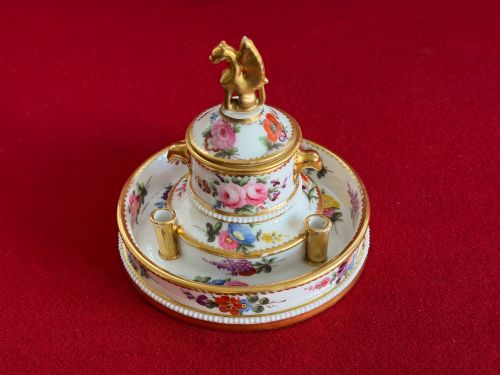
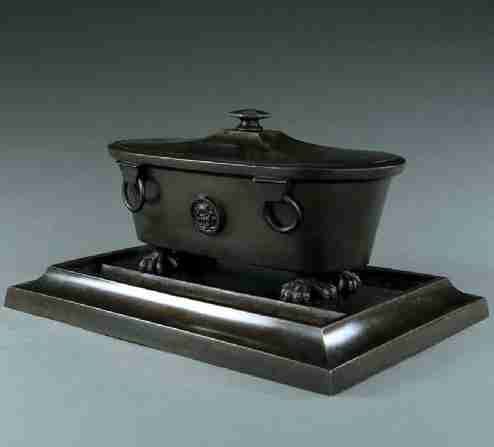
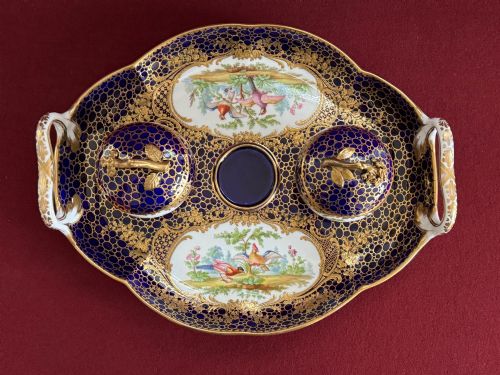
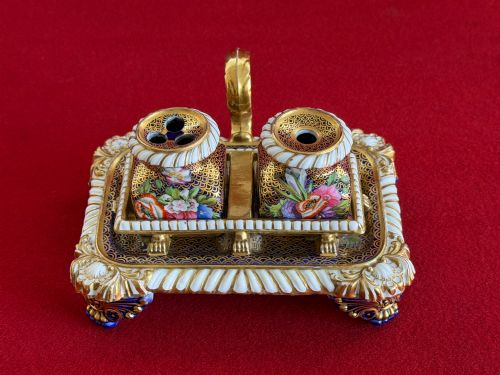
Metal components relied on bronze casting, ormolu gilding, and silver plating by firms such as Elkington, while ceramic pieces involved porcelain bodies from factories like Spode and Flight Barr & Barr decorated with hand-painted patterns or blue and white Delft faience glazes. Stonework such as Ashford marble and Sienna marble provided heavy, polished bases for bronze and ormolu inkwells.
Carved wooden elements required skilled joinery, visible in the detailed Black Forest animal figures and Irish hand-carved oak pieces shaped as owls. Champlevé enamel and inlaid brass demanded precise hand-tooling to recess decorative metals and glass into the wooden or bronze frames.
Antique Desk Writing Set Retail Price Guide 2026
Typical asking prices for desk writing set among the pieces listed under this phrase on Sellingantiques today, from the lower quarter to the upper quarter. They describe what is for sale here now, not the wider market.
Surviving desk sets occasionally retain dried ink crusts in the corners of their glass wells, left behind by Victorian letter writers.
What Varies in Quality
The distinction between ordinary and superior pieces rests on the choice of materials and the complexity of the internal fittings. Dense figured veneers, substantial sterling silver mounts rather than thin plating, and heavy cut glass inkwells elevate a desk set above simpler brass-trimmed wooden trays.
Craftsmanship in the joinery and metalwork dictates overall standard, seen in tight mitre joints on veneered boxes, crisp chiselling on bronze and ormolu mounts, and fully matching glass inserts within inkstands. Makers who incorporated specialised compartments for sealing wax, vesta cases and matching candlesticks achieved a higher degree of integration.
Provenance and ornamentation also drive distinction, where signed pieces by known makers or detailed decorative programmes such as Boulle work, champlevé enamel or hand-painted porcelain panels demonstrate superior workshop execution.
Elkington·Henry Matthews·Wilkinson & Co·Walker And Hall·Mercier Frères·Sampson Mordan & Co·Lund of London·Flight Barr & Barr·Marson & Jones
The Antique Desk Writing Set Glossary
- Standish
- A portable tray or stand fitted with inkwells, sanders and penholders used on a desk. This term frequently applies to eighteenth and nineteenth-century examples in brass, silver or ceramic.
- Writing Slope
- A portable sloping desk that opens to reveal a leather-lined writing surface and storage compartments for paper and ink. These pieces were often fashioned from burr walnut or mahogany.
- Ormolu
- Gilded bronze popular in French and English decorative arts during the nineteenth century. It provides bright metallic highlights on desk stands and inkwell bases.
- Champlevé
- An enamelling technique where troughs are dug into a metal surface and filled with vitreous enamel before firing. It appears on nineteenth-century bronze desk accessories.
- Coromandel
- A heavy, durable timber imported from Asia, valued for its rich dark brown colour and dramatic contrasting grain. It was frequently selected for Victorian stationery boxes and ink stands.
- Vesta Case
- A small matchbox fitted with a striking surface, often incorporated into desk sets or paired with sealing wax holders. These items catered to nineteenth-century lighting and sealing needs.
Antique Desk Writing Set: Frequently Asked Questions
What is the difference between an inkstand and a desk set?
An inkstand specifically refers to a tray or stand holding inkwells, sanders and pen rests for immediate desktop use. A desk set often includes a wider assortment of matching items such as stationery boxes, blotters and candlesticks.
While smaller inkstands were easily moved between rooms, larger desk sets formed permanent fixtures on library tables and executive desks throughout the nineteenth century.
How were antique writing slopes used?
A writing slope provided a portable angled surface for reading and writing letters before the widespread adoption of fitted stationery cabinets. The hinged lid folded down to reveal a sloping leather-lined writing pad.
Beneath the writing surface, storage compartments held folded paper, envelopes, ink bottles and nibs, allowing a traveller to pack an entire writing desk into a single wooden box.
How do I date a Victorian desk stand?
Dating a Victorian desk stand involves examining the timber types, metal plating marks, and hardware styles used in its construction. Burr walnut and coromandel became particularly popular during the mid-nineteenth century, often accented with heavy brass mounts.
Silver-mounted pieces frequently carry hallmarks indicating the assay office and exact year of manufacture, while unincorporated brass and bronze stands rely on stylistic cues from Gothic Revival, Egyptian Revival or Neoclassical designs.
Are glass inkwells removable for cleaning?
Most fitted glass inkwells lift directly out of their brass or wooden collars to allow for ink replenishment and washing. Original glass inserts often feature hand-cut facets and polished pontil marks on the base.
Replacement glass inserts are common in antique sets, so collectors look for inkwells that fit snugly into the original collars without excessive movement.