


Antique Desk Side Table
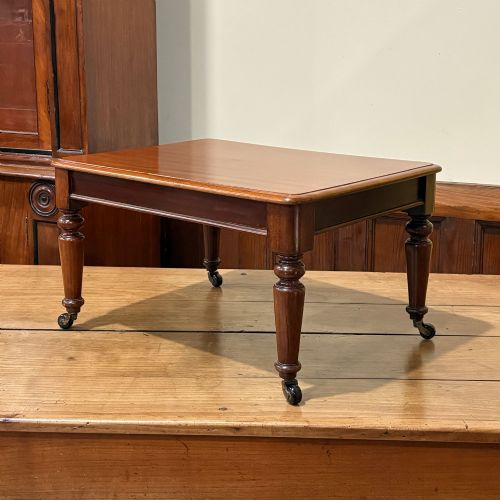
An antique desk side table combines the surface utility of a compact writing space with the restrained footprint of a traditional side table.
Antique Desk Side Table
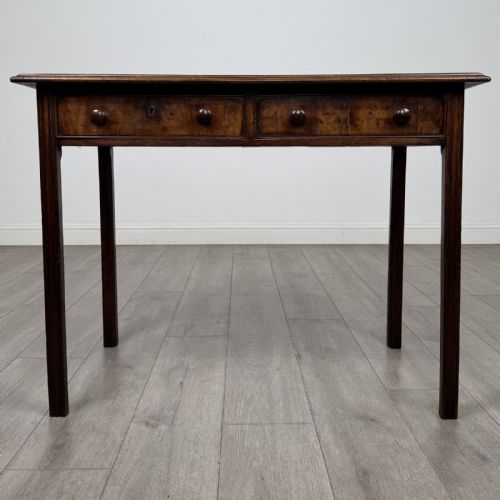
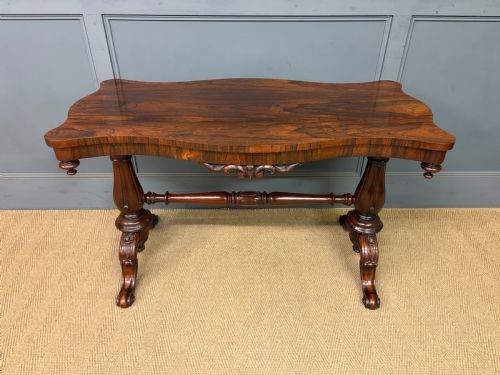
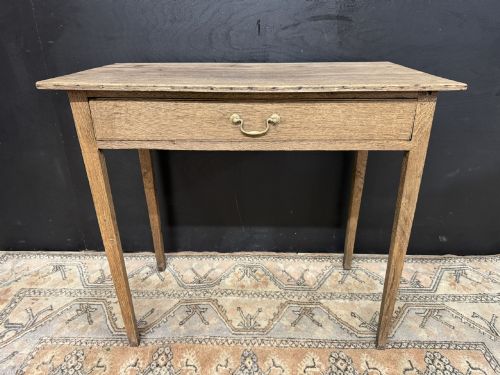
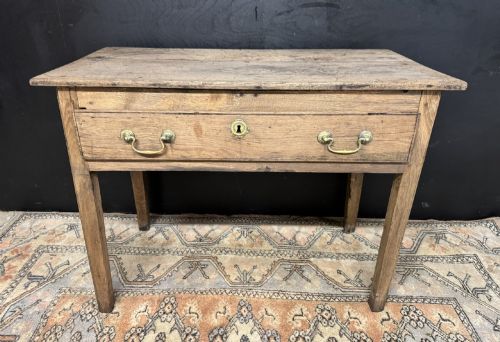
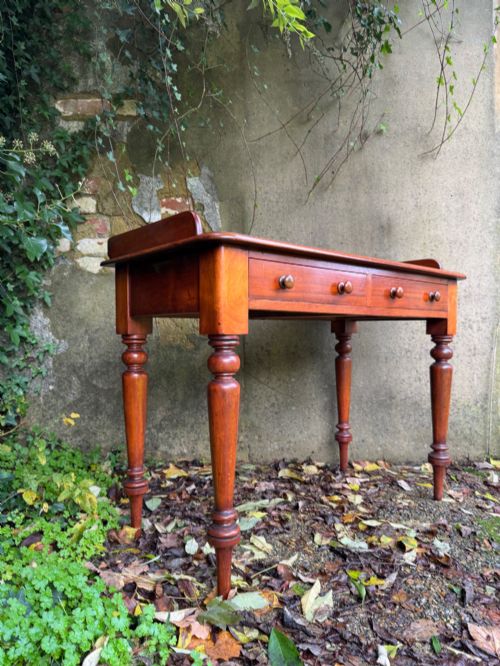
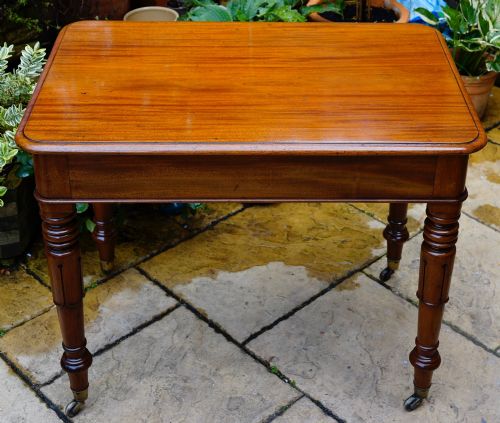
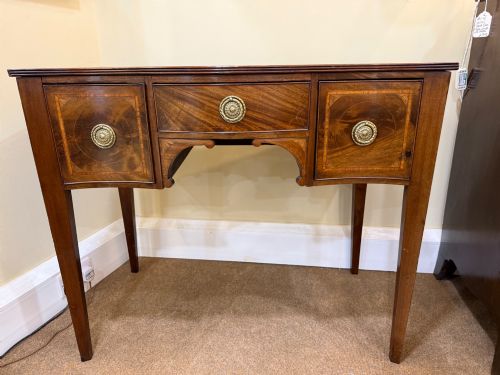
When searching for an antique desk side table, buyers encounter a crossover of forms including lowboys, writing tables, console tables, and sofa tables originating from the Georgian, Victorian, and Edwardian eras. These pieces bridge the gap between dedicated writing furniture and occasional tables, often featuring integrated drawers for correspondence.
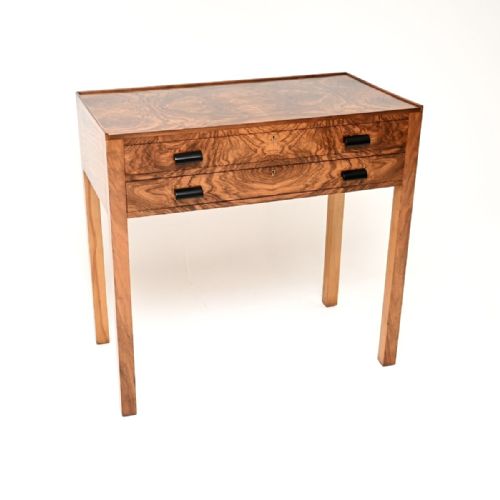
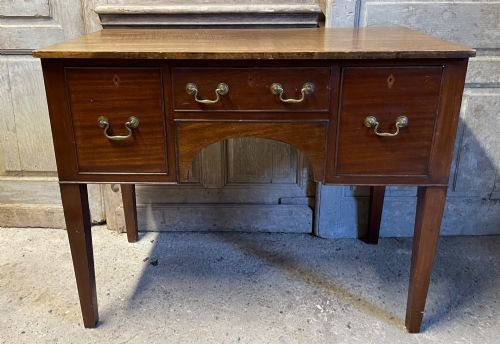
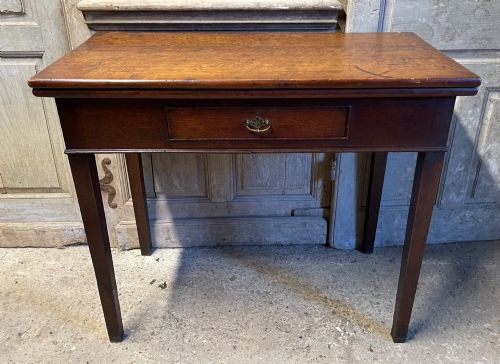
The versions met most frequently on this page span solid oak country pieces, mahogany Georgian designs, and walnut or rosewood revival pieces with fine marquetry or parquetry inlay. They serve equally as lamp tables, hall furniture, or compact bedroom writing desks.
Origins range from English regional workshops to Scottish urban makers and French cabinet-makers producing Louis XV revival pieces. The proportions consistently favour smaller footprints suited to placement beside seating or against hallway walls.
Materials and Techniques
Construction relies heavily on dense timbers such as mahogany, oak, walnut, and rosewood, frequently enhanced by decorative veneers like burr walnut, satinwood, and yew wood. Secondary woods like pine or beech appear in drawer linings and internal framing.
Cabinet-makers employed traditional joinery techniques including dovetail joints for drawer construction and mortise and tenon frames for structural stability. Surface ornamentation incorporates brass handles, ormolu mounts, leather desk inserts, and intricate marquetry or parquetry.
Antique Desk Side Table Retail Price Guide 2026
Typical asking prices for desk side table among the pieces listed under this phrase on Sellingantiques today, from the lower quarter to the upper quarter. They describe what is for sale here now, not the wider market.
Several tables include hidden compartments designed for secret correspondence.
Evaluating Construction and Finish
Quality rests primarily on timber selection, such as the depth of figure in flame mahogany or burr walnut, matched against the integrity of the secondary woods. Superior examples maintain original hardware, uncompromised drawer linings, and crisp hand-cut dovetails.
The finesse of the carving, the precision of the parquetry inlay, and the retention of a sympathetic polished finish separate workshop pieces from standard commercial output. Structural balance and the absence of heavy timber shrinkage further define the upper tier.
JAS Shoolbred·Mappin & Webb·Heals of London·Gillows
The Antique Desk Side Table Glossary
- Lowboy
- A small Georgian table with one or more rows of drawers, commonly used as a dressing table or side table.
- Sofa table
- A rectangular occasional table designed to stand in front of or beside a sofa, typically featuring drop leaves at either end.
- Marquetry
- Decorative patterns formed by the insertion of contrasting veneers into a wood panel, often depicting floral or geometric motifs.
- Parquetry
- Geometric mosaic woodwork used for floors or furniture surfaces, creating repeating triangular or square patterns.
- Frieze
- The horizontal band situated directly beneath the tabletop, frequently housing one or more integrated drawers.
Antique Desk Side Table: Frequently Asked Questions
What is an antique desk side table used for today?
These pieces function effectively as compact laptop stations, hallway drop-zones, or bedside writing surfaces where space is at a premium.
Their integrated drawers offer convenient storage for stationery and small household items while maintaining a decorative presence.
How do I distinguish Georgian from Victorian examples?
Georgian pieces generally exhibit cleaner, more restrained lines with linear mahogany or oak construction and minimal applied ornament.
Victorian iterations often favour heavier proportions, darker woods like burr walnut, revival styles such as Louis XV, and more elaborate marquetry.
Can these tables be used as dressing tables?
Many examples historically served dual purposes for correspondence and grooming, particularly smaller lowboys and pieces fitted with multiple drawers.
Adding a tabletop mirror transforms a side table or writing table into a functional dressing surface.
Are these tables suitable for small rooms?
Their restrained depth and narrow footprints allow them to fit easily into hallways, alcoves, and tight corners without dominating a room.
Drop-leaf sofa tables offer adjustable surface area depending on immediate spatial requirements.