
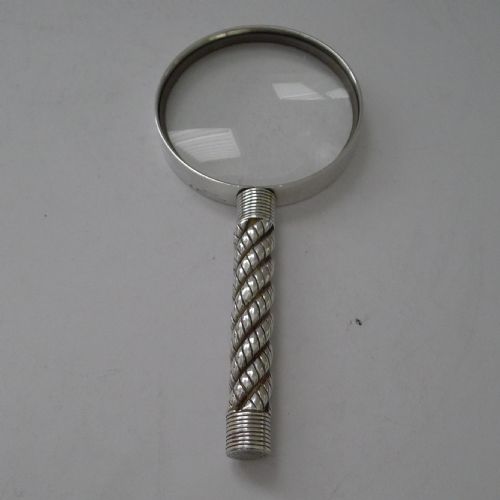
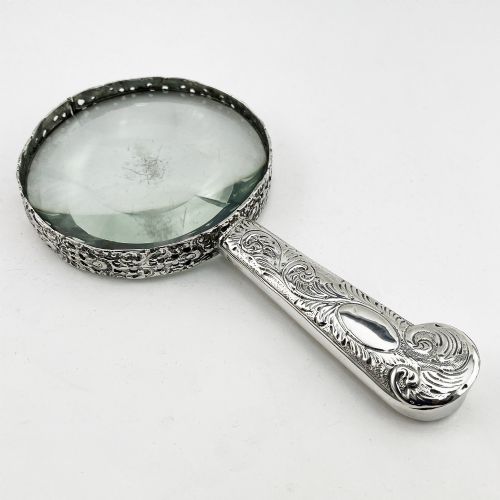
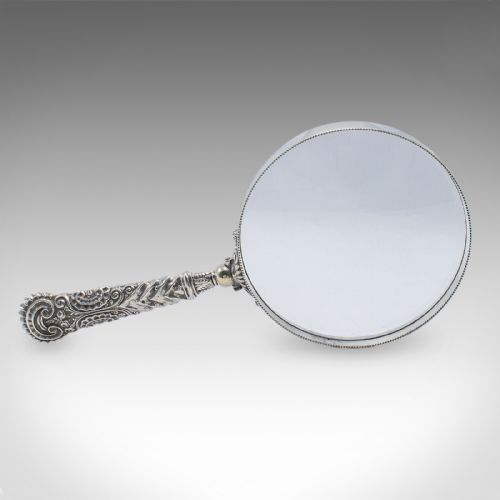


Antique Desk Magnifying Glass
An antique desk magnifying glass brings functional heft and period detail to a writing table.
What an antique desk magnifying glass is
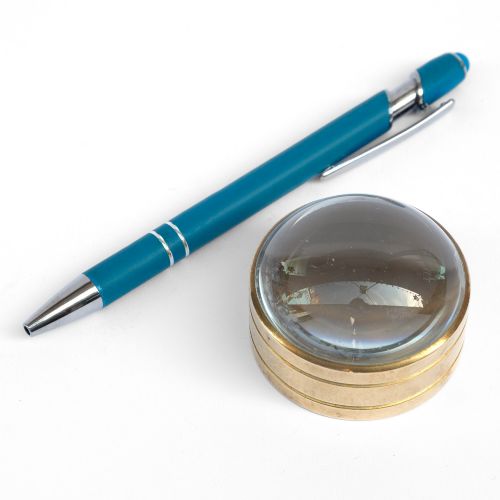
An antique desk magnifying glass serves as a practical tool and a decorative desk accessory for reading fine print or inspecting details. These pieces combine optical utility with substantial weight, often doubling as paperweights on a workspace.
The version most commonly encountered on this page is the English brass desk magnifying glass or paperweight from around nineteen ten. These examples range from standard sizes to oversized and mammoth formats, frequently featuring bullseye lenses.
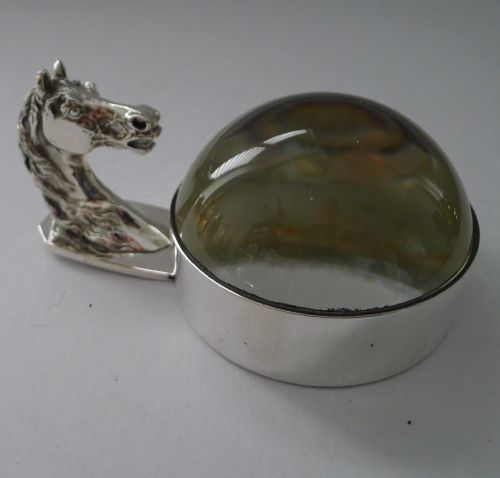
Beyond Edwardian brass instruments, the selection encompasses pieces from the Art Deco period utilising shagreen and silver plate, alongside mid-century examples such as equestrian designs from Paris. Victorian reception desk letter sets also incorporate these magnifying lenses among matched stationery items.
Materials and construction
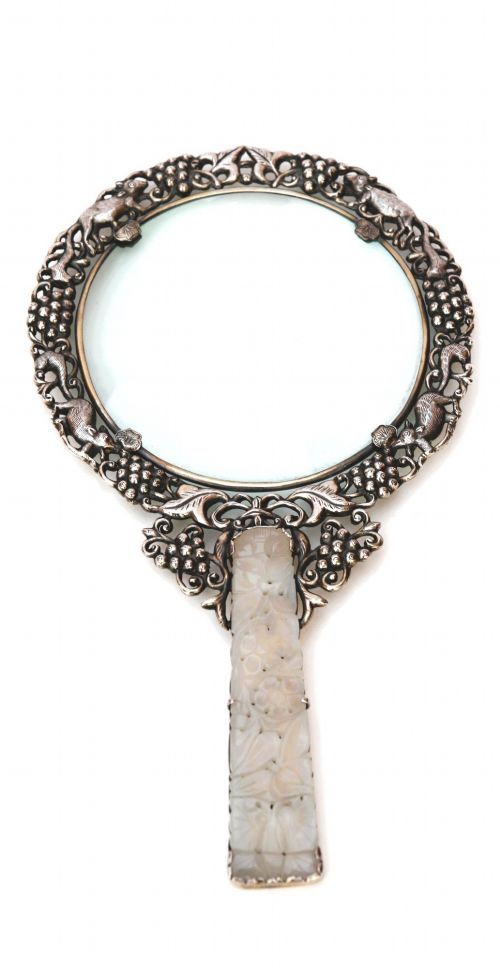
Makers constructed these objects using brass, silver plate, sterling silver, glass, walnut, and shagreen. Metal components were cast or turned, while pivoting models incorporated adjustable brass mounts for positioning the lens over documents.
Textured finishes such as shagreen appear alongside smooth polished metals and clear optical glass. Folding mechanisms and combination pieces, including rulers and letter sets, demonstrate period metalworking and assembly techniques.
Retail Price Guide 2026
Typical UK retail prices for desk magnifying glass, calculated from the Sellingantiques database of over a million retail prices indexed since 2003. This retail price guide relies exclusively on Sellingantiques data; no external sources or auction records are used, so the figures do not describe the wider market.
If a brass desk glass is described as mammoth, expect it to command attention.
Distinctions in execution
Quality rests in the weight of the metal housing, the clarity and thickness of the glass lens, and the precision of any pivoting or folding mechanism. Substantial brass castings and oversized or mammoth proportions elevate the presence of a piece on the desk.
Material choice marks another distinction, moving from standard brass utility items to luxury finishes such as silver plate combined with shagreen or sterling silver constructions by named Parisian and English makers.
Hermes Paris·Cindo Paris
The Antique Desk Magnifying Glass Glossary
- Bulls Eye
- A thick, convex glass lens designed to gather light and magnify small text. These lenses often sit within heavy brass mounts on desks.
- Shagreen
- Untanned skin from sharks or rays, prized for its granular texture and used to cover luxury desk items during the Art Deco period.
- Paperweight
- A heavy object placed on loose papers to prevent them from scattering. Many large desk magnifying glasses served this dual purpose.
- Sterling Silver
- A silver alloy containing ninety-two point five percent silver by mass, utilised for high-end desk accessories and folding magnifiers.
Frequently Asked Questions
How were desk magnifiers used?
These instruments sat on writing tables to assist with reading small print, maps, or documents. Their considerable weight also allowed them to function as paperweights.
In reception settings, they formed part of matched stationery suites that included letter openers and rulers. Owners kept them within arm's reach for daily administrative tasks.
What periods do these pieces date from?
The pieces span from the late nineteenth century through the Edwardian era, Art Deco period, and mid-century modern designs. Edwardian brass examples from around nineteen ten represent the largest portion of the record.
Later items reflect twentieth-century design movements, incorporating materials like shagreen and specific stylistic motifs such as equestrian horse heads.
Are the lenses adjustable?
Certain models feature pivoting or adjustable brass mounts that allow the user to alter the angle of the lens. This design helped direct light onto the page and accommodated different reading postures.
Stationary versions remained fixed in heavy frames, relying on their overall placement rather than articulated joints.
How do I style a desk magnifier?
Place the piece centrally on a leather blotter or wooden writing surface where its metallic finish and glass lens catch the light. It pairs naturally with other vintage desk accessories.
Allowing the object to rest on top of open books or correspondence highlights its dual role as a functional tool and decorative accent.