



Vintage Silver Magnifying Lens
A vintage silver magnifying lens brings practical desk utility together with tactile period craftsmanship.
Vintage Silver Magnifying Lens
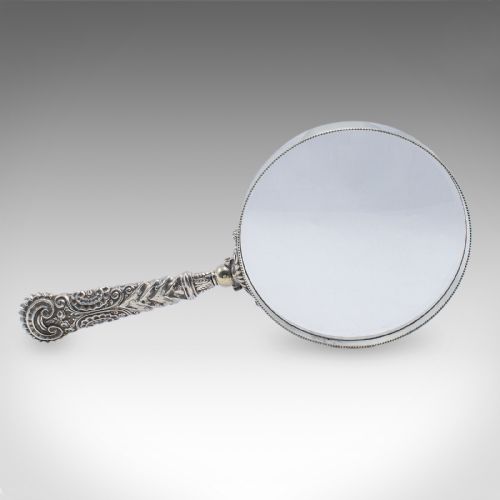
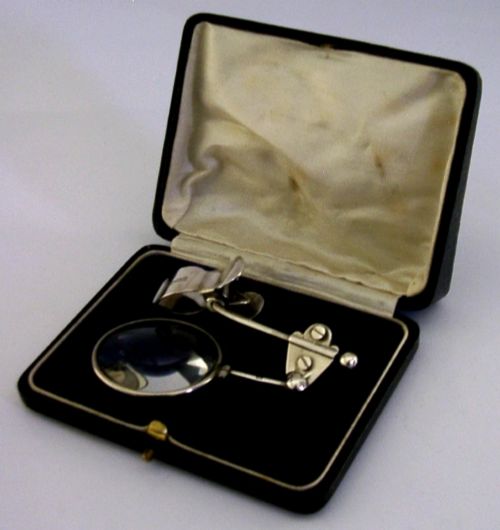
A vintage silver magnifying lens is a desk accessory or library aid designed for close reading and detailed examination. These items combine precious or plated metal mounts with optical glass lenses, often appearing in formats ranging from handheld library pieces to specialised thumb magnifiers.
The versions most commonly met on this page span the Victorian and Edwardian eras through to the Art Deco period of the 1930s. Handles and mounts take various forms, incorporating materials such as mother of pearl, shagreen and jade alongside standard sterling silver and silver plate.
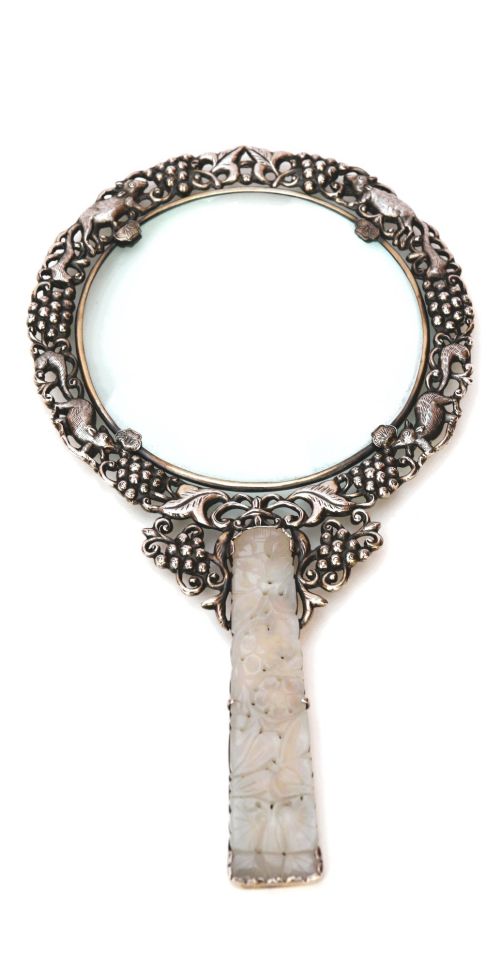
Origins stretch from English workshops to Qing Dynasty items, reflecting a global trade in portable optical instruments. Buyers encounter everything from simple desk tools to elaborate guilloche enamel pieces and mammoth map magnifiers.
Materials and construction
Makers set optical glass lenses within mounts forged from sterling silver, silver plate, brass or other metals. Handles frequently utilise organic and decorative elements such as mother of pearl, shagreen and jade to provide texture and visual contrast.
Decorative techniques recorded in the pieces include repousse work and guilloche enamel applied to metal surfaces. Frames and mounts rely on traditional silversmithing methods to secure the glass securely within the handle structure.
Vintage Silver Magnifying Lens Retail Price Guide 2026
Typical asking prices for vintage silver magnifying lens among the pieces listed under this phrase on Sellingantiques today, from the lower quarter to the upper quarter. They describe what is for sale here now, not the wider market.
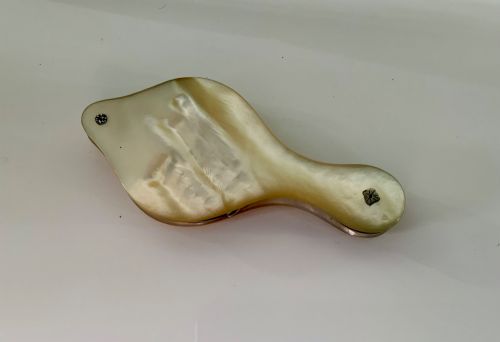
A fish-shaped thumb magnifier from 1927 proves that even practical library tools occasionally adopted aquatic ambitions.
Distinguishing quality
Quality in a vintage silver magnifying lens rests upon the clarity of the optical glass and the weight of the silver or metal mount. Substantial sterling silver handles and well-preserved decorative surfaces indicate higher execution standards than light silver plate over base metal.
The integration of luxury materials like shagreen, mother of pearl or jade elevates a piece beyond standard utility. Finer examples display crisp detail in repousse work or precise application of enamel, maintaining structural integrity across the frame and handle.
P H Vogel & Co·Asprey·Fosters
The Vintage Silver Magnifying Lens Glossary
- Sterling silver
- An alloy containing 92.5 percent silver by weight, widely utilised for British desk accessories and marked with hallmarks indicating assay office and date.
- Silver plate
- A base metal core covered with a thin layer of silver, offering the appearance of solid silver at a different cost point.
- Shagreen
- Undyed sharkskin or rayskin with a rough, granulated texture, frequently employed on handles during the Art Deco period.
- Guilloche enamel
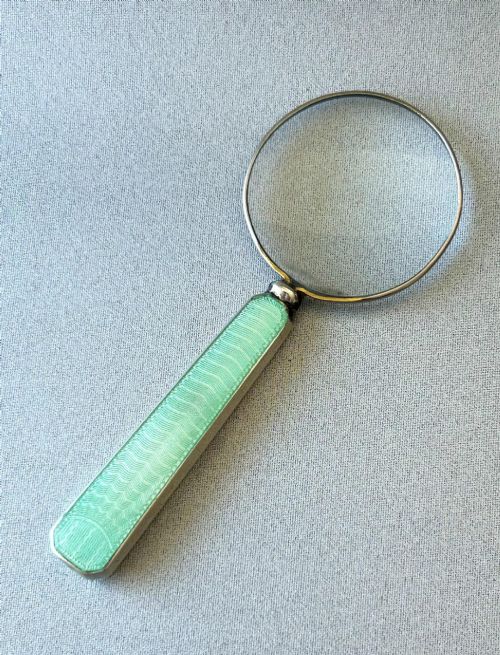
- A decorative technique where transparent enamel is layered over mechanically engraved metal, creating repeating geometric patterns.
- Repousse
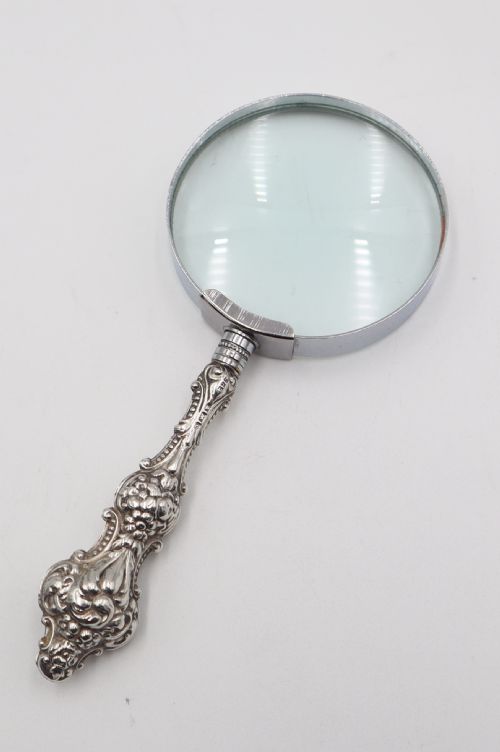
- A method of shaping metal by hammering from the reverse side to form raised relief designs on the front.
Vintage Silver Magnifying Lens: Frequently Asked Questions
What were vintage magnifying glasses used for?
These items served as practical library aids and desk accessories for reading small print, examining maps, and inspecting fine details. Wealthy households and professionals kept them on desks or tables for daily use.
Over time, they evolved from purely functional tools into decorative desk ornaments that reflected the design tastes of periods like the Edwardian era and Art Deco movement.
How do I date a silver magnifying lens?
Dating relies on hallmarks stamped into the silver, which indicate the assay office, standard, and specific year of production. Stylistic markers such as Art Deco geometric lines or Victorian repousse work also help narrow down the period.
Makers' marks provide further evidence by linking the piece to documented silversmiths and manufacturing firms active during specific decades.
How do I care for silver and glass?
Maintaining these pieces requires gentle cleaning of the glass with standard optical cleaner and a soft cloth to avoid scratching. Silver mounts should be polished sparingly with a non-abrasive cloth to preserve hallmarks and decorative details.
Organic handle materials like mother of pearl or shagreen need protection from excessive moisture and direct sunlight to prevent warping or surface damage.
Are these lenses still useful for reading?
Most pieces retain fully functional optical glass lenses capable of magnifying text and fine details effectively. They function well on modern desks as practical tools alongside their appeal as decorative antiques.
Some specialised variants, such as map magnifiers or thumb magnifiers, offer wider fields of view or targeted magnification suited to specific tasks.