



Antique Delftware Display Dish
An antique delftware display dish brings hand-painted tin-glazed earthenware into modern interiors, offering centuries of historic character through blue and white or polychrome palettes.

Antique Delftware Display Dish
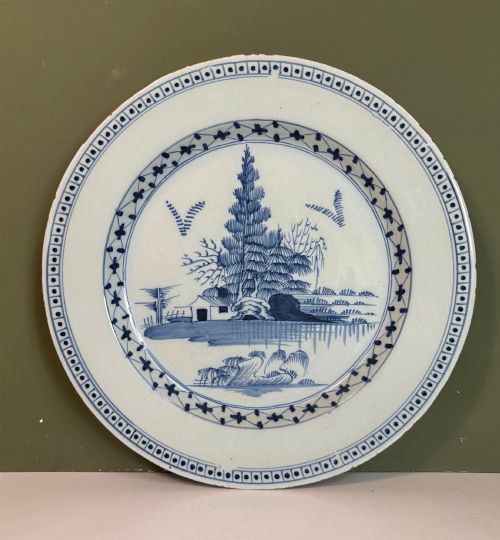
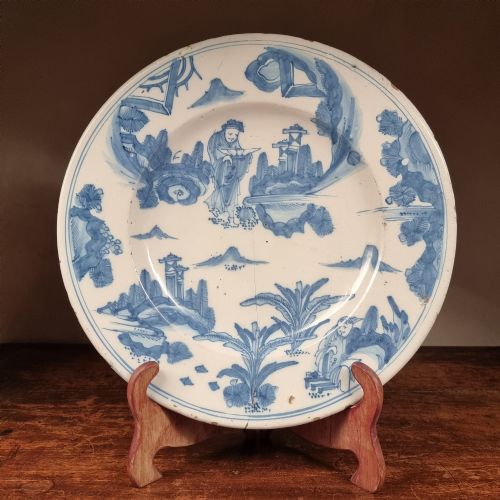
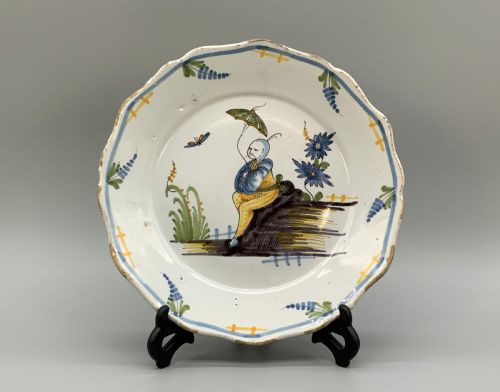
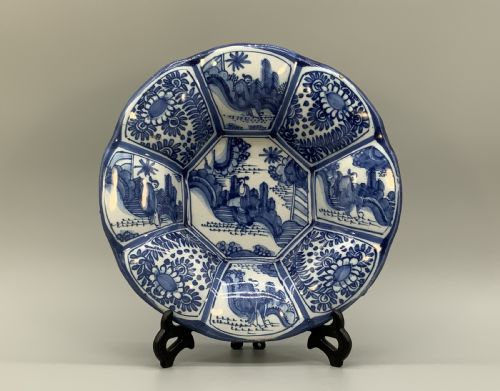
When someone searches for an antique delftware display dish, they encounter large chargers, decorative plates, and lobed dishes intended primarily for visual impact rather than daily dining. The pieces available span from the seventeenth century to the nineteenth century, originating from English, Dutch, and French potteries.
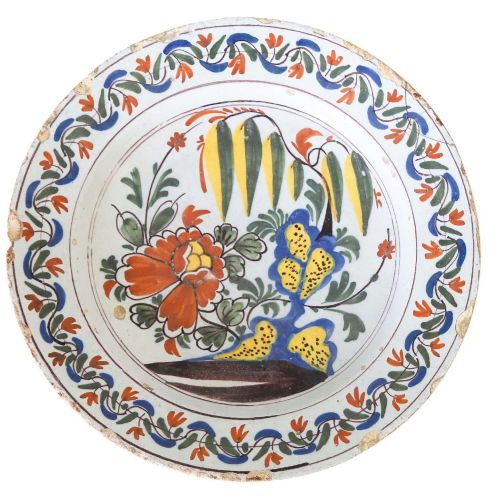
The standard form met on this page is the large circular charger, often featuring painted floral, geometric, or Chinoiserie motifs. English and Dutch examples dominate the selection, showing both blue and white painting and richer polychrome colour schemes.
Objects range from deep chargers measuring significant diameters down to smaller cabinet plates. Collectors find distinct variations in regional styles, from Kraak-influenced seventeenth-century designs to mid-eighteenth-century English polychrome works.
Materials and construction
These items are shaped from earthenware clay, forming a porous ceramic body that required a stable base before glazing. Potters coated the fired clay in a tin glaze, which produced an opaque white or cream surface suitable for direct brushwork.
Painters applied cobalt pigment and other metallic oxides directly onto the absorbent unfired glaze surface. This technique meant that brushstrokes fused permanently with the glaze during the single high-temperature kiln firing.
Listings feature earthenware bodies covered in tin glaze, decorated with cobalt pigment and various polychrome mineral oxides.
Factors determining quality
Quality rests upon the crispness of the hand-painted decoration and the ambition of the pictorial composition. Pieces featuring detailed Chinoiserie scenes or complex multi-colour palettes demonstrate superior artistic control compared to simpler geometric borders.
The smoothness and opacity of the tin glaze also dictate the visual standard of the object. A well-fired glaze provides an even white ground that enhances the brilliance of the cobalt and polychrome pigments without excessive pitting or cloudiness.
Lambeth Delft
The Antique Delftware Display Dish Glossary
- Tin-Glazed Earthenware
- Pottery covered with a ceramic glaze containing tin oxide to produce an opaque white finish. This surface served as the canvas for painted decoration before the final firing.
- Charger
- A large decorative plate traditionally used for display on sideboards or walls rather than for serving food at the table. These oversized dishes form the core of historical delftware collections.
- Polychrome
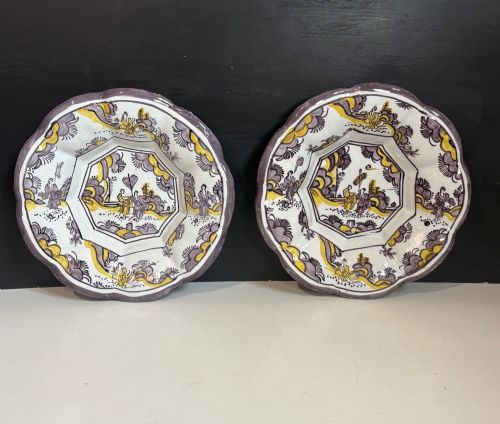
- Decoration employing multiple colours rather than a single pigment like blue. On these plates, colours typically include manganese purple, yellow, green, and iron red.
- Chinoiserie
- European artistic styles reflecting Chinese decorative motifs and landscapes. This aesthetic appears frequently on seventeenth and eighteenth-century delft plates.
- Kraak Style
- A Dutch interpretation of late Ming dynasty Chinese porcelain imported by the Dutch East India Company. These designs feature panels radiating around a central pictorial motif.
Antique Delftware Display Dish: Frequently Asked Questions
How were antique delftware display dishes used historically?
These large chargers and plates were designed primarily for ornamental display on walls, dresser backs, or sideboards. Wealthy households used them to showcase colourful imported motifs or fashionable local ceramic art to visitors.
Because the tin glaze is relatively soft and prone to chipping along the edges, they served as decorative centerpieces rather than everyday tableware.
How can I tell English delft from Dutch delft?
English and Dutch delftwares share similar tin-glazed earthenware bodies and painting techniques, making differentiation a matter of subtle stylistic cues. English pieces often exhibit specific palette characteristics, such as the distinct manganese and polychrome mixes found in eighteenth-century Lambeth productions.
Dutch examples frequently display closer adherence to Chinese Kraak styles or distinct regional floral border patterns. Examining the clay body weight and glaze tone helps experienced collectors separate the origins.
What is the difference between a plate and a charger?
A charger is substantially larger than a standard dining plate, generally measuring well over thirty centimetres across. These oversized formats were created specifically to carry bold pictorial scenes or elaborate floral arrangements.
Plates were produced in smaller dimensions for grouped cabinet display or occasional service, though antique examples on this page are similarly valued for their decorative glaze work.
How do I safely hang a heavy antique charger?
Hanging an antique tin-glazed charger requires a secure, padded wire spring hanger that distributes weight evenly across the rim. Avoid any mounting system that exerts pressure on a single point or requires altering the ceramic body.
Ensure the wall fixing is anchored securely into a stud or uses a proper wall plug to support the substantial weight of the earthenware dish.