




Antique Decorative Chalices
Antique decorative chalices bring classical ceremony into the room, cast in bronze or blown in glass to hold nothing more than their own presence.
Antique Decorative Chalices
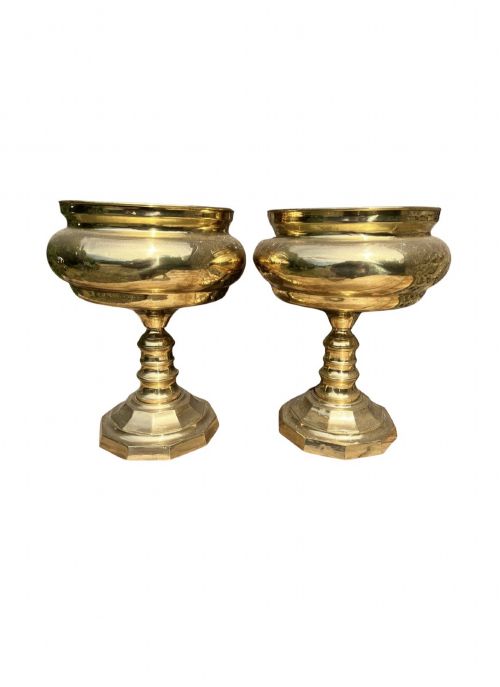
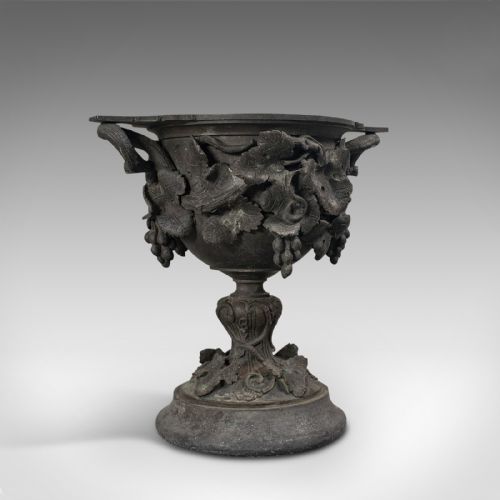
When you search for antique decorative chalices, you encounter a varied assembly of vessels spanning the Georgian, Regency, and Victorian eras through to the early twentieth century. These pieces encompass bronze Grand Tour campana urns, brass goblets, and cased glass rummers designed for display rather than service.
The selection on this page leans heavily toward nineteenth-century French and Italian works alongside British Arts and Crafts creations. You will find pedestal bowls, loving cups, and stemmed drinking vessels executed in brass, copper, pewter, and opalescent glass.
Makers such as Wedgwood and individual Arts and Crafts workshops contribute specialised forms like lustre melba cups and pewter chalices with Celtic Revival motifs. Each item functions primarily as a decorative accent, reflecting historical revivals from Neoclassical to Art Nouveau.
How they were made
Metal vessels rely on traditional foundry methods, utilising cast bronze, spun brass, and beaten copper. Artisans frequently applied gold leaf, gilding, or enamel cabochons to enhance the surface detail of these decorative forms.
Glass pieces demonstrate sophisticated manipulation through cased layers, opalescent blowing, and millefiori techniques. Artisans combined molten glass layers and incorporated metallic leaf or surface gilding to achieve rich optical depth.
Antique Decorative Chalices Retail Price Guide 2026
Typical asking prices for decorative chalices among the pieces listed under this phrase on Sellingantiques today, from the lower quarter to the upper quarter. They describe what is for sale here now, not the wider market.
Some nineteenth-century travellers carried bronze campana urns home in their luggage just to prove they reached Italy.
What varies in quality
The caliber of a metal chalice rests upon the crispness of its casting and the integrity of its patination. Superior examples display sharply rendered classical motifs and hand-chased details rather than soft, mass-produced surfaces.
For glass and ceramic vessels, quality reveals itself in the precision of the cased layers, the depth of the enamel work, and the brilliance of the gilding. Master glassmakers achieved a harmonious balance of weight, colour saturation, and proportion that lesser workshops missed.
Royal Doulton·Makeig-Jones Wedgwood·Adelbert Niemeyer
The Antique Decorative Chalices Glossary
- Campana urn
- A bell-shaped vessel with a flaring rim derived from classical antiquity. These forms were popular souvenir purchases during the Grand Tour.
- Cased glass
- Glass composed of two or more distinct layers of different colours. This technique allows artisans to cut through the outer layer to reveal contrasting colours beneath.
- Kantharos
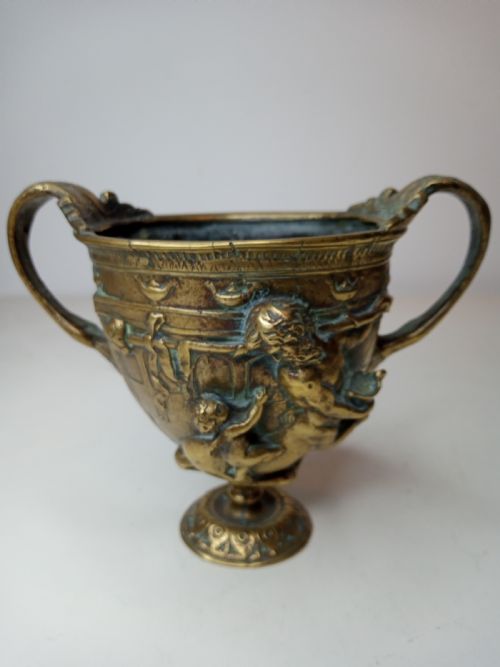
- An ancient Greek cup form featuring a deep bowl and two high-swung vertical handles. Nineteenth-century revivals recreated these shapes in bronze and brass.
- Millefiori
- A glasswork technique producing distinctive patterned mosaics. Molten glass canes are bundled, fused, and sliced to create floral or geometric cross-sections.
- Rummer
- A large, heavy stemmed drinking glass common in the eighteenth and nineteenth centuries. They often feature engraved decoration and substantial footed bases.
Antique Decorative Chalices: Frequently Asked Questions
How were antique chalices used?
Most surviving examples functioned as decorative ornaments, cabinet specimens, or centrepieces rather than active tableware. Grand Tour bronze urns commemorated travels through Italy, while loving cups marked specific social occasions.
Arts and Crafts pewter and copper chalices celebrated handcraft traditions and revivalist aesthetics, designed to be admired for their sculptural qualities.
How do I style a chalice at home?
Place a metal or glass chalice where light can catch its surface, such as near a window or on an open wooden shelf. Their vertical profiles contrast well against lower decorative objects like bowls and trays.
Pair bronze campana urns with traditional interiors or use Arts and Crafts copper pieces to anchor a room with rich, warm metallic tones.
How do I date a decorative chalice?
Dating relies on identifying material characteristics, stylistic revival periods, and maker signatures or registration marks. Victorian and Regency pieces often show specific classical motifs and casting methods.
Later works from the early twentieth century reflect Arts and Crafts or Jugendstil ideals, utilising hammered surfaces and organic enamel cabochons characteristic of that specific era.