
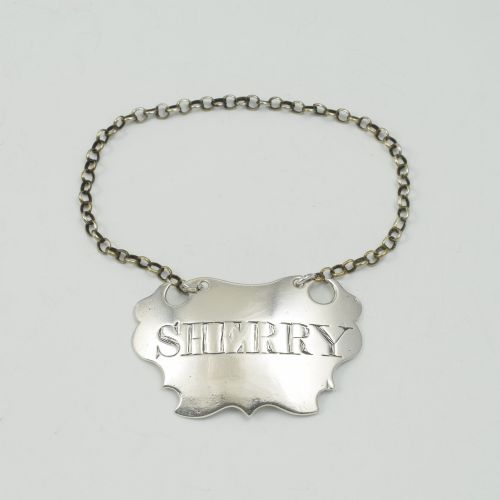
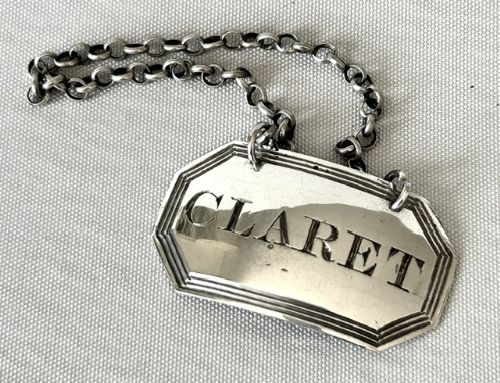
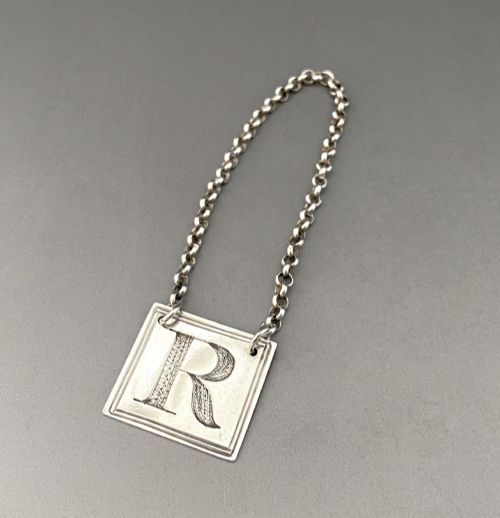
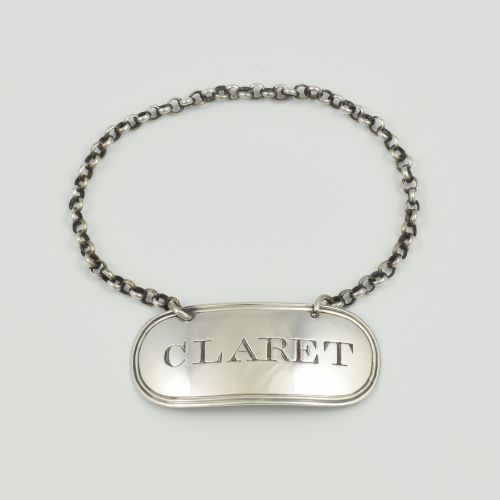

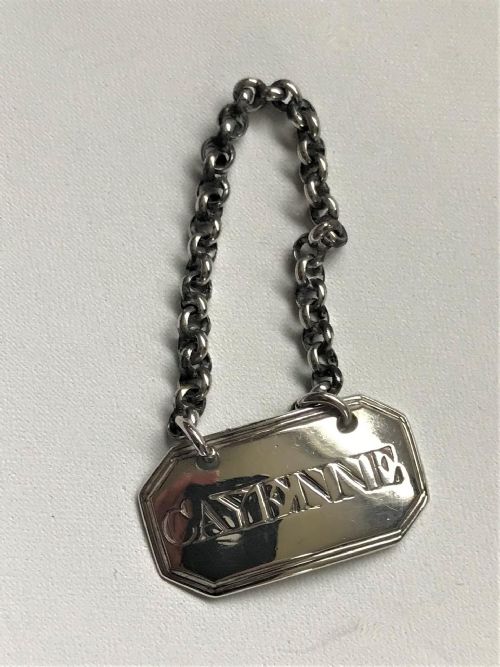


Antique Decanter Bottle Ticket
An antique decanter bottle ticket identifies the contents of a decanter, bringing silver and glass together on the dining table.
Antique Decanter Bottle Ticket
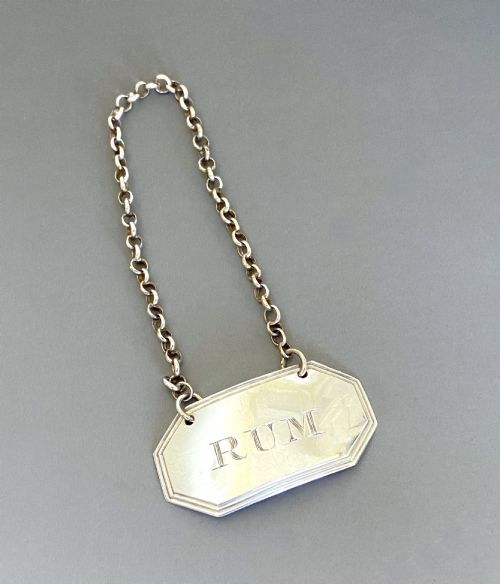
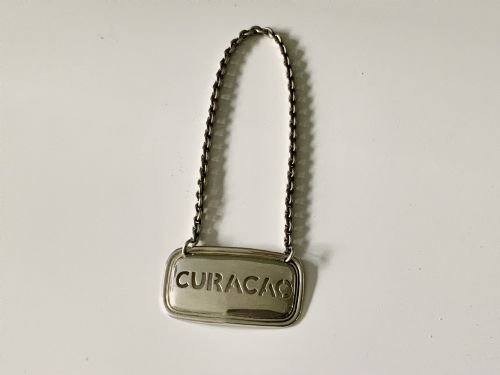
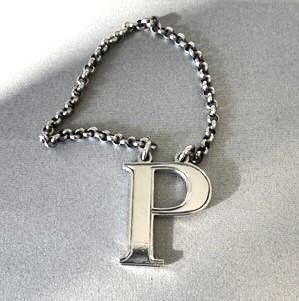
An antique decanter bottle ticket is a small piece of silverware or glassware used to identify spirits and wines. When you search for this phrase, you encounter items designed to hang around the neck of a decanter or wine bottle.
The pieces on this page span the Georgian, Victorian, and Edwardian periods. Most examples take the form of silver labels or tags naming specific drinks such as port, sherry, madeira, and rum.
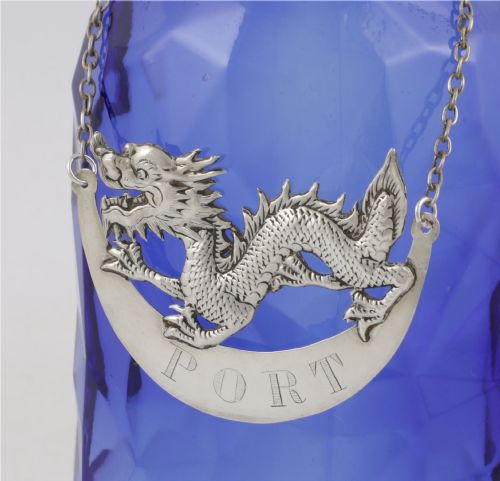
Makers fashioned these accessories in shapes ranging from simple escutcheons to vine leaves and pierced designs. Alongside metal tags, the selection includes glass bottles fitted with silver mounts.
Materials and construction
Silversmiths utilised sterling silver, solid silver, and silver gilt to shape these bottle tickets, frequently employing techniques like piercing and engraving for titles and decorative motifs. Some items feature enamel work or incorporate precious metals alongside teal glass bodies.
Makers connected the tags to bottles using matching silver chains or rigid neck rings. Provincial and London workshops alike struck these pieces with hallmarks to certify the metal standard.
Listings span the Georgian, Victorian, Edwardian, and Regency periods, utilising sterling silver, silver gilt, enamel, and teal glass.
Distinctions in quality
Quality rests upon the crispness of the chased or engraved lettering and the elegance of the outline, whether a vine leaf or a shield escutcheon. Pierced work demonstrates the skill of the silversmith through clean edges and balanced symmetry.
The presence of clear hallmarks, maker marks, and matching suspension chains elevates an example. Sets matched as triphammer groups or pieces by named makers command distinct attention from collectors.
Elizabeth Morley·Tiffany·Digby Scott Benjamin Smith·John Reily·Thomas Wallis II·William Sharp·Peter Anne Bateman
The Antique Decanter Bottle Ticket Glossary
- Decanter label
- A small tag hung around the neck of a bottle to name the contents. These items are also known as bottle tickets.
- Escutcheon shape
- A shield-like form commonly used as the backing plate for engraved titles on silver tags. This outline is typical of Georgian silversmithing.
- Silver gilt
- Sterling silver coated with a thin layer of gold. This finish gives the metal a warm, yellow lustre.
- Provincial silver
- Plate marked outside the main assay offices such as London. Scottish provincial towns produced distinctive examples.
Antique Decanter Bottle Ticket: Frequently Asked Questions
What is a decanter bottle ticket?
A decanter bottle ticket is a small label hung around the neck of a decanter to name the wine or spirit inside.
These accessories prevent confusion at the dining table when serving multiple bottles of similar appearance.
How were bottle tickets attached?
Makers attached the silver tags using fine silver chains fitted around the neck of the decanter.
Some Edwardian and Victorian designs used rigid silver collars instead of chains.
How do I identify a Georgian label?
Georgian examples often feature hallmarks indicating London or provincial assay offices alongside distinctive hand-engraved titles.
They frequently appear in escutcheon, crescent, or vine leaf outlines popular during the eighteenth and early nineteenth centuries.