



Antique Cylinder Secretary Bookcase
An antique cylinder secretary bookcase brings together a concealed writing surface and a shelved upper cabinet, offering both architectural presence and practical study space.

Antique Cylinder Secretary Bookcase
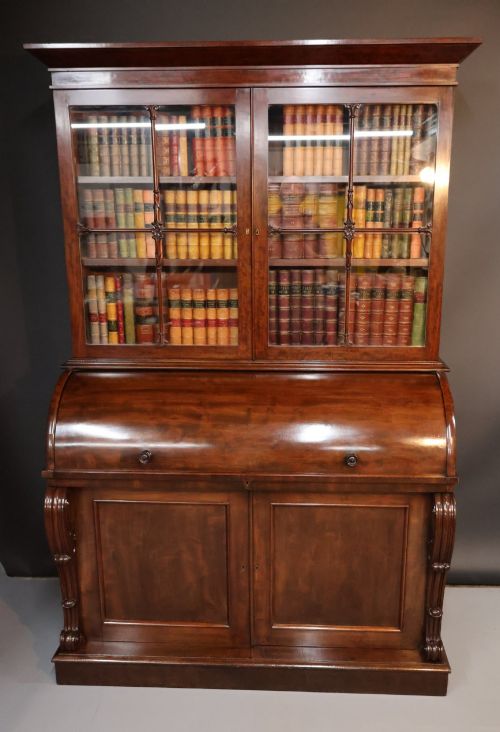
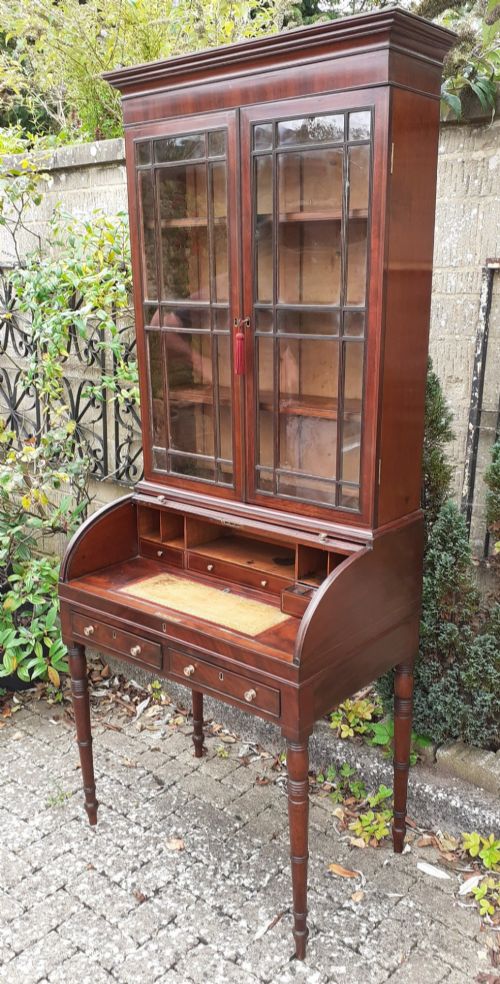
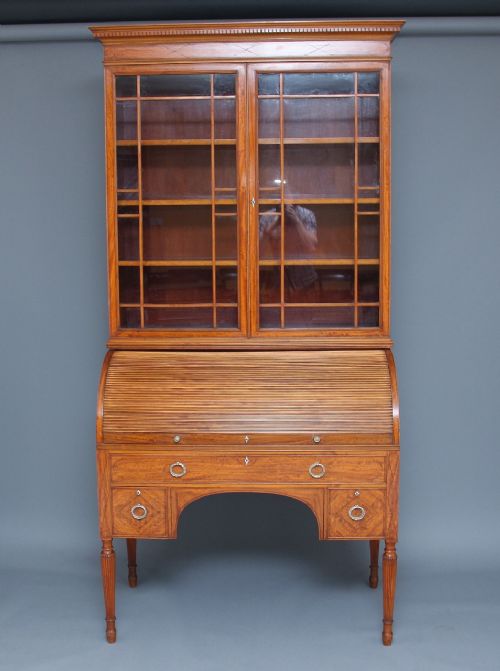
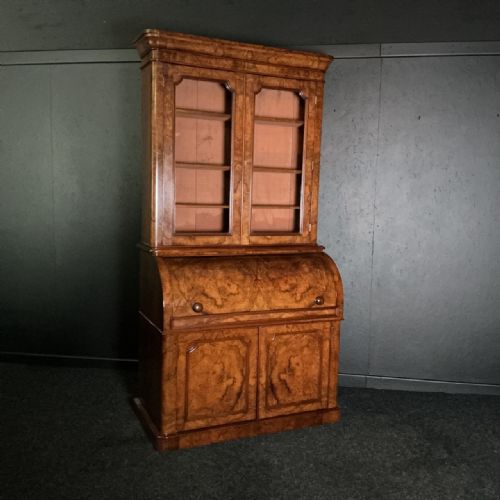
An antique cylinder secretary bookcase is a substantial hybrid furniture form that combines a glazed upper display cabinet with a lower bureau section featuring a curved roll-away cylinder front. These pieces bridge the gap between architectural shelving and private writing furniture, accommodating both the display of libraries and the secure storage of correspondence.
The versions most commonly met on this page span the eighteenth and nineteenth centuries, traversing Georgian, Regency, William IV, and Victorian stylistic periods. Makers during these eras worked extensively in mahogany, satinwood, burr walnut, and rosewood, incorporating glazed doors above and fitted writing interiors below.
How they were made
Makers constructed these cabinets using dense timbers such as mahogany, walnut, and rosewood, often applying delicate fruitwood inlay or burr walnut veneers to create rich surface patterning. The cylindrical roll top mechanism required precise joinery so that the curved wooden shutter slid smoothly within internal tracks to conceal the writing desk.
Upper sections utilise clear glass panes held within wooden frames to protect library collections, whilst lower writing compartments frequently integrate leather writing surfaces, small drawers, and pigeonholes. Brass fittings, including handles and escutcheons, secure the drawers and doors across Georgian and Regency examples.
Listings feature pieces spanning the Georgian, Regency, William IV, and Victorian periods, utilising mahogany, satinwood, burr walnut, and rosewood.
What varies in quality
The distinction between ordinary and exceptional examples rests upon the selection of timber figures and the finesse of the decorative marquetry or brass inlay. Finer pieces demonstrate meticulous matching of burr walnut or satinwood veneers across the cylinder front and drawer facades, creating a continuous and harmonious visual rhythm.
Structural integrity of the complex cylinder mechanism and the crispness of carved details further separate workshops like Edwards & Roberts or Tudor & Burrey from standard production. The quality of the interior fittings, such as secret compartments and finely dovetailed drawer construction, defines the upper tier of surviving pieces.
Tudor & Burrey·Edwards & Roberts
The Antique Cylinder Secretary Bookcase Glossary
- Cylinder top
- A curved wooden shutter that rolls back into the body of the desk to reveal a pull-out writing slide and pigeonholes. This mechanism replaced the traditional fold-down flap of standard bureau bookcases.
- Secretary
- A piece of furniture containing a writing drawer or pull-out desk surface combined with a bookcase or set of drawers. The term is frequently used interchangeably with bureau bookcase.
- Marquetry
- Decorative patterns formed by the insertion of different woods, metals, or ivory veneers into a solid wood matrix. It appears to striking effect on eighteenth-century Dutch and English cabinetwork.
- Satinwood
- A pale, hard wood with a natural golden sheen and satiny texture. It was favoured by late eighteenth-century and nineteenth-century cabinetmakers for high-status neoclassical furniture.
- Glazed bookcase
- An upper cabinet fitted with glass-fronted doors designed for the display and protection of books. These doors often feature intricate wooden tracery or glazing bars.
Antique Cylinder Secretary Bookcase: Frequently Asked Questions
How does a cylinder mechanism work?
The curved wooden shutter runs along channeled grooves cut into the interior sides of the desk carcase. Pulling the writing slide forward guides the cylinder smoothly backward into the body of the piece.
This action simultaneously uncovers or operates connected desk drawers, providing an enclosed workspace that can be locked securely when not in use.
Where were these pieces used?
These large cabinets served as private desks and libraries in the principal rooms of Georgian and Victorian townhouses and country estates. They belonged in studies, libraries, and withdrawing rooms where gentlemen and gentlewomen managed correspondence.
The upper glass doors allowed owners to display leather-bound book collections while keeping volumes free from dust.
How do I date a cylinder bookcase?
Dating relies upon observing the prevailing architectural styles, timber choices, and hardware signatures of specific periods. Georgian examples often display restrained mahogany surfaces or satinwood with delicate inlay, whilst Victorian pieces incorporate heavier walnut timbers and more robust carving.
Secondary woods used inside drawer construction and the style of the brass handles offer further clues to the decade of manufacture.
Are the upper and lower sections original?
Many surviving examples were constructed as unified single pieces by the original workshop, ensuring matching timbers and consistent cabinetmaking techniques across the entire height. However, because bureau bases and bookcase tops were sometimes paired together over centuries of domestic use, examining the connection points and wood grain continuity is essential.
Matching secondary woods inside both the upper cabinet and lower desk help confirm that the two halves belong together.